On the surface, the Queensland by-election of Stafford may seem unremarkable.
A Labor safe seat was held by Labor after a messy defection and tragic death of its sitting MP.
With a short run-up and thin field, of course Labor was able to secure the seat, take a bow for the press, and move on.
Where’s the story?
Actually, there are two stories – one for each major party – and they read more as warnings than electoral tallies.
We begin with the LNP.
In many ways, Stafford represents the best chance possible for the conjoined Liberal-National Party against Labor’s traditional (but malleable) working-class voters.
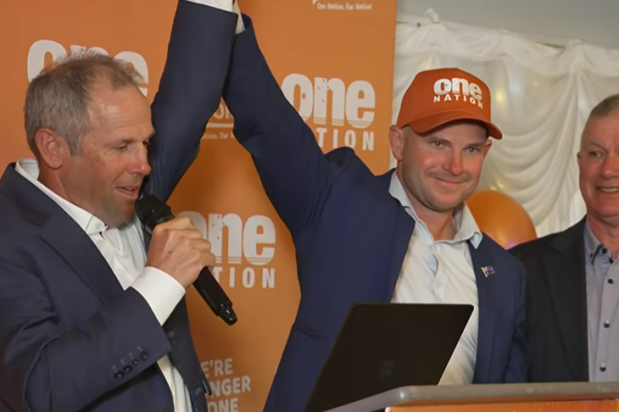
Stafford is prime future One Nation territory, and Pauline Hanson has already pledged to conquer the seat at the next state election.
Last Saturday, the LNP had no meaningful conservative competition. It was a free, low-risk shot at Labor’s base and a chance to dig in and see what sort of conversion rates might be possible.
They also had two contributing benefits in the form of an appalling federal Labor Budget that ripped aspiration straight from the heart of Australia’s workers, and the weight of an extremely popular Premier, David Crisafulli, making fuel security promises that appeal to unionised workforces.
There was a lot of organic pull to the right to capitalise on.
In some ways, LNP candidate Fiona Hammond managed to do so, beating Labor’s Luke Richmond quite decisively on first preferences.
The LNP, at last count, received 12,618 while Labor sat on 9,639. It was the two-candidate preferred that derailed the LNP, leaving them with a political photo finish.
Legalise Cannabis appeared to split their preferences roughly 60:40 to Labor. The Independent was closer to 80:20, the Greens split 86:14, and Animal Justice went 62:38.
In the reverse, the Libertarians split their small vote 65:35 to the LNP. Family First’s even smaller vote went 76:24, while the other Independent went 63:37.
It wasn’t enough to get the LNP over the line.
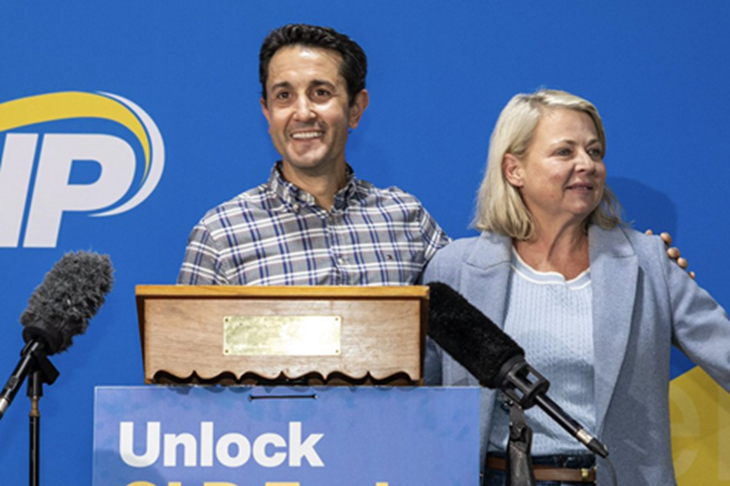
Premier David Crisafulli conceded defeat of the Brisbane seat saying: ‘Over 40 per cent of people voted first for the LNP … despite that, I do think we’re going to fall agonisingly short, guys. I think we’re going to fall agonisingly short, but boy, oh boy, what an incredible campaign. I think it’s safe to say on a night like this you’d rather be in this room.’
Labor definitely copped a swing. Well, a second swing, as the seat already faced an 8 per cent swing when the Labor state government was thrown out on its arse in 2024.
Plenty of people are asking if it was a mistake for One Nation to pass on another high-profile by-election but on balance, James Ashby is likely right with his sentiment of not wanting to ‘burn candidates’ in a four-week campaign.
The circumstance of the by-election was also awkward, suffice to say for One Nation it was nothing like chasing a seat abandoned by the failed former leader of the Liberals and heart of the Menzies dream. Farley’s victory in Farrer was worth more than all the campaign advertising money in the world because it instilled hope and elation into the human arm of the campaign machine. And they will need that heading into a difficult Victorian state election later in the year.
In any case, the LNP proved that they can take swings off Labor in the best possible environment, but crucially, not win it outright.
That result will worry the Liberals and Nationals at large given Crisafulli’s team are best placed to return results. Far better than say, most of the infighting Victorian Liberals.
It would not surprise me if Crisafulli is putting some serious thought into a structured preference relationship with One Nation at the next election to secure another LNP term of government. One Nation would no doubt be supportive of Crisafulli’s oil and gas projects and helping to ensure their survival would be beneficial to the One Nation brand. If the LNP were to promise them some proper representation, there is good reason to presume One Nation could do some of the heavy lifting in Labor seats and push Labor further away from power.
These sorts of arrangements could be mutually beneficial if it gives the voting public a taste of steady conservative government where real change is achieved.
Labor certainly won’t be relaxing at this result. Former Premier, Steven Miles, called it an ‘incredibly short campaign’ in ‘difficult circumstances’ even though there was little cause to suspect the safe seat would be under threat.
The fact that it was given a shake-down must have sent a few scares through Labor on Saturday night.
On its own, it has been said that the result, if replicated, could cost Labor seats at the next election.
Although I would not be surprised if Steven Miles is having a second glance at UK Labour’s situation following the local council elections that took place the week before.
Populism, perhaps better known as old-school conservatism mixed in with a bit of patriotism, has loosened the core Labor vote.
In the UK it has been described in many ways: a crumbling wall, a wound bleeding out, an electoral catastrophe waiting to happen…
Essentially, the job-based loyalty that once bound Labor voters to the party has eroded to a point that the final betrayal – displacement of culture via mass migration – has made the Labor voter more amenable to new parties.
In the UK, Labour taxes are paying to keep migrants in comfort while the working-class falls into a state of poverty not seen in over a hundred years. There is no bargaining power against Marxist victimhood.
Reform has utterly colonised this space. Having demolished the Tories first, they have now wiped out Labour on two occasions. Nigel Farage’s party does not carry generational stigma for Labour voters and so, while it might share significant portions of its ideological outlook with the Tories, Labour voters feel relatively comfortable parking their protest vote with Reform.
A similar situation is developing among Labor areas in Australia. One Nation and Pauline Hanson might have spent several decades as the scorn of holier than thou politicians, but at least voters know exactly what to expect from their leadership. In a landscape of liars and do-nothings, a party of principle is a powerful thing.
And so while One Nation did not contest Stafford, it would have sated their suspicions about the working-class vote.
There is now an assumption that One Nation holds the key to winning state and federal elections against Labor. If the Liberals and Nationals want to form government, will have to swallow their pride, do a bit of swift maturing, and start making strategic and genuine moves to secure an alliance. To double-cross One Nation or fail to deliver policies they have adopted from Pauline Hanson’s material would be fatal, not for one election, but for the foreseeable future.
Stafford was a quiet, if fascinating glimpse at the two-party playing field.
Flat White is written by Alexandra Marshall. If you would like to support her work, shout her a coffee over at donor-box.