Broke Labor, the delusional Greens, and their cultivated maze of semi-socialist converts have been beating their ‘eat the rich’ drum lately.
We know why.
Treasurer Jim Chalmers has run out of other people’s money.
Government departments are continuing to throw hundreds of millions around like it’s loose change. There’s a ‘bold’ Budget on the horizon, scaring everyone to death. A trillion-dollar hole lurks beneath the Treasury with a scary interest bill that gets worse every time the RBA opens its mouth. And now inter-generational friction is being pushed as padding for a nation-wide ravaging of private assets.
When Labor are done milking the working class and ‘correcting inter-generational fairness’ by pinching pennies from retirees, they intend to take as much as possible from ‘rich people’ and the mining sector.
And what will the government do with this money?
Fix potholes? Help farmers? Build roads? Streamline the state? Chip in for a refinery or nuclear plant?
No. They will waste it. Blow it on aid for Afghanistan or the ‘climate mafia’ run by Pacific nations that shake us down every year under the threat of stroking a few Chinese warships. Maybe add more politicians to Parliament. Build something with the words ‘net’ and ‘green’ somewhere in the spec…
What they certainly won’t do with that money is put it toward veteran affairs.
Gina Rinehart’s $200 million act of generosity this week has embarrassed the government’s lacklustre record for veterans and shown Australia why it is important to have privately directed funds involved in charity. For one, Ms Rinehart is demonstrating how much further money can go when it doesn’t have to do several laps of the bureaucracy first.
The topic could not be more important.
Homelessness among veterans remains an appalling and desperately sad statistic. Somewhere around 6,000 veterans, according to RSL Australia, are at risk of homelessness every year while around 1,600 are sleeping rough.
These figures were brought into focus when a question was added to the 2021 Census and ongoing research is being done to keep track of the unfolding crisis.
Why is it that, despite serving their country, veterans are three times more likely to end up with nowhere to live than other Australians?
There are programs in place to reach out to these people, some of which can be found here.
Over the past few years, there have been government grants directed toward veteran services, but let us be honest, the money spent on veterans is tiny in comparison to green energy, the NDIS, and the cash used during the last election to wipe out some student debt. Heck, they even found $20 million for an ad campaign telling people what they already know about the fuel shortage.
The Specialist homelessness services annual report 2024-5 published by the Australian Institute of Health and Welfare says:
At 30 June 2025, there were 57,200 permanent current serving ADF members (Defence 2024) and an estimated 576,800 living former serving members (DVA 2025).
Research found that an estimated 5.3 per cent of veterans who transitioned from the Australian Defence Force between 2010 and 2014 experienced homelessness within a 12-month period, based on the data from the 2015 Transition and Wellbeing Research Programme (TWRP) survey (Hilferty et al. 2019).
The report goes on to state that:
Identified risk factors for veterans contributing to a high risk of experiencing homelessness include higher levels of psychological stress during service, as well as relationship breakdowns and unemployment following transition from the ADF.
This is not an ‘election-winning’ topic for politicians. It cannot be packaged into trending hashtags and pushed relentlessly on social media to radicalise the youth into voting. It is an uncomfortable topic for a generation of voters who think war is outdated and service is bizarre.
Those few good politicians in Canberra who pursue the wellbeing of our veterans do so as passion projects.
It is a terrible reflection of our current political system that the floodgates of public money are opened for foreign Net Zero companies or foreign aid in regions of the world administered by terror groups, but very little generosity is shown toward our own. Why are veterans sleeping rough when Australia has given over $300 million to Afghanistan since 2021? Over $130 million to Gaza and surrounding regions? $100 million to Indonesia to strengthen their health system and support their green infrastructure? $600 million to PNG for a Rugby League team…
Some research shows that if ‘left unaddressed, the overall economic cost of veterans’ homelessness could top $4.6 billion’ over a period of 30 years.
It is clear from first-hand reports that having somewhere stable to live while veterans re-learn skills for the civilian world is critical in transitioning people between careers.
If Australians want people to voluntarily fight for the country, then we really must do better as a society when it comes to moving people through this challenging career path.
Mining giant Gina Rinehart has long been a supporter of veterans. This week, via Hancock Prospecting, Ms Rinehart pledged $200 million toward the purchase of housing to accommodate veterans. Which is exactly what they need most.
Ms Rinehart told the media:
‘I was shocked to learn recently that more than 6,000 veterans are homeless. This is unacceptable. I hope that others will also actively and generously help to lessen this tragedy.
‘The housing crisis, a crisis made critical by government approvals and permits delaying new housing and the ability to extend houses, high government taxes adding to costs, and record high immigration causing housing shortages, has affected many Australians.
‘But maybe not enough are aware that more than 6,000 of our veterans are now sleeping in the streets.
‘Clearly, our contribution alone will not help enough homeless veterans, leaving around 6,000 veterans still homeless. A different approach to the veterans’ housing crisis is badly needed, a crisis also affecting many other Aussies too.’
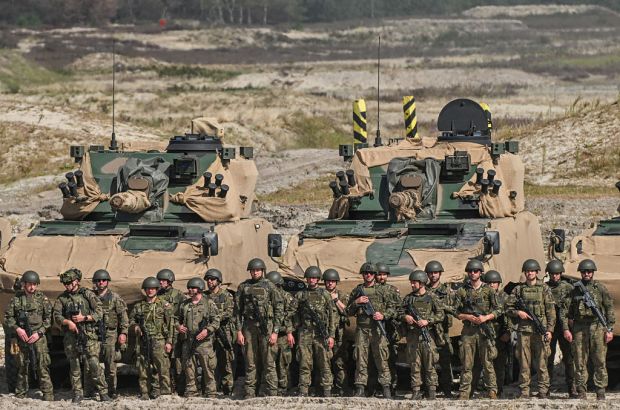
Instead of attempting to build from scratch, it has been reported that the process of locating suitable residences has already begun. Former hotels and apartment complexes are perfect candidates. It was even suggested that disused barracks might be included. Rather ironic, given Labor’s recent proposed fire sale of military assets.
The important point about the properties is that they will allow veterans to live near potential employment and civilian training so they can re-integrate into Australian life instead of being left behind.
These are not people who desire a life of welfare.
They want a new life. They want the dignity of work. They want the freedom of economic independence.
While RSL Australia has no involvement in this private investment, they were very receptive of Ms Rinehart’s efforts. ‘It is an incredibly generous donation that will be welcomed by the veteran community,’ said their national president. They remain hopeful that in addition to providing shelter for veterans, the act will also bring attention to the situation.
Hancock Prospecting has a history of looking after veterans, with their Sir Valston (Ms Rinehart’s world war two veteran uncle) Hancock House which opened in 2024 and is operated by the Australian Air Force Association WA. The need is so great that it reportedly reached its capacity within three months of opening the doors.
Thank you, Ms Rinehart, and shame on the Labor government.