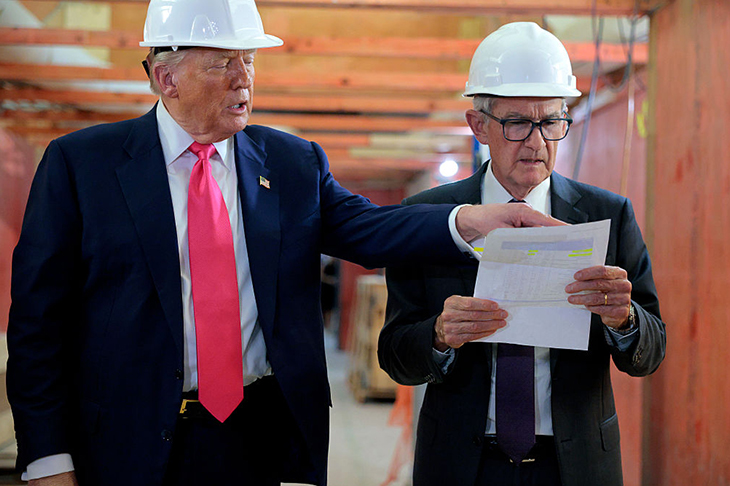
Federal Reserve Chair Jerome Powell is now under criminal investigation. Allegedly over overruns. Allegedly over testimony. No one seriously believes this is about the courtyard fountains. The real question is older than the post-Volcker consensus that made central bank independence an article of faith.
My interest in central banking technically predates my birth: I was gestated inside the Reserve Bank of Australia in 1967. My mother’s workplace at Martin Place was a temple to high modernist finance, all Wombeyan grey marble and Narrandera granite. The trannie in the lunch room (I am told) played a lot of Sandie Shaw’s Eurovision winner, ‘Puppet on a String’. Turns out strings matter. No one wants to be the marionette.
The official chorus is familiar. Central bank independence is sacred. Markets are nervous. Democracy itself trembles. Former Fed chairs clutch their pearls and issue statements like parish priests sensing heresy in the nave.
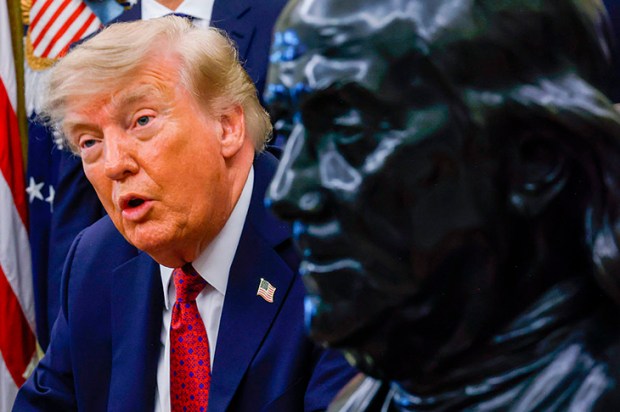
But no president spends political capital prosecuting a man whose term ends in months because of a renovation. This is not law enforcement but theatre – and like all good theatre, the audience matters more than the actor.
Powell is not being removed. He is being exhibited.
Trump already admitted as much. Powell’s term expires in May. A successor was named last week: Kevin Warsh. This isn’t about Powell walking the plank. It’s about showing the next chairman the sharks circling the ship.
That is why the investigation matters even if nothing comes of it. It establishes precedent. It demonstrates vulnerability. It tells future Fed chairs that independence is not a shield but a courtesy – one that can be withdrawn when it obstructs political purpose. Powell might have benefited from a closer reading of Machiavelli on the inconstancy of princes, and on the danger of mistaking custom for protection.
The fight is not over interest rates but timing. And timing, in a dollar world, is power.
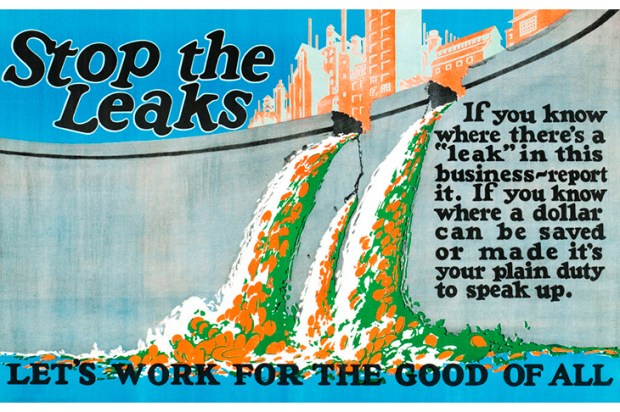
The modern economy runs on dollar plumbing. Trade, shipping, commodities, debt, insurance – all move through pipes ultimately controlled by the United States. Whoever controls the flow controls the pain.
China governs as a sovereign, but trades like a dependent. It prints yuan, but borrows dollars. It plans industrial policy, but prices energy, food, freight, and insurance in a currency it does not issue. Master at home, renter abroad.
That dependence hides inside what Beijing politely calls ‘financial innovation’. Offshore borrowing by property developers. Local government financing vehicles rolling debt through trusts. Wealth management products. Dollar liabilities outside formal balance sheets, metastasising.
Cheap dollars feel like relief. That is the trap.
When the Federal Reserve loosens policy, the world floods with dollars. China gorges. Property reflates. Provinces borrow. Shadow credit revives. The machine leans forward and persuades itself the danger has passed.
Then the tide goes out. Suddenly. Offshore funding evaporates. Dollar debts harden. Capital flees. Reserves burn. This is not theory. It nearly broke China in 2015 to 2016, when capital flight surged past a trillion dollars and Beijing was forced to burn reserves, impose capital controls, and crush domestic growth to stabilise the currency. The leverage is worse now.
Slow pressure allows adjustment. Predictable policy gets priced in. But whiplash – loosen to invite extension, then snap – turns leverage into a weapon against the borrower.
This is dollar weaponisation by sequence rather than sanction. Not embargo, but timing. Not tariffs, but liquidity. A rival is not crushed by denial, but by invitation – invited to overextend, then abandoned mid-stride.
George Friedman and Peter Zeihan have long warned that globalisation was not a law of nature. It was a naval project. The US Navy made trade insurable. Remove the guarantee and geography reasserts itself with a vengeance.
China must import vast quantities of food, energy, and fertiliser every day to function. It is the most trade-dependent great power in history, without control of the routes that sustain it.
Those routes are failing. The Red Sea is a missile range. Hormuz is a bargaining chip. Malacca is being squeezed by an India that no longer pretends neutrality. Insurers, not admirals, now decide where ships go. China imports roughly three-quarters of its oil through corridors it does not control.
Chokepoints do not need blockades. They need premiums. Greenland matters because it sits astride tomorrow’s chokepoints: Arctic routes, rare earths, and the shortest missile paths between continents running through melting ice. Control Greenland and you own tomorrow’s geometry of power.
Independent Fed chairs, like Powell, cannot be trusted with this strategy. His religion is gradualism; his instinct, reassurance. He believes that the Fed’s role is to smooth outcomes, not to shape them geopolitically.
Which is why his replacement is Kevin Warsh. Not because he is a great economist, but because he understands the brief has changed.
Warsh brings institutional aggression and a taste for upheaval. For him, the dollar is leverage, not liturgy.
This is also domestic politics. Rate cuts mean easier mortgages, rising house prices, buoyant equities. Midterm insurance in 2026 and a smoother runway for 2028, whether the name on the ticket is Vance or Rubio. Good economic news buys political time. Political time buys strategic freedom.
Foreign central banks already understand the message. When global bankers rushed to issue a rare joint statement backing Powell, the Bank of Japan quietly stayed out. It consulted the government but could not get approval in time. One official admitted hesitation was ‘partly because of our relationship with the US’. With an election looming in Japan, silence was safer than solidarity.
Even the European Central Bank in Frankfurt felt compelled to stress it ‘still trusts’ the Fed to honour swap lines – the emergency dollar funding that keeps the system from collapse. Translation: obedience is still rewarded. Once such reassurances must be spoken aloud, the hierarchy has already been exposed.
The bankers understand this perfectly, which is why they are screaming. A world of predictable, gently managed money is where leverage is safe and mistakes are forgiven. A world of timing and chokepoints is where borrowed money becomes a liability you cannot hedge. They prefer their cushions. Trump prefers a wooden bench and a man with a stopwatch.
Independence, we are told, is the last defence of democracy. In truth, it was always a convenience – a way to keep political hands off the monetary levers while disciplining workers and cushioning commercial banks from their own stupidity.
Trump’s unforgivable sin isn’t the vulgarity; it’s allowing politicians back into the monetary control room. Once politics touches the plumbing – money, shipping, energy – the priesthood loses control.
The pipes are visible now. And once you see where power really lives, it’s hard to pretend Powell’s oversights were ever the point.
Got something to add? Join the discussion and comment below.
You might disagree with half of it, but you’ll enjoy reading all of it. Try your first month for free, then just $2 a week for the remainder of your first year.