My car hasn’t been travelling very well this year. OK, it is nearly 13 years old, but it has been regularly serviced, and I don’t do a whole lot of kilometres each year. I’m beginning to wonder whether the state of Melbourne’s roads has taken a toll on the old gal.
My thoughts have turned to the possibility of buying a new car and what type I should choose. Let me quickly add here that there is NO WAY I’m buying an electric vehicle. I also can’t see the point in buying a hybrid, although I’m told that Toyota does make good hybrid cars.
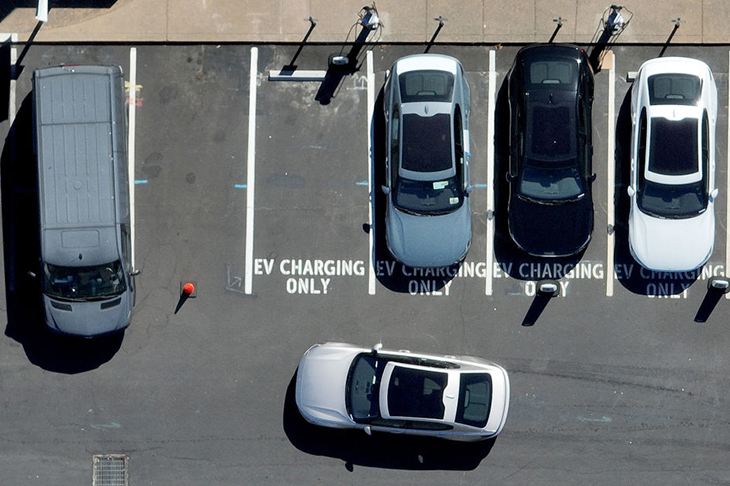
In theory, I could buy an EV. We have a garage, so we could install a charging device, although I’m not sure whether 3-phase power is required. I generally make short trips around the city, and we could use the other car when we go further afield.
But the thought of carefully planning trips, making sure the car is charged, worrying about high insurance costs, unsure of servicing the vehicle – why would I bother? I currently spend about five minutes every fortnight filling up the car and the local mechanic is just down the road. I’m not one for trading convenience for saving the planet.
It’s always worth checking the facts on the environmental impact of EVs. The promoters of EVs, such as the climate zealot, Matt Kean, chair of the Climate Change Authority (CCA), can’t get enough of them.
Indeed, the CCA has declared that more than 50 per cent of all new cars sold in the next decade must be EVs. That’s to meet the government’s ridiculous emissions reduction target of 62-to-70 per cent by 2035. Around eight per cent of new cars sold so far this year are EVs. That’s quite the gap.
But here’s the thing: manufacturing EVs is a much more emissions-intensive process than making cars with internal combustion engines – at least 40 per cent more. With the growing dominance of China as the main supplier of EVs, it’s a very bad start given the predominance of coal-fired electricity in that country. Before an EV has even hit the road, it is a long way behind being better for the environment than your standard jalopy.
In fact, it has been estimated that it’s not until the EV has travelled some 40,000 to 60,000 kilometres that the delta on emissions is superior for the EV. Of course, at that point or not long after, the EV may need a new battery; so, all bets are off at that point. There is also very little resale value for most EVs, so that needs to be considered.
Of course, the Keanoa (geddit: quinoa) is unlikely to let facts stand in the way of his obsessions. And getting more EVs on the road is one of his goals in life. He likes to cite Norway as an example of EV paradise on earth – 90 per cent of new cars are EVs in that Land of the Northern Lights.
But here’s another thing to consider: Norway is the size of a handkerchief; its population is less than Melbourne’s; the government taxes the living hell out of normal cars; and the subsidies to EV owners are breathtaking and extremely expensive for taxpayers. Indeed, there is serious consideration being given in Norway to scaling back the subsidies to EV owners.
And can I be just a bit picky here by pointing out that Norway is a wealthy country because of its oil and gas reserves; that’s right, fossil fuels? It continues to extract oil and gas from its waters and makes a motza doing so. No wonder the country’s politicians can engage in various indulgent acts such as being an effective part-owner of every EV car by dint of the subsidies. It also makes them feel less guilty about the oil and gas.
But getting back to Keanoa and his promotion of even more subsidies for EVs in Australia, there is not a subsidy, incentive or mandate that he doesn’t like. The shocking policy of exempting EV buyers from fringe benefits tax is a case-in-point.
It is now estimated that this scheme will cost the taxpayer nearly $20 billion over a decade, and overwhelmingly favour higher income earners. The Productivity Commission estimates that the carbon abatement cost of the FBT exemption is between $1,000 and $20,000 per tonne, compared with the current cost of an Australian Carbon Credit Unit of less than $50.
Keanoa’s motto is ‘whatever it takes and spare no cost’. Similarly, his resistance to the introduction of a road user charge for EVs – and bear in mind heavy EVs impose more damage on roads than normal cars – is shameful. To his way of thinking, EV owners need to be given a free ride while everyone else pays high rates of excise on petrol and diesel to fund the roads.
And let’s not forget here B1’s New Vehicle Emissions Scheme, which is just a fancy way of subsidising EVs at the expense of all other types of cars. It imposes annual restrictions on total emissions of the cars sold by companies, with non-compliance leading to financial penalties. To conform, the companies will jack up the price of higher-emitting (tailpipe, at least) vehicles. Of course, consumers have the option of hanging on to their current vehicles, which will defeat B1’s EV dreams.
At least, I get a few chuckles reading about the dire situation of the global automotive industry and the companies that fully drank the EV Kool-Aid – think here Volkswagen, Ford, GM, Audi and Porsche, among others. The Chinese-owned Volvo company had declared that it wouldn’t sell any non-electric cars in Australia after 2025. The company has walked back this pledge. It also expects to continue to produce internal combustion cars after 2030, also undoing a prior commitment.
The one story I particularly love is about Porsche and its swanky Cayman. The company fully intended to switch exclusively to EVs only to find that the people who typically purchase expensive Porsches were not really interested. There has been a complete U-turn, although there will not be a new petrol Cayman on the market until 2029. These things take time. In the meantime, the company has had to write off over $3 billion from its books.
Volkswagen has also temporarily shut down two of its factories in Germany because of ‘lower-than-expected demand’ for its EVs.
I dip my lid to the bloke who runs Toyota who was always sceptical about a rapid shift to EVs. In his opinion, it’s just not possible to get ahead of consumer preferences. He was severely criticised for this view, with other auto executives claiming a failure to read the room on his part. But Toyota’s concentration on hybrids has given the company a competitive lead in this sub-market.
In the meantime, the global automotive market is being flooded with Chinese-made EVs marketed at ridiculously low subsidised prices. European and US manufacturers simply cannot compete. The EU has already imposed tariffs on these EVs, with more to come. It will be similar in the US. There is a very high likelihood that some major European and US manufacturers will not survive. I’ll let you know what car I decide on down the track. But I’m pretty sure the reliable old gal will get me around for a little while longer.
Got something to add? Join the discussion and comment below.
You might disagree with half of it, but you’ll enjoy reading all of it. Try your first month for free, then just $2 a week for the remainder of your first year.