The announced change in name from Pauline Hanson’s One Nation (PHON) to simply ‘One Nation’ is significant. Political parties that include the founder’s name come and go, but no active political party that includes the founder’s name has existed as long as the party formed by Pauline Hanson in 1997.
One of the problems with a political party name that includes the founder’s name is longevity. In Australian federal political history, only the now-defunct Lang Labor Party came close to existing as long as PHON. But that was only from 1931 to 1950, and PHON is well past Lang’s record.
Other casualties include Clive Palmer’s parties and Derryn Hinch’s Justice Party. Katter’s Australian Party may continue because there are two generations of Katters, but, as with Jacqui Lambie’s party, it is unlikely to have any national impact. Further, the Nick Xenophon Team, now known as Centre Alliance, has had little electoral impact nationally despite dropping the founder’s name.
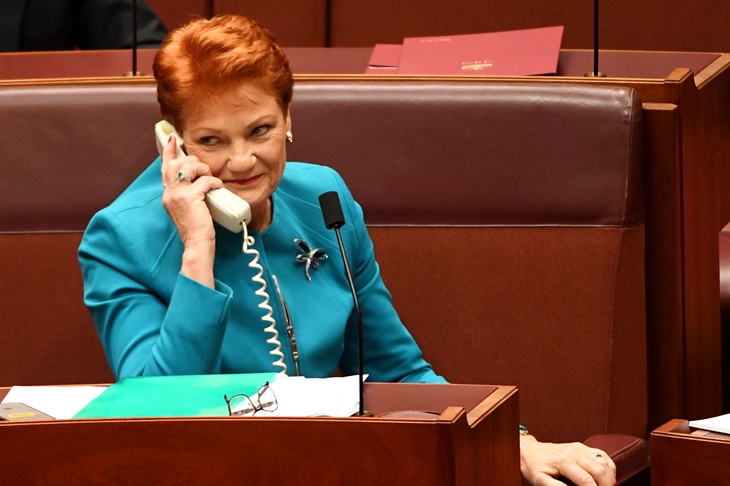
However, One Nation is unique in Australian political history and on the back of the Liberals’ long slow accident, Pauline Hanson is set to leave a legacy that may well endure.
I will never forget watching Pauline Hanson’s maiden speech after she became the Member for Oxley in 1996. She said then what everyone was thinking. She continues to do so to this day.
At the 1998 election, I was on the hustings for the Liberal Party in the seat of Dickson up against Cheryl Kernot after she abandoned the Democrats for Labor. (Following its move to the left, Don Chipp’s party is long gone, perhaps providing an historical precedent for the demise of the Teals.) The enthusiastic One Nation supporters were driving around in a tiny four-wheel drive with an Australian flag bigger than the car. I helped them to scrutineer as they were complete novices, but they were keen to learn.
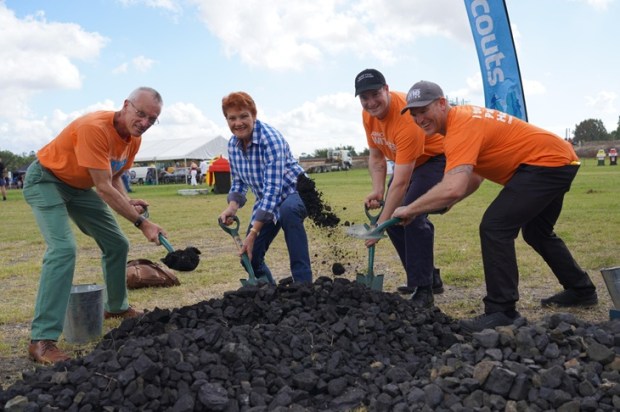
Fast forward to today, and One Nation is setting up branches. The professionalisation of the political party is a necessary process for succession once the founder retires or is no longer with us. Sir Robert Menzies’ Liberal Party is an example of what a party that is not entirely reliant on its founder can achieve. Conversely, Jack Lang’s party existed for 19 years, but as ‘The Big Fella’ aged, his ego could not be harnessed within Lang Labor.
The monkey on the back of One Nation has been frequently dysfunctional relationships between Pauline Hanson and her party’s other elected representatives. Ongoing media and political attacks against Hanson (not to mention her wrongful imprisonment) haven’t helped. If the professionalisation and devolution of power prove sustainable, this may become a thing of the past.
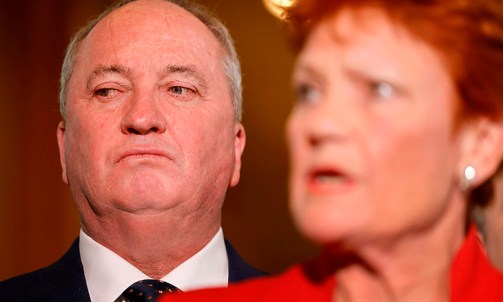
And with Barnaby Joyce thrown into the mix, who knows what might happen?
There are two possibilities. Joyce may just increase the size of the target for more mainstream media and political attacks. Or, if the party structure doesn’t implode, he may just be the catalyst that brings the other Nationals and Liberals to One Nation’s fold. That, of course, may be too long a bow to draw.
With leftists trying to keep the progressive Liberals and Nationals onside by giving them advice that only benefits Labor, the party of Sir Robert is on the ropes. But only a fool could believe that the momentum that One Nation is gaining is only a flash in the pan.
I am running out of metaphors. It is Pauline Hanson’s plain talking that has served her, her party, and Australia well. In my opinion, there is too much policy detail and not enough focus on principles. The change in name is essential, and the Riverina Branch is a great starting point for the devolution of the party’s leadership.
I have one major concern. One Nation has no easy-to-communicate public document that outlines One Nation’s principles. This is important if the party is to transition from a minor fringe party to a major national party. Without outlining its principles, there is a risk that another big ego will take the party off track. This would be disastrous for Australia, leaving us without a proper opposition party.
Dr Michael de Percy @FlaneurPolitiq is the Spectator Australia’s Canberra Press Gallery Correspondent. If you would like to support his writing, or read more of Michael, please visit his website.