It is indubitable that a good education leads to a better life for those who are fortunate enough to receive it. It is also evident from declining maths and literacy levels, both in Australia and countries abroad, that a good standard of education, once lost, is difficult to recreate.
Creating balance in life is, and always will be, a challenge. In the context of education, creating and teaching children how to have a healthy balance provides them with a strong platform upon which the rest of life can be built.
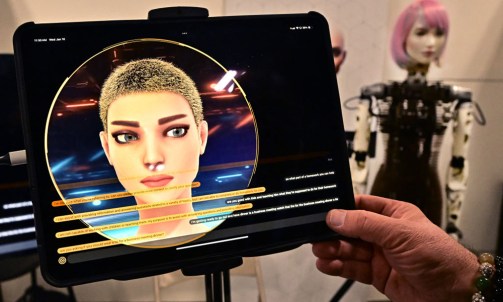
What strikes me as being particularly obvious is that there is a strong correlation between lowering literacy rates and time spent staring at a screen. Time which was once spent outdoors or reading books, has in part been replaced by endless hours on devices observing too much utter trash.
If we look at statistics highlighting the number of mental health issues prevalent among young people over the past decade, we would no doubt discover that there has been a drastic increase in mental health issues among young people.
Whilst there is a time and a place for technology, I do not believe that it was designed to replace independent thought, analysis, or observation. Yet, when we allow anything new into life, disillusionment inevitably occurs.
This is most likely what we are witnessing. A lack of critical thinking and interest in ethics or accountability are potentially the root causes of nihilism.
I personally think that it would be wondrous if the next challenge in support of mental health was a challenge in which we each committed to replacing an hour per day currently spent on our phones with an hour spent outdoors in the fresh air or with friends and family, without a device. Obviously, for all practical purposes, a phone is a phone and will be needed in emergencies, so let’s not state the obvious here. But was it not also originally just created to make a phone call?
Nevertheless, given that addictions to technology are no figure of one’s imagination and are sadly experienced by many young people, (who could instead be learning about the wonders of the ancient world or reading the literary works of past geniuses), it is all the more essential that young people develop healthy social skills and learn to enjoy real life, not simply a life that is only as seen through a screen.
Let’s encourage young people to get out and about, explore the fascinating world we live in, and return to pre-pandemic levels of face-to-face interaction, where it is logistically possible, of course.
I do not for a moment disagree that technology and online calls have created a more efficient landscape for meetings, keeping in touch with people overseas or even simply in different parts of the country, and learning about other places when not able to travel to them. However, at the end of the day, when the balance swings too far towards technology and counteracts the beauty of most of the above, as with anything, we ought to step back and reassess. I do believe that technology was designed to be complementary to everything we already have … it would not be a sustainable invention, even from product sales and consumers’ perspectives, if it were not!
So, whilst removing or changing the day and age we live in is not a possibility nor would we wish to, what can we do to counter the adverse effects of social media and screen addiction among young people?
In a schooling environment, the solution might very well be to keep things simple and focus on the core subjects, combined with a manageable involvement in extra-curricular activities, which have the benefit of fostering and encouraging important life and social skills, such as teamwork, healthy competition and how to have a work-life balance.
Ought it really to be any more complicated than this?
Perhaps outside of school, as adults, we too can learn invaluable lessons from what we are witnessing in younger generations and lead by example. I understand that this is easier said than done. Perhaps a simple change like this is all that is required for society to stem the flow of mental health issues that are simply caused by too much sitting on a sofa, staring at something insignificant on a screen.
‘A room without books is like a body without a soul.’ – Marcus Tullius Cicero.