Books

The good old bad old days: Prestige Drama, by Seamas O’Reilly, reviewed
Set in 1980s Derry, O’Reilly’s novel vividly captures the rifts and festering resentments within a close-knit community during the Troubles

Does a propensity for crime depend on one’s DNA?
Kathryn Paige Harden’s research suggests some genetic connection – but this is not scientific determinism, and ‘real moral choices can’t be understood biologically’
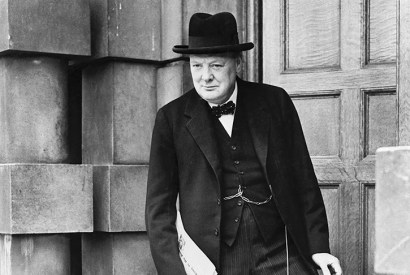
At the beginning of the second world war, Winston Churchill seemed a most unlikely hero
His early directives at the Admiralty and his handling of the Norway campaign exasperated his war cabinet colleagues and might even have ended his political career

Would W.G. Grace recognise the game of cricket today?
The leisurely long-format game once so dear to the English has been transformed by television and T20 into a highly professionalised global sport that has effectively become football
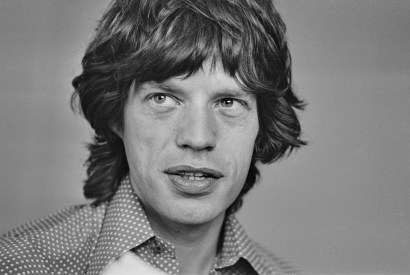
Lean and mean: Mick Jagger was always a tightwad
His parsimony included replacing chocolate biscuits with plain ones at recording sessions and paying a derisory £50 for what became known as ‘the most famous logo in the history of pop music’

Marvels of the masked ball: dressing up in Georgian London
A craze for masquerades reached its apogee at Carlisle House in the 1770s, when vast forests were imported into the ballroom, along with fountains and festooned arches

Accelerating the ‘kill chain’ – a terrifying glimpse of future warfare
A misfit band of military personnel and Silicon Valley uber-geeks apply AI to target America’s enemies more rapidly and accurately than ever before

From pike-and-pitchfork brigade to crack militia: ‘Dad’s Army’ wasn’t so ludicrous after all
Sinclair McKay traces the gradual evolution of the Home Guard into what one colonel described as ‘the best trained and equipped force of its kind in the history of our country’

No one is ordinary: The Things We Never Say, by Elizabeth Strout, reviewed
Writing about the inner lives and struggles of small-town characters, Strout reminds us that we are all battling something, even if we don’t broadcast it

Is coffee-drinking the new secular religion?
In a whimsical discussion of our relationship with the beverage, Julian Baggini proposes ‘Coffeeism’ as a philosophy for everyday life

They shoot horses: Boyhood, by David Keenan, reviewed
Two young Glaswegians revenge themselves on the men who assaulted them at a nightclub by murdering one of them and killing their herd of horses

The exquisitely dull life of Elizabeth II, expert on cap badges
‘I spend most of my life conversing with strangers’, admitted the late Queen, hosting endless receptions, launching ships, taking salutes and pinning medals on civic worthies
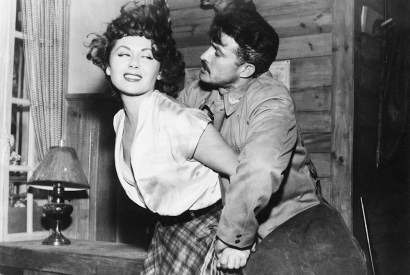
All the gossip about Lady Chatterley’s Lover
Trawling through decades of songs, newspapers, films and merchandise, Guy Cuthbertson catches a shoal of ephemera relating to Lawrence’s last novel

Were Britain’s postwar dons just having too much fun?
Hugh Trevor-Roper, for whom the university was a place of pleasure as well as learning, identifiedas early as 1951 a ‘party of darkness’ focusing on administrative efficiency and dullness

How Syria’s dream of freedom ended in further repression
Anand Gopal traces events through the lives of six rebels, from the first stirrings against Assad to the latest protests against corruption

The doyen of the France’s culinary scene is unmasked
Robert Courtine, the revered food critic and Le Monde columnist for four decades, turns out to have been a devotee of Hitler and ferocious anti-Semite

A foolproof way of predicting the future
Nostradamus’s prophecies are so poetic that they can be taken to foretell almost anything, while the American clairvoyant Jeane Dixon also managed to cover every possibility

In praise of uncertainty over hollow conviction
Using his life as a case study, Brian Dillon sets out to demonstrate that education is just as much about questioning things as it is about obtaining answers

The land of missed opportunity: The Left and the Lucky, by Willy Vlautin, reviewed
A bullied eight-year-old forms a bond with his caring, middle-aged neighbour in a heartbreaking novel of modern America’s underclass

The art of printmaking in all its glorious complexity
Holly E.J. Black highlights the differences between the feathery delicacy of an etching, the bold forms of a linocut and the carved sinews of an ancient woodblock

A meditation on reality: Transcription, by Ben Lerner, reviewed
In a short, glittering novel, Lerner shows how the factual is always infused with the fictional as he explores the tension between the given and the constructed

Weeds, bugs and lichens must now thrill the imagination
Muted, scrubby grasslands rather than rolling green fields are what excite the naturalist John Wright – and the buzz of stinging insects
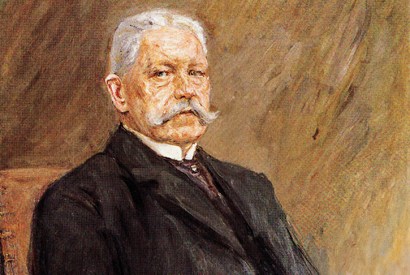
How interwar Germany became a breeding ground for evil
The permissiveness of the 1920s led to an autocratic backlash, with ‘the entire class representing intellectual Germany’ becoming ‘Nazi-infested’, according to the diplomat Harry Kessler

Haunting images: The Shadow of the Object, by Chloe Aridjis, reviewed
With its eerie slides portraying the long dead, a magic lantern becomes a focus for the novel’s understated meditation on mortality
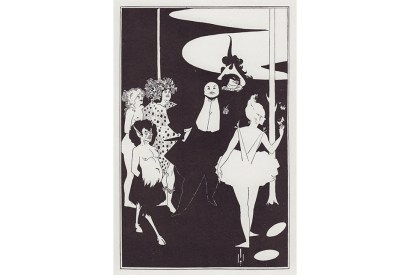
A portrait of the fin de siècle in all its morbid decadence
Matthew Sturgis leads us into a sultry, incense-laden world where Death itself nurses a sinister preference for the young