One of the most illuminating pieces of evidence given to the Royal Commission into Antisemitism and Social Cohesion came in its dying days, as Commissioner Virginia Bell rushed to finish proceedings early, from a witness who had been called to explain how to stop people from being dehumanised.
Rita Jabri Markwell, a solicitor with the Australian Muslim Advocacy Network, proposed an anti-dehumanisation framework for Australia to adopt. It had been developed to protect Palestinians, so she was queried about how it would apply to Jews.
She explained that, ‘The reality is that there are people in our community who legitimately feel that Zionism is on the same page as white supremacy… as abhorrent as Isis ideology’ and could be ‘characterised as a form of violent extremism, because of the thread of dehumanisation that runs through it.’
Nicholas Bender SC, appearing for Jewish organisations, asked Markwell how the framework would apply to Mia Klein, a Jewish student who was evicted from her share house because she was a Zionist.
Suppose, he said, a message was circulated at Klein’s university saying: ‘There are Zionists in our classes. Every single one of them celebrates genocide and has blood on their hands; make these animals feel subhuman.’ Would that breach the framework?
‘I don’t think, on the face of it, that it would,’ Markwell replied.
So, as Bender observed, Aman would continue the age-old tradition of dehumanising Jews through a political lens: previously they were demonised as ‘capitalist, communist, Bolshevik, rootless cosmopolitan and now – in 2026, Zionist’.
It exposed one of the central difficulties confronting the Royal Commission. It’s easy to identify an antisemite who is a neo-Nazi. He hates Jews. He makes no secret of it. There are no semantic charades.
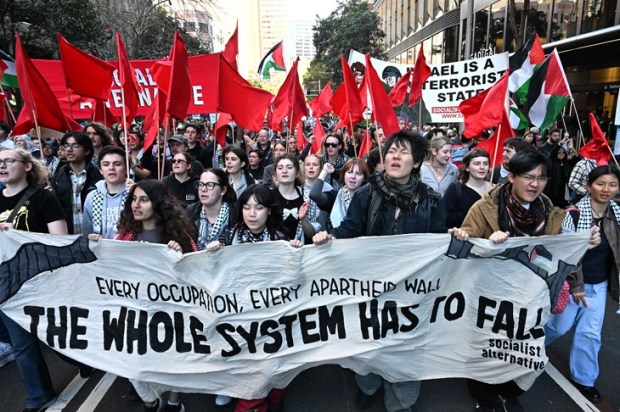
But what about the anti-Zionist who says they oppose racism, fascism and white supremacy, and support human rights and social justice, but Israel is an apartheid state committing genocide which has no right to exist; and that people who support its existence are consequently morally repugnant.
At its most basic, Zionism asserts the right of Jews to national self-determination in their historic homeland, but Commissioner Virginia Bell probed whether it was the term that was confusing Markwell. Putting Zionism aside, she asked, could Markwell accept ‘the legitimacy to the existence of the state of Israel’?
Markwell could not. ‘As a human rights lawyer, I don’t think that any state that relies on unlawful occupation and apartheid and genocide could be said to be a legitimate state.’
Macquarie University academic Randa Abdel-Fattah has been explicit about the consequences. ‘If you are a Zionist, you have no claim or right to cultural safety,’ she wrote in 2024. It was, she said, her duty to make spaces culturally unsafe for them.
The demonisation of Zionism is not just the preserve of Muslims. Greens Senator Nick McKim last week accused the Labor government of being ‘captured by Zionist interests’. When it was pointed out by the president of the Zionist Federation of Australia, Jeremy Leibler, that accusing Jewish people of secretly manipulating governments and public institutions was an antisemitic trope with odious origins in The Protocols of the Elders of Zion, McKim condemned the Bondi attack and denounced antisemitism, but rejected Leibler’s argument that criticism of Zionism is inherently directed against Jewish people and ‘conflating “Zionist” with “Jew”, as the Zionist Federation does, is fundamentally dishonest’.
Sure, not all Jews are Zionists, but why is it only the Jewish state that has no right to exist? Why, when it is attacked, is it accused of genocide even before it retaliates? Why is it accused of white supremacism and apartheid when Israel is more tolerant of religious, racial and sexual diversity than any Muslim-majority country?
Some 16 years ago, Paul Berman’s The Flight of the Intellectuals addressed the deference of Western intellectuals towards Tariq Ramadan, the urbane grandson and apologist of Muslim Brotherhood founder Hassan al-Banna. He contrasted this with their condescension towards Ayaan Hirsi Ali, who was living under an Islamist death threat after the murder of her friend Theo van Gogh. Ramadan insisted that he did not support terrorism; he just wanted to understand it. But as Berman pointed out, ‘he understands terrorism so tenderly he ends up justifying it. And he justifies it so thoroughly he ends up defending it’.
7 October marked a depressing milestone in how far that process had progressed. Hamas soldiers filmed themselves conducting the worst pogrom of the 21st century and were cheered by Islamists in the forecourt of the Opera House and defended on campuses in the language of anticolonialism and antizionism.
Sheikh Shadi Alsuleiman, president of the Australian National Imams Council, was questioned about Sheikh Ibrahim Dadoun’s proclamation of a ‘day of victory’ at a pro-Palestinian rally immediately after the 7 October massacre.
All Alsuleiman could say was that Dadoun had spoken in his personal capacity and that ANIC did not endorse his comments. Under questioning, he accepted that the remarks could reasonably have been perceived as celebratory of violence and were inappropriate.
Home Affairs Secretary Stephanie Foster was questioned about $308,000 in Commonwealth funding awarded under a Pythonesque program to foster ‘social cohesion’, which went to the parent company of OnePath Network, a media outlet that claims it counters negative views of Islam and, in pursuance of that goal, brought American influencer Sneako to Australia. To give a flavour of who Sneako is to the uninitiated, a livestream featuring Nick Fuentes, Andrew Tate, Sneako, and other manosphere influencers praised Hitler.
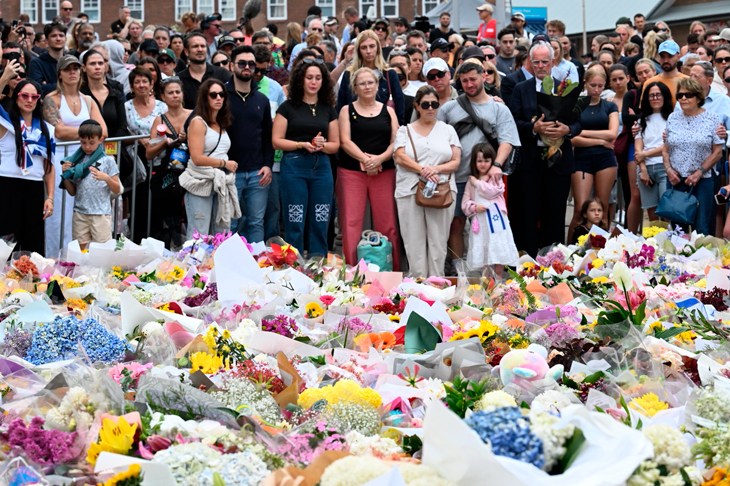
Australia has at least three antisemitic currents: far-right, Islamist and progressive, yet all three are dissolving into a Tiktoxic soup. The Bondi massacre has made this impossible to ignore.
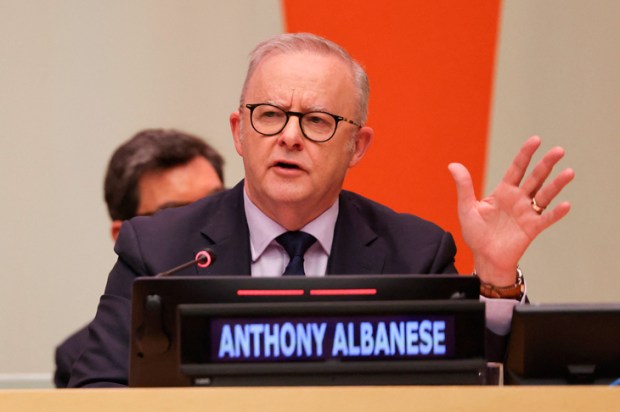
Leaving aside the reluctance of the Prime Minister to call a Royal Commission and the extraordinarily restricted timetable he gave it, he was always going to resist having his ministers dragged before it, let alone himself.
And even if they had appeared, they would have done their best to say nothing useful. The reality is the Royal Commission was never likely to solve Australian antisemitism. The subject is vast and its causes deep-rooted. What it has done is expose the poison that our political culture has spent years avoiding. Finding the antivenom will be harder.
Got something to add? Join the discussion and comment below.
You might disagree with half of it, but you’ll enjoy reading all of it. Try your first month for free, then just $2 a week for the remainder of your first year.