SBS has recently presented a four-part documentary series about the death of Kumanji Walker, who was brutally killed by a member of the Northern Territory police force while he was in his community of Yuendumu. Zachary Rolfe, the police officer who shot Mr Walker was, after a very detailed examination of the evidence, charged with murder. I urge you to watch the series with an open mind.
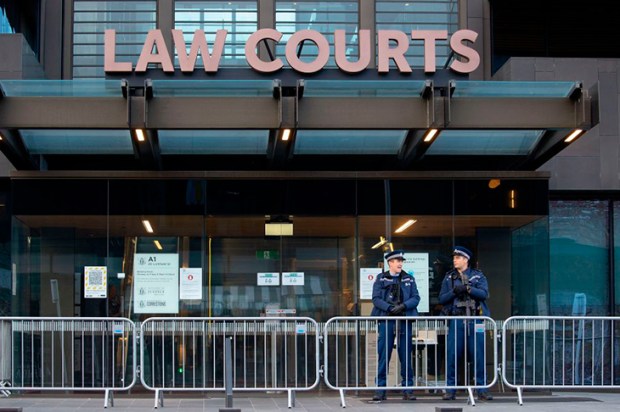
The police investigation into this incident lasted 18 months, Rolfe’s trial took five weeks, and the jury took seven hours to reach a not guilty verdict. Under normal circumstances that would be the end of the matter. But, to the Aboriginal lobby, this decision was not final. It did not mean that having been found not guilty, Zachary Rolfe was innocent. For the people of Yuendumu and many others, this was simply more evidence in support of their claim that Australia was irremediably racist. According to the Sydney Morning Herald, ‘The verdict inevitably caused anguish and despair for Mr Walker’s family and, more broadly, Indigenous Australians who believe – with some justification – that the justice system is stacked against them’ (‘Profound issues remain after acquittal in the Kumanjayi Walker case’. SMH 13/3/ 2022). What followed the decision in the murder trial was a coronial inquiry lasting from March 2022 to July of this year.
More recently, Samara Nangala Brown, who describes herself as a Walpiri woman and who claims Yuendumu is ‘a wonderful place rich in culture’, has been outspoken in her criticism of how the government handled this tragedy. Speaking to camera on the SBS documentary she says, ‘If we’re talking about truth-telling, then the world needs to see what happened to Kumanjayi Walker.’ Towards the end of the final episode, with tears rolling down her cheeks, she tells us that she frequently sought advice from Kumanjayi.
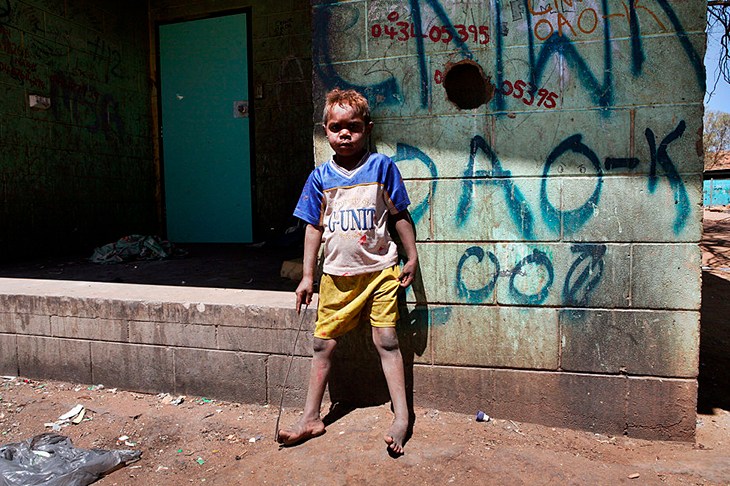
Unfortunately, the documentary currently being broadcast on SBS and NITV, is not about ‘truth telling’. It is about presenting a distorted account of the circumstances in Yuendumu which precipitated the confrontation in which Kumanjayi Walker was killed. What the documentary fails to acknowledge is that the Yuendumu community has to accept some responsibility for the death of Mr Walker. This man was in trouble before he was born. His mother continued drinking while pregnant and, by the time he was 12, both his parents, neither of whom were ideal role models, were dead, and he had a criminal record. Growing up in a dysfunctional society like Yuendumu only compounded the numerous disadvantages his parents had left him. Consider just two of the many examples which indicate how Yuendumu residents, and the culture in that community, contributed to the death of this man.
On 6 November, two police officers tried to arrest Kumanjayi and he charged at them with an axe. The officers retreated and told his grandmother that he should hand himself in immediately. No one in the community encouraged him to present to the police. Had they done so, he might be alive today. On the same day, the home of the manager of Yuendumu’s medical clinic was ransacked and, in the following two days, the homes and cars of all the medical staff in Yuendumu were attacked with shovels and pickaxes. Fearing for the nurses’ safety, officials decided to evacuate all medical staff and their families on the morning of 9 November. Had they not been driven out of the community, they may have had the expertise to prevent the death of Mr Walker. None of this is discussed in the SBS documentary. Instead, someone on screen asks, ‘We got a big clinic here. Where did all those people go?’
In 2024, Northern Territory Coroner Elisabeth Armitage handed down landmark findings from a major domestic and family violence inquest examining the deaths of Northern Territory women. She noted that at least 87 women had been killed by partners since the turn of the century, with over 82 being First Nations people.
So, how many of those 82 women, who were murdered by their partners, could you have named? The answer is, almost certainly, none and the obvious follow-up question is, why does the death of one adult male attract so much attention while the death of 82 murdered women is ignored or forgotten? The answer to this question is equally obvious. Whenever a black person is killed by a police officer it is national news, and the black lives matter mob will march for the benefit of the TV cameras. When an Aboriginal male beats his wife to death, it may get some mention on a slow news day but it won’t be given the same depth of coverage.
There may be some of what the left-wing media likes to call ‘structural racism’ in Australia’s various police forces. But no amount of cultural reform in those organisations will, in itself, reduce the amount of domestic violence in remote Aboriginal settlements. Nor will it have any substantial impact on the number of Aboriginal women who are murdered by their partners.
It is time for a genuine ‘truth telling’ which recognises that many of the murders of wives by Aboriginal males and the death of Kumanjayi Walker have, at a deep level, a similar cause. Social dysfunction in Aboriginal communities leads to a cycle of violence which becomes self-perpetuating. Aboriginal inhabitants of remote settlements kill more of their own community than police do. Yet the media still prefers to scrutinise the culture of the police rather than that of the communities in which they are supposed to keep order. We often inherit from our parents certain beliefs and patterns of behaviour. This is especially the case when those patterns are reinforced by living in a closed community with endemic parental dysfunction. Until such time as the culture in remote Aboriginal settlements can be reformed, the violence and criminality will continue and the Northern Territory police will be the whipping boys.
Got something to add? Join the discussion and comment below.
You might disagree with half of it, but you’ll enjoy reading all of it. Try your first month for free, then just $2 a week for the remainder of your first year.