The Weekend Australian recently published two jeremiads discussing the slough of despond formerly known as Great Britain. John O’Sullivan’s ‘How England Lost Control’, and Louise Perry’s ‘Why I’m leaving Britain for Australia’. Both argued that their former homeland is not so great anymore. According to these authors, Britain’s economic decline is largely due to a weakening of the social fabric which held the different social groups together.
This weakening has developed slowly and was multi-faceted. Both writers referred to the mass migration which has turned Britain from a unified nation with a broadly shared set of values, into one in which issues involving race and religion have resulted in conflicts that have fundamentally altered the character of the no longer united kingdoms. According to O’Sullivan, ‘Wide-spread riots seemingly by white working class crowds following the murder of three young girls in Southport by the adolescent son of Rwandan asylum-seekers were a visible sign of this transformation and of this unrest.’
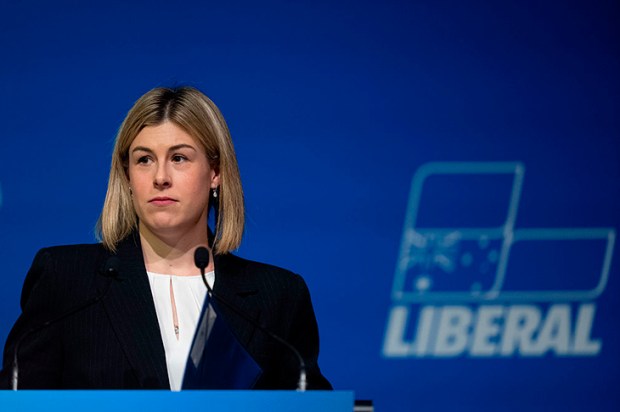
Perry tells us that she ‘started thinking seriously about leaving Britain in 2024, spurred by two things: my direct experience of the dire state of NHS maternity services, and my unease about the rise of Muslim sectarianism in politics. This was the year in which the ‘Gaza Five,’,a group of politicians who ran on an Islamopopulist platform, were elected to parliament. These candidates ignore the liberal universalist ideals that other British politicians are committed to, instead making explicit appeals to ethnoreligious solidarity.’
‘Meanwhile, the Pakistani Muslim-dominated cities of Birmingham, Oldham and Bradford have seen multiple cases of arson attacks on politicians’ cars in the lead-up to elections, as well as tire-slashing and threatening messages scratched into the paintwork. Violence is a feature of elections in Pakistan. Is it so very surprising that we are now seeing the same disorder in Pakistani-majority areas of Britain? Paying close attention to current affairs is part of my job, and it became apparent to me that British politics was changing, and not for the better.’
Both articles present a picture of modern Britain which most conservatives will accept but both fail to recognise that the problems that they discuss do not apply solely to the UK. The economic and social problems outlined in these articles apply, to a greater or lesser extent, to almost every industrialised Western democracy. Furthermore, both authors have failed to acknowledge that the partial deindustrialisation of Europe and the USA is also having a profound impact on those economies and the people who live in them.
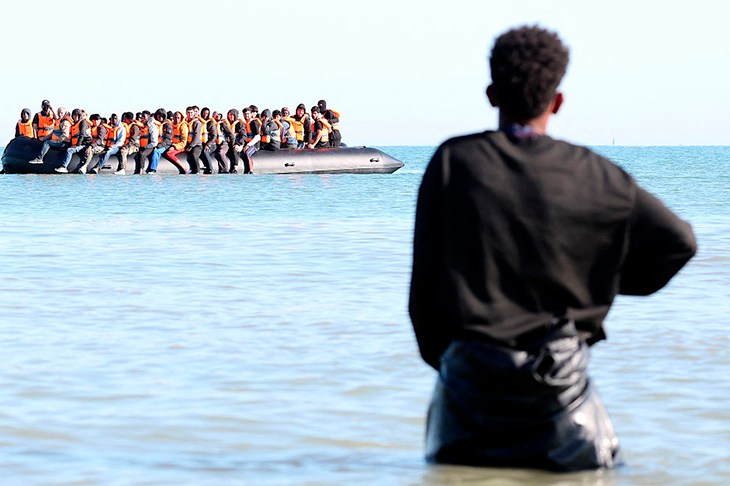
The mass migration of millions of people from the third world to the northern hemisphere democracies is not being, and cannot be, controlled within our present political systems. A report submitted to the European Parliament in 2018 found that, ‘the structural flaws and delays in the broader asylum framework carry a wider societal and administrative friction cost of roughly €50.5 billion annually’ – a staggering cost which must by now be even higher but the Europeans are having no more success than the Brits at controlling immigration by ‘asylum seekers’.
Australia has been saved from the problems facing the northern hemisphere’s democracies by what we should now call, not the ‘tyranny’ but the salvation of distance. We have also been largely spared the devastating consequences of the rise of China. The Industrial Revolution briefly turned Britain into the world’s most powerful nation. The impact on the two richest nations in Asia was catastrophic. In 1700 India’s share of global trade was almost 25 per cent. The development of machines in Britain which could weave fabric destroyed India’s main industry. By 1949, its share of global GDP had collapsed to 5 per cent. Britain’s industrialisation had a devastating impact upon the Indian economy from which it is, only now, recovering. The rise of Britain had an equally devastating impact on the economy of China which, following defeats in two ‘opium wars’, began the process of collapse which the Chinese now call the century of humiliation.
The balance of power between the Western democracies and the Eastern nations is now in the process of reversing. Britain destroyed the Indian and Chinese economies in the 19th century and, in the same way, China today is now taking the jobs which were once assumed to be unassailably tied to Western manufacturing. In 1953, 650,000 people were employed in the US steel industry. By 2015 that number had fallen to 142,000. A similar reduction applies in every European steel producer and, in almost all aspects of heavy industrial production, China’s economic dominance has resulted in what we now call the de-industrialisation of the West. The British shipbuilding industry and the American car industry are two of the most famous examples of economic decline, but a similar pattern of job loss can be found in almost every manufacturing industry in Europe, the UK and America with the exception of the aviation industry. India is decades behind China but is also contributing to Western economic decline by taking back office jobs from English-speaking countries.
Perry’s decision to move to Australia may be prescient. The inability of the Western democracies to prevent economic decline is exacerbated by the inability to control immigration. The prevailing ideology holds that migration from foreign cultures enriches nations and there is some truth in this. But the idea that migrants bring only the good aspects of their previous nation and not the bad is naïve. Some cultures are flexible and can adapt to change. The failure of Islam to moderate its demands and the expectations of its followers in the West is problematic. The gods of the Chinese and Indians, who are coming here in their millions, are less demanding.
Australia never had much of a manufacturing industry and will not suffer the same problems that deindustrialisation of the northern hemisphere’s democracies is causing. Similarly, our distance from the world’s trouble spots, means that we can decide who comes here and the circumstances under which they arrive. We remain, for the time being, the lucky country.
Got something to add? Join the discussion and comment below.
You might disagree with half of it, but you’ll enjoy reading all of it. Try your first month for free, then just $2 a week for the remainder of your first year.