Every so often, politics runs an experiment that no economist could ever design. Take one people. Give them the same language, same history, same food, same customs, same climate, and the same stretch of earth. Then draw a line through the middle, hand each half a different operating system and watch what unfolds.
This experiment was run twice in the twentieth century, in Germany and in Korea. Both times the starting point was poverty. Both times one half became rich and the other stayed poor. The result was so lopsided that it ought to have ended the argument for good. Yet the argument keeps returning, wearing new clothes, using new words and promising a better ending.
Begin with Germany. In 1945, the country lay in ruins on both sides of what would become the inner German border. The people of Leipzig and Dresden were no less educated, no less industrious and no less German than the people of Hamburg and Munich. Saxony had been one of the great industrial heartlands of Europe. Nothing about the talent of the people explains what came next. Only the operating system does.
West Germany chose private property, open markets, a sound currency, and the rule of law. In 1948, price controls were swept away almost overnight, and shops that had been empty for years filled with goods within weeks. An economic miracle followed.
East Germany chose central planning, collectivisation and a state that decided what would be made, what it would cost and who would be allowed to have it.
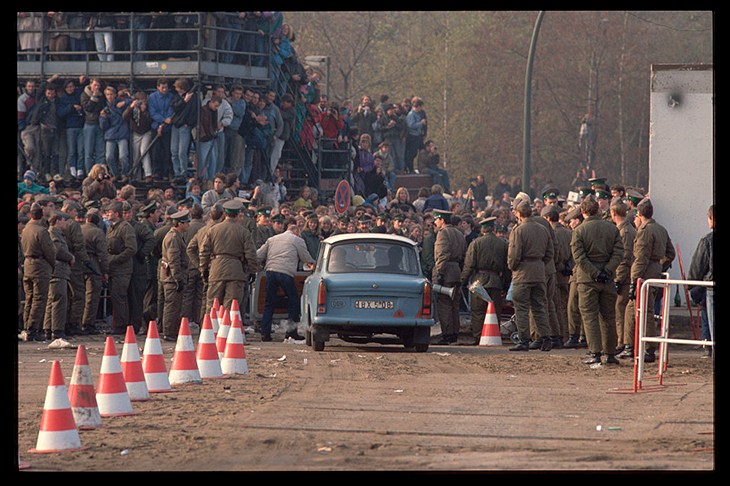
East German families often waited more than a decade for a Trabant, a small two-stroke car with a plastic composite body. Housing was allocated, not chosen. Shelves held whatever the plan had decreed, which was rarely what anyone wanted. And a state that promised equality and called itself a workers’ paradise had to build a wall, guarded by guns and landmines, and recruit an army of informers to stop its people leaving utopia.
When the Berlin Wall came down in 1989, the truth spilled out. Factories were decades out of date. Rivers and air were badly polluted. The output figures the regime had boasted about for years were fiction.
Korea is a starker experiment because the socialist half began with the advantage. There the experiment continues to this day.
When the Korean Peninsula was divided in 1945, most of the heavy industry, hydroelectric dams and mines built under Japanese colonial rule lay in the north. The south was largely agricultural and desperately poor. At partition, the North was the richer half per head. That lead did not last.
Pyongyang in the North followed the planning playbook to the letter: land collectivisation, state ownership of everything worth owning, a cult of the leader and an economy run from the top. Seoul in the South, for all its early flaws and its own spells of authoritarian rule, bet on exports, private enterprise, and integration with the world economy.
By the 1970s, the South had overtaken the North, and the gap has widened ever since.
Today the Bank of Korea estimates that income per person in the North is roughly one twenty-eighth of that in the South. South Korea builds the mobile phones in our pockets, the ships in our harbours and the cars in our driveways. North Korea suffered a famine in the 1990s that killed hundreds of thousands of its own people.
Look at a satellite photograph of the Korean peninsula at night and you will see the South blazing with light and the North almost entirely dark.
Socialism did deliver equality, of a kind, in both those socialist countries: equality of poverty and equality of misery. But not for everyone.
The East German Politburo lived in a guarded compound where a special store stocked Western goods that ordinary citizens could only dream of. In Pyongyang, the ruling family and a loyal elite enjoy imported luxuries, private resorts, and the best of everything, while the countryside goes hungry.
Every regime that promises to abolish the privileged class simply installs a new one, smaller, harsher, and accountable to nobody.
When the state controls the economy, power over the economy becomes the only power that matters, and those who hold it look after themselves first. Concentrating every decision in the hands of planners does not abolish greed. It merely removes every check on it.
Australia is not about to become East Germany or North Korea. But the direction of travel matters.
Commonwealth payments are forecast at around 27 per cent of GDP this financial year, and gross debt is now more than $1 trillion. Industry policy increasingly means Canberra is choosing which sectors deserve taxpayer backing.
Taxes are rising, regulations multiplying, inflation persists, productivity languishes, and each new problem, including those government itself created, is met with the same reflex for more government.
The people who champion this path are mostly well-meaning. They sincerely believe that a little more planning, a little more redistribution, and a little more state direction will finally produce the fair and prosperous society that markets supposedly cannot. That is exactly what the planners in East Berlin and Pyongyang believed too.
But Australia is setting up a different experiment. What happens when a rich country adopts, piece by piece, the policies that kept poor countries poor.
The result will be worse, not better. A poor country has little left to lose. A rich one has a great deal, and its wealth rests on capital, skills and investment that can leave far faster than they arrived.
It has been seen before. Argentina was among the richest countries on earth a century ago, and Venezuela the richest in South America within living memory. Both have spent decades showing how much a rich country can lose and how quickly.
The lesson of Germany and Korea is not that every tax rise leads to a gulag. It is that prosperity is not a fixed pie waiting to be sliced more fairly by wise officials. It comes from free people: free to trade, free to keep what they earn, and free to fail.
Strip these things away, slowly, or quickly, and the pie shrinks for everyone except those holding the knife.
Anyone who believes that Australia’s current policy pathway leads to utopia should spend an afternoon looking at the evidence.
Same people. Same culture. Same land. Different rules.
One half got Mercedes and Samsung. The other got the Trabant and a famine.
Got something to add? Join the discussion and comment below.
You might disagree with half of it, but you’ll enjoy reading all of it. Try your first month for free, then just $2 a week for the remainder of your first year.