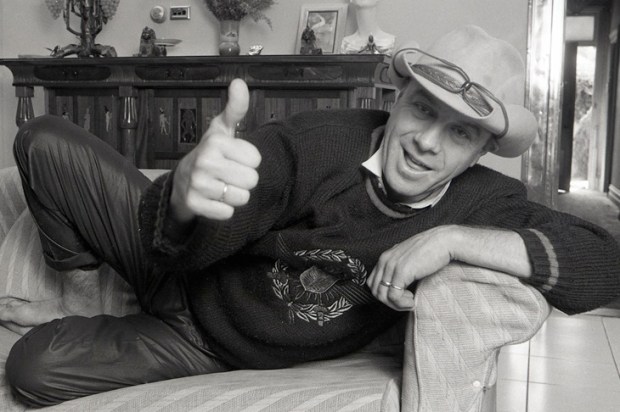
The American novelist Cynthia Ozick famously quipped, ‘Two things remain irretrievable, time and a first impression.’ My first impression of the Rev Hon Fred Nile, who died this weekend at 92, proved no exception.
At a 2001 Bible Society dinner in the Jubilee Room of NSW Parliament, I first encountered the seasoned parliamentarian, who even then, at the midpoint of his parliamentary career, was already considered a veteran!
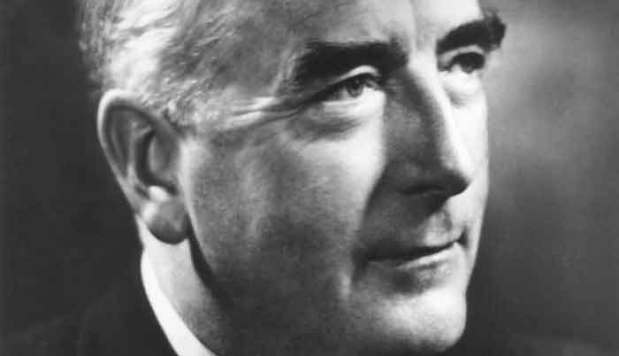
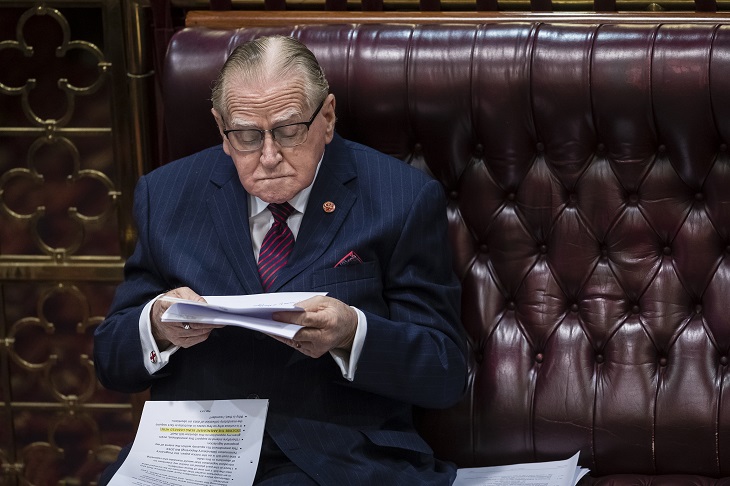
Sporting bushy eyebrows and a double-breasted suit, he exuded a distinguished Menzies-like presence that filled the room. Somewhat star-struck, I approached him with a little trepidation but felt immediately at ease with his affability and warmth. After placing his business card in my hand, a lifelong respect and admiration for this ‘happy warrior’ was ignited.
That first impression revealed two features about ‘Rev Fred of Macquarie Street’. As a professional parliamentarian respected across the aisle, he had presence and gravitas, yet as the son of a King’s Cross taxi driver and waitress, he never lost the common touch. He was just at ease rubbing shoulders with royalty in high places as he was mingling with everyday punters at the local club.
Born into a working-class family on September 15, 1934, Nile converted to evangelical Christianity through his local Congregational Church where he met and married his first wife, Elaine, who served alongside him in NSW Parliament for almost fifteen years.
Nile became a devoted evangelist for Jesus Christ, preaching the Bible as the written Word of God, receiving ordination as a Congregational Minister, leading Australia’s Christian Endeavour movement, and serving as Assistant Director of the 1968 Billy Graham Crusade in Sydney – a nationwide event that attracted a total attendance of 455,000.
Together with his Christian discipleship, Nile served his country in uniform as one of Australia’s national servicemen (‘Nashos’) in the 1950s and 60s. An unabashed Australian patriot, he cherished and revered our British heritage, especially in the monarchy and the Australian flag, whilst crusading against communism and rallying to defend our nation’s hard-won freedoms and Judeo-Christian inheritance.
Nile first came to public prominence in the 1970s with his leadership of the Festival of Light, a kind of forerunner to the Australian Christian Lobby, where he contended vigorously for Christian moral causes such as the sanctity of marriage, the protection of human life, and the pursuit of moral purity in opposition to pornography, gambling and drug use.
Yet it was his entry to Parliament that really put him on the national stage with his election to the NSW Legislative Council in the 1981 NSW state election. He would remain a fixture on the red leather for the next four decades, joining Billy Hughes and Philip Ruddock as one of Australia’s longest-serving parliamentarians.
Not content to confine himself to the ‘hot-button’ moral issues of abortion and LGBTQI law reform, Nile contributed to an exhaustive catalogue of policy areas including law and order, health, education, public transport and infrastructure, housing, Indigenous policy, the environment, energy, animal welfare, industrial relations, child welfare, aged care, and youth policy.
Right up until he finally stepped down from the NSW Legislative Council at 88, Nile routinely chaired parliamentary committees, bringing his policy expertise to matters as diverse as the sale of electricity infrastructure, road safety, asbestos insulation, gambling, children, and young people, as well as electoral and political party funding.
Contrary to what many of his critics both inside and outside the church would claim, Nile’s mission in politics was not simply about defending Christian morality, but helping to deliver public policy for the common good.
While Nile was frequently perceived as polarising, with his forthright stand on contentious matters invariably dividing public opinion, he was also a great unifier.
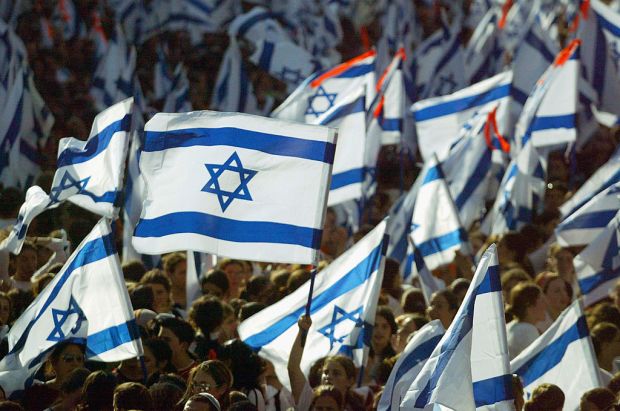
As a Protestant in the Congregational tradition, he followed in Menzies’ footsteps to transcend Australia’s sectarian divide. At one of his mass rallies in the 1970s, the Catholic and Anglican Archbishops of Sydney appeared together on public platform for the first time. Nile went on to co-ordinate a visit of Mother Theresa in 1981, met with the Pope, and stood shoulder-to-shoulder with Roman Catholic and Eastern Orthodox Christians in the defence of shared faith and values. Like Menzies, he became a great friend of the Jewish community, sharing their Hebraic heritage and affection for Israel.
Politically, Nile transcended the divide between the ALP and the Coalition. On economic policy, he was a centrist who steered a middle course between the libertarian right and statist left to envision a humane, free-enterprise economy with opportunity for all.
Whilst unabashedly conservative, he attracted both Menzian-style Liberals who applauded his faithful attachment to God, Crown, flag, and family, as well as the admiration of old school Labor voters who identified with his traditional working-class character and affinity for the poor.
Like any mortal human being, Nile was by no means without his flaws. Throughout his career, there were the mistakes and misjudgements, the gaffes, the personal fallouts, the poor optics of some of the street protests, and the ill-fated project of the Christian Democratic Party that could at times be his worst political enemy!
Yet for all these shortcomings, Nile was a courageous moral leader of immense integrity, wisdom, and prescience. While perceived by many as yesterday’s man who lost the battles on abortion, same-sex marriage, and euthanasia, he was also a visionary who will ultimately be vindicated by the course of history.
With the public coming to better appreciate the harms of gambling, pornography and drug addition, as well as the resurgence of anti-Semitism, the veteran crusader was well ahead of his time when he sounded the alarm on these perils decades earlier.
Far from his causes and ideals becoming dead and buried, they have enjoyed a new lease of life with youthful figures such as the late Charlie Kirk, Freya Leach, and other young conservatives carrying on his baton to champion faith, family and patriotism.
In the words of the Apostle Paul, Frederick John Nile had ‘fought the good fight, finished the race, and kept the faith’. Long after he is laid to rest, this ‘mighty man of valour’, will be remembered fondly for not just his avuncular touch but for his courage, character and enduring vision for a more righteous and just world.