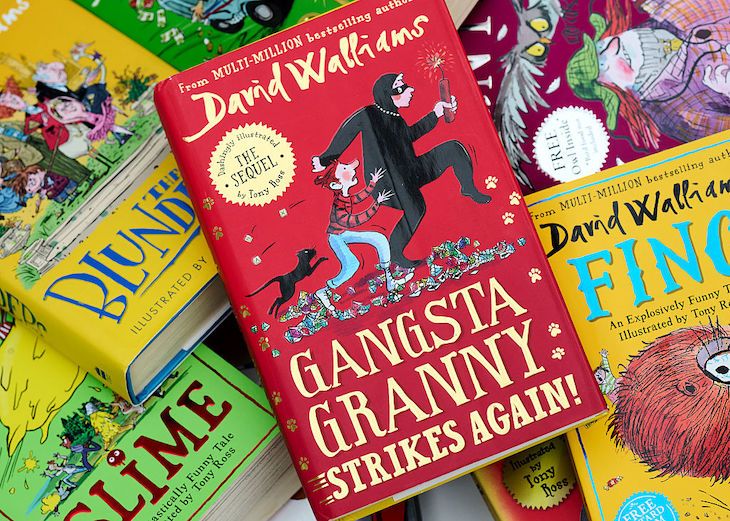
Make the case for separating the art from the artist, and we usually think of David Bowie and his life-affirming back catalogue, Pablo Picasso and his heralding of an artistic movement, or perhaps the grizzly Charles Bukowski and his thousands of poems. Who would have expected the ethical dilemma to touch the co-creator of a show criticised for depicting characters in blackface, and his children’s books featuring a gangsta granny and a South Asian shopkeeper called Raj?
When Walliams’ debut children’s book was released, I remember it struck a strange chord. Why him? Why this book? Why him? For kids?
But here we are. So what should be done about David Walliams’s books and TV shows following the publication of allegations of sexual misconduct against the actor, which he denies?
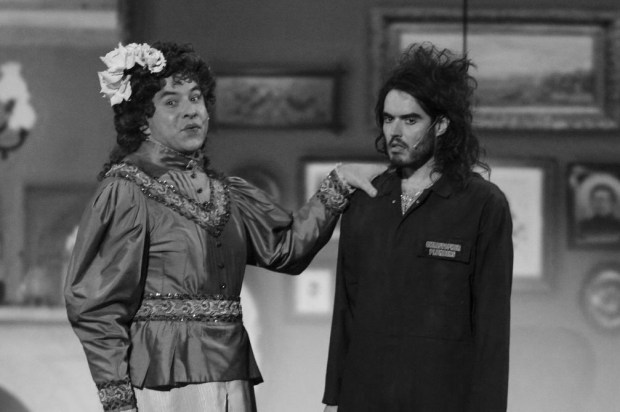
It’s worth rolling back the years to 2008 to ask why anyone at HarperCollins thought it was a good idea for Walliams to write kids’ books in the first place. That was the year The Boy in the Dress – a knock-off Roald Dahl impersonation – was published. But what signalled that Walliams was the right children’s author to pen this particular story about gender? Well, he famously had a cross-dressing fictional character, Emily Howard, whose catchphrase “I’m a lady” was mockingly proclaimed while wearing a Victorian dress and doing manly things. It must have been that.
I was only a teenager when Little Britain came out. And when Walliams’ debut children’s book was released, I remember it struck a strange chord. Why him? Why this book?
But someone saw his comedy show criticised for its punching down and cacophony of racist, sexist, homophobic jokes, and said: Yes, this is the man who should be writing books for children. At the 2004 British Comedy Awards, Jonathan Ross had joked that the ceremony, then 15 years old, was drunk and probably going home with Walliams. Our new Jacqueline Wilson. We must publish multiple books a year!
Any lowly writer like me knows that the publishing business puts money behind priority authors and then pays very little in money and marketing to the leftover majority. The fact that HarperCollins UK secured Quentin Blake, Roald Dahl’s illustrator, to work on Walliams’ early books is an indicator of the commercial weight they put behind him. Those quaint scratchy scribbles were meant as a subliminal message to parents. A sign that they had chosen him as a beloved children’s author for the ages, Dahl’s natural successor.
Perhaps it’s my lingering teenage suspicion, but I suspect not: Walliams’ children’s stories have always seemed…weird. “Gangsta Granny”, a homeless man called “Mr Stink”, the recurring shopkeeper being South Asian, a girl being called a “slag”?
There were loud echoes of the same Little Britain ideas: working-class people generally being greedy or gross, and women being typically annoying, shrill or bad. It wasn’t until 2021 that Walliams’ publisher removed the story “Brian Wong, Who Was Never, Ever Wrong” from The World’s Worst Children after complaints that it was racially stereotyping.
From 2020 onwards, you’d assume HarperCollins was under pressure to act regarding the children’s author. His “contributions to culture” in the form of Little Britain and Come Fly With Me sketches were being reassessed in light of Black Lives Matter.
Old clips of Walliams on tour playing his fictional kids’ entertainer showed him pulling a young man’s trousers down. One woman – who as a 17-year-old had met Walliams backstage at Britain’s Got Talent – sent widely-seen Tweets about how grimly normalised it was for a man in his forties to be inviting girls into his dressing room. Yet ex-HarperCollins employees told the Guardian that, at that time, managers assured them any Twitter discourse would blow over. A spokesperson for HarperCollins said the company took “employee wellbeing extremely seriously”.
HarperCollins opened an internal inquiry in 2023 after a junior employee raised concerns. It ended in 2024 with no consequences for Walliams, according to the Guardian, and the Telegraph reported that one woman who raised concerns left with a five-figure payoff and an NDA. Walliams’s spokesperson said he was never told of the investigation or given a chance to respond. His kids’ books continued to be published until December 2025, when HarperCollins said it would publish no new titles, “under the leadership of its new CEO.” The publisher stopped selling his back catalogue later, in September 2026.
Depressingly, the trend is well-established. Women can whisper and whisper and even officially complain all they like, but as long as one man’s voice is making an industry – any industry – a lot of money, it’s unusual for much to be done until the axe cannot be held suspended for any longer. The axe typically involves an extensive media investigation and mass public disclosure. It all epitomises a wider culture in which no one is willing to take responsibility for platforming certain individuals, including the audiences who enjoy their work.
Most of us have made our own judgement calls and moved on when it comes to moralising over artists, but a new slant on that issue presents itself now. Is there a duty of care when it comes to whose children’s books get published, especially the ones treated as too big to fail?
People are not all light or all dark, of course, but shouldn’t we ask, as publishers, parents, readers: does this person have an open heart? Do they tend to see the good in people? Do they tell stories that matter, in a way that honours a child’s naivety, and nurtures their willingness to be kind to others?
Years ago, Walliams said that Roald Dahl was his childhood literary inspiration. It was Charlie and the Chocolate Factory, he said, that captured his imagination at age 11. Much like its hero Charlie Bucket, Walliams was presented with the golden ticket to a whole factory in which he could see his visions come to life and be sold all over the world. Walliams and his family would never have to worry about money again.
The BBC may have kickstarted David Walliams’ story of fame but it was the publishing industry that presented him with the golden ticket.