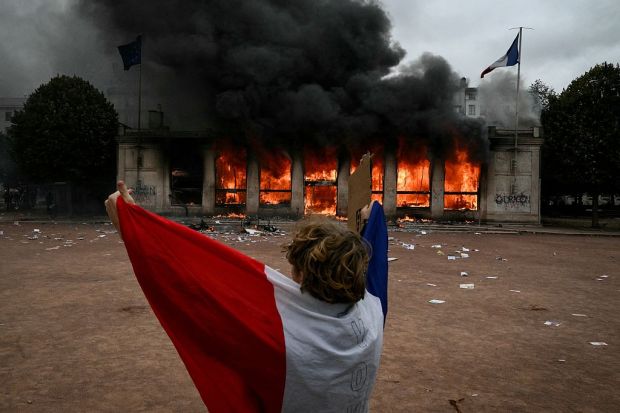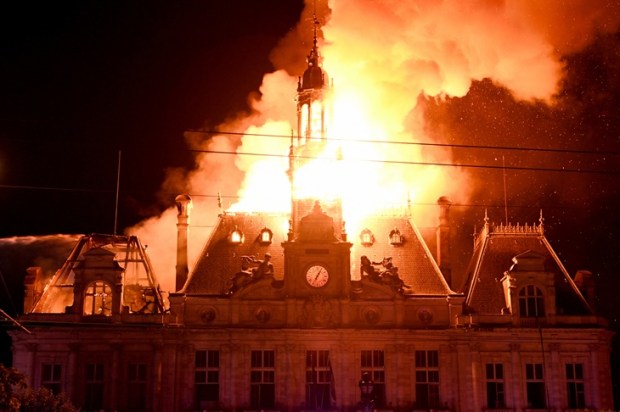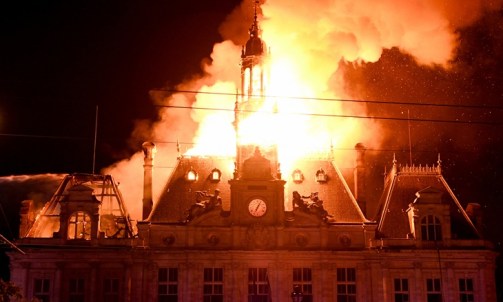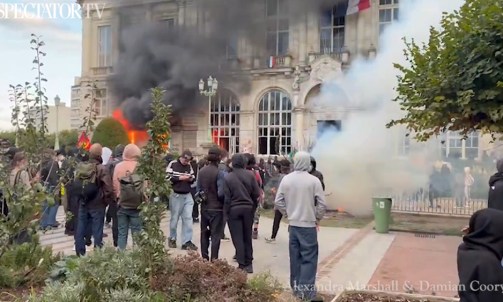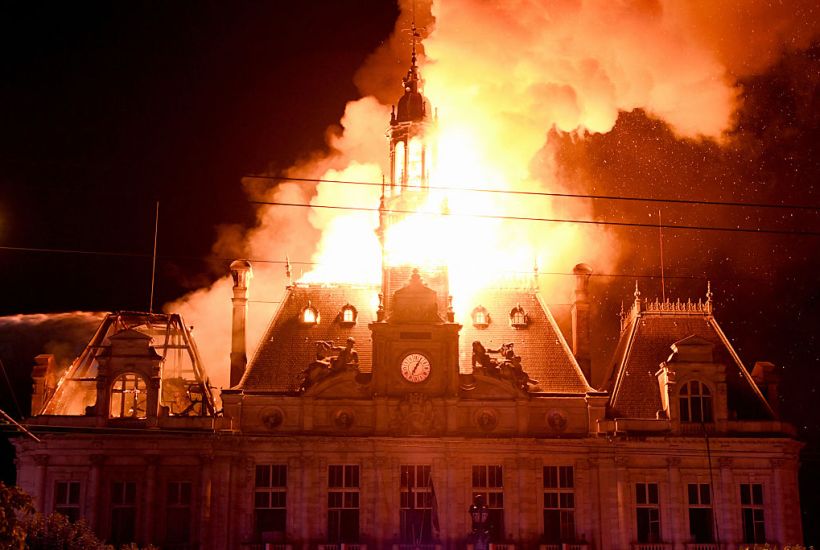
On Bastille Day, 1883, the people of Limoges inaugurated a beautiful new town hall, paid for from the legacy of a rich burgher with no children. On Saturday, rioters set fire to it.
‘Barbarism is not the prehistory of humanity but the faithful shadow that accompanies its every step.’ That was Alain Finkielkraut, but I know it because Clive James quoted him when he wrote of how to keep our societies and values alive. He said we liked to think being cultured warded off barbarism, but that barbarism doesn’t care if we are cultured or not. He was only half right. Barbarism does care: it hates us for being cultured. Barbarism, whether imported or home bred, wants to see our culture burn.
Societies fall when they despise their own achievements
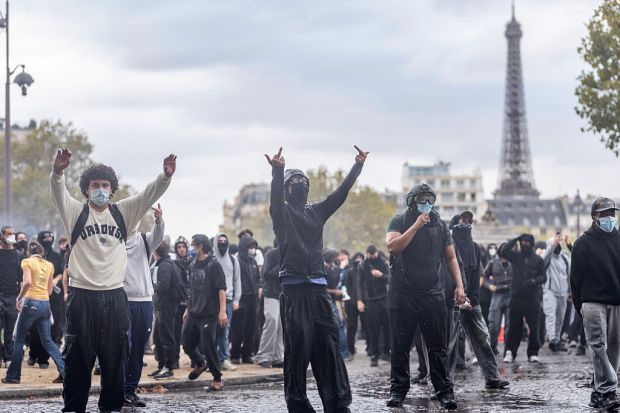
You will have seen the images of masked hordes throwing missiles at the police – including chimney pots chucked from roofs with vicious intent – and raiding shops from Louis Vuitton to whatever is the French equivalent of JD Sports.
Le Figaro carries JD Vance’s argument blaming immigration by those who hate western liberalism, and hate France. The paper talks of guerrilla war and left-wing demagogues. Le Parisien sounds apocalyptic; Le Monde writes of hundreds of thousands of ordinary demonstrators, but of others wreaking violence on a scale to threaten the republic.
In 1972, during Nixon’s visit to China, the Chinese premier Zhou Enlai was asked about the impact of the French Revolution. ‘Too early to say,’ he famously replied. Lovely, to think this wisdom about the slow fuse of consequence. In reality Zhou was thinking of the riots of 1968.
During those riots a young Roger Scruton watched cobblestones being ripped from the streets of the Latin Quarter for use as missiles against the police. ‘I suddenly realised that I was on the other side,’ he later said. ‘I was disgusted by it, and thought there must be a way back to the defence of western civilisation against these things. That’s when I became a conservative. I knew I wanted to conserve things rather than pull them down.’
The Duc de la Rochefoucauld said that in the misfortunes of our best friends we always find something not displeasing to us. My pleasure in the struggles of the French, my British birthright, ended the moment I wondered whether we might be next.
French public sector spending consumes an even higher proportion of national income than ours. Their government takes more from those who work than ours does, and gives more to those who don’t. The result has not been a surplus of public satisfaction, or a wealth of well-functioning public services. Dissatisfaction with education has undoubtedly contributed to the current civil unrest.
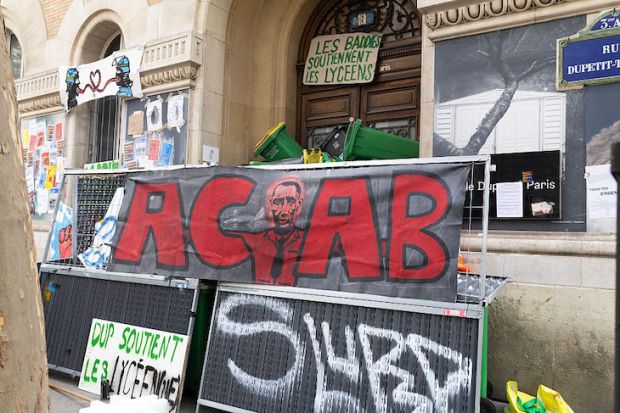
What underlies it is darker. The youth of France has traditionally rebelled against the bourgeois generation above it, before going through the normal transition to become the orthodoxy it once felt so strongly opposed to. But since the student riots of 1968 the support for bourgeois values that once underpinned western liberal democracies, and defended them against the frontal assaults of Marxism and fascism, has been undermined from within. High culture has been deemed worth no more than low, the great achievements of modernity a facade for capitalist oppression and a betrayal of the people. What began as criticism has ended with contempt. Societies fall when they despise their own achievements.
We live in better times than the world has ever known. We live longer, our children are less likely to die, literacy is normal while hunger is not. Slavery, which was once normal in societies, is vanishingly rare. Freedom has flourished. Over recent decades we can spy declines; over past centuries advances that cannot be honestly denied. Why, then, do so many people seem to hate what we have become?
Whatever the answer, the streets of France have been seized by barbarism. Ugly, violent, dedicated to envy and cruelty and destruction. Too early to say what happens next, but not too early to say what needs to happen. We aim for a society built on trust, but that does not spring up by itself. Cultural confidence needs muscle. Love of honesty begins with fear of the law.
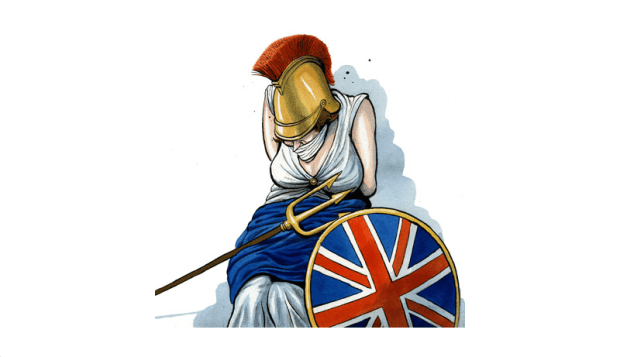
The wife of our National Security Adviser explains on social media that Hamas ‘won power in fair 2006 elections’ and was ‘blackballed.’ Sadiq Khan is proud of modern London, his pride oddly untempered by anti-vehicle attack barriers – diversity bollards – now permanent in our civic architecture. The Union Jack and the St George’s Cross are treated as symbols of racism, not pride, while Palestinian flags fly as freely as they did on Saturday’s Place de la République. Too many of those in charge of western societies seem uncertain whether they deserve to be defended.
What is going on in France is a European problem, a western problem. If barbarism is not to triumph, order must be maintained. Liberal values are new in history. Most lives are no longer brutish and short. The bourgeois lives in which freedom has flourished, and which built beautiful ordinary civic buildings like French Hôtels de Ville, must be fought for. Civilisation, like the porcelain of Limoges, is difficult to build, easy to break.