Once upon a time, there was Camelot, when the world was ruled by US President John F. Kennedy and his wife, Jackie. They were a glamorous couple who could have starred in an American movie, and sort of did.
Australians were part of that innocent world and then we too had our own collisions with reality. Lessons were learnt from the noisy final decades of the 20th Century. The Easter Rabbit is not a little hopping Bilby. Aspirations for the peso, and a South American regime covered in gold braid, sunglasses, and armed forces were worthless.
Today, we are still dealing with the loss of innocence. One popular answer was to find a spiritual Guru. Although the Beatles found that their spiritual Guru was unaccountably interested in their girlfriends.
Perhaps development gurus are a better bet. Nobel prize winner Daron Acemoglu is one of the most famous and has just written a new assessment.
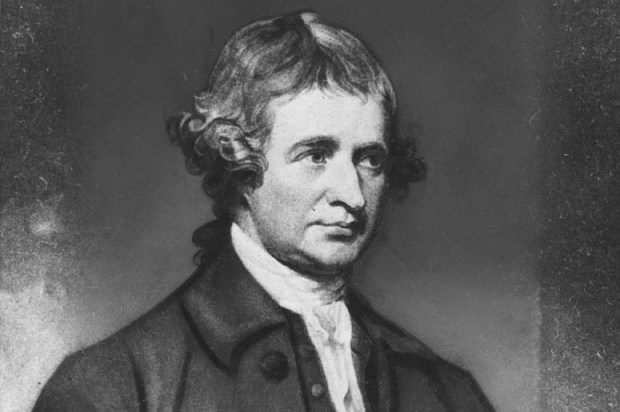
In What Happened to Liberal Democracy? he says that early 17th Century Britain agreed that ‘it is unnatural for the people to govern or choose governors’ as a philosopher said. This was ‘divinely ordained’. It took 18th Century philosophers such as John Locke and the English Civil War to ‘cement the notion that sovereignty rested with the people’, a view which then ‘started becoming second nature to British people’.
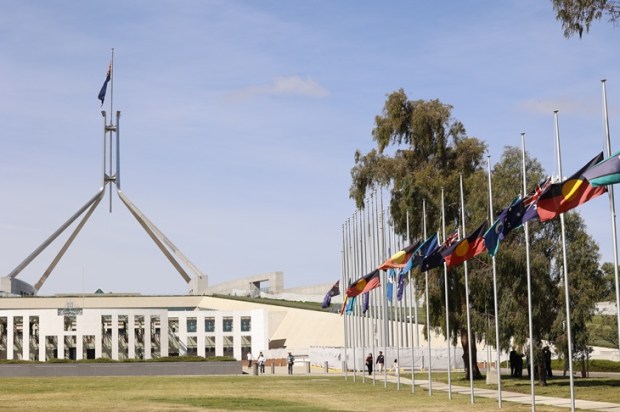
Australia was fortunate in choosing British colonists. They brought this idea with them. It is the foundation of all Australian parliaments and liberties.
I remember listening to one of the most accomplished historians of our time speak about Alfred Deakin’s five ‘principles’. He could not bring himself to mention Britain. He would have preferred to ‘let slip the dogs of war’ and kill Redcoats, was my impression. Australians are chronically unable to speak the language of their own constitutions, freedoms, and history.
It is a problem, because as Acemoglu says, ‘working-class liberalism’ needs a ‘common identity that transcends local, specific identities, and communities that bring people together rather than further polarising them’.
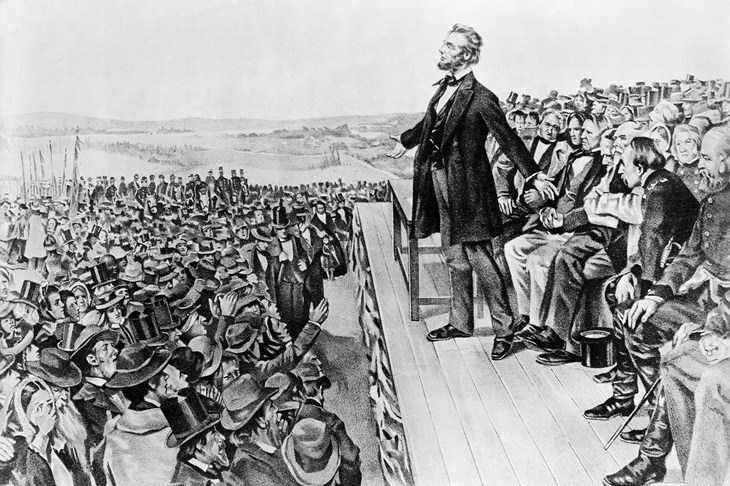
Abraham Lincoln’s address after the Civil War battle of Gettysburg in 1863 does this for America, he thinks:
‘That government of the people, by the people, for the people, shall not perish from the Earth!’
Where is Australia’s Gettysburg address?
We have a hesitating, embarrassed silence about the origins of our remarkable freedoms. Even though it is clear that Edinburgh in Scotland is not named after the wonderful Edinburgh Gardens in Melbourne. I checked.
So that is the first change that is needed. Our intellectual life has to learn to speak the language of Australian freedoms, parliaments, and Constitutions. We need a simple explanation of how the people were given voice by our comparatively beneficial history and ideas, a ‘great history’ as a former Prime Minister said last week.
Acemoglu does not suggest we ignore problems. Nor should we ignore the problems that we escaped, such as the violent absolutism of Europe and South America, or the Asian region.
Acemoglu comments:
‘Any immigration policy that eschews the need to build citizenship will ultimately damage democracy and self-government.’
He suggests ‘broad buy-in from society for its policy priorities … is necessary for a stable policy on any topic, and certainly on contentious ones like immigration’.
Which we consistently ignore:
‘The [immigration] program is not identified in the public mind with the national interest…’ (Fitzgerald Inquiry, 1988)
We also often appoint narrowly based commissioners to address specific contentious areas of government, which undermines Parliamentary responsibility. Some of these commissioners may be less than persuasive in their public presentations, reflecting their narrow background. To such an extent that one of our most successful recent Prime Ministers had little regard to ‘human rights’ advice in relation to the Tampa refugee and immigration crisis in 2001 (Kelly, The Australian 2026).
Many or most issue-based commissioners might be replaced by Assistant Ministers, or the Department, administered by a Minister responsible to Parliament. Or by parliamentary committees.
Then the Minister can be held to account for failings. My own attempts in the past to draw attention to truly odd statements made by issue-based commissioners were met by the Ministerial answer that these commissioners are ‘independent’. This was an abrogation of Ministerial responsibility.
Acemoglu says: ‘Certain Muslim communities in Britain have invoked their religion and traditions to impose sharia law and other practices that violate people’s basic freedoms or right to exit.’
His answer is adherence to ‘basic liberal principles’.
Citizenship should not be prevented by a ‘racist or supremacist narrative’, he says. Any sort of convincing positive narrative may be a struggle for us. ‘Supremacy’ is several galaxies away. Although there is a main actual ethnic source for our original liberties which should not be hidden.
Acemoglu briefly deals with ‘climate change’, but without mentioning the damage that higher power prices do to the standard of living of working-class people.
Nor should we ignore the fact that Australia cannot hope to rebuild a manufacturing sector without ensuring that cheap and reliable power is available to make the sector even remotely viable and competitive. And how important this is to our defence effort at a time of great geopolitical danger.
Acemoglu makes the point that ‘a robust safety net is core to the working-class liberal agenda’. So too is the need to pay for it. This requires a priority to be given to economic growth, and further investment and industry.
Australia has a ‘great history’. Why not show this by quoting the Parliamentary debates and ordinary industrious people that step by step developed the country from the Pilbara to Mount Isa?
The Easter Rabbit is not a Bilby. We are not a South American regime covered in gold braid, sunglasses, and armed forces. Wednesday is still named after Woden, Thursday after Thor, although not many sacrifice cattle or sheep anymore. We function, even function well, within a cultural tradition. Even if there are sub-cultural traditions of sheer lunacy.
The Hon. Reg Hamilton, Adjunct Professor, School of Business and Law, Central Queensland University