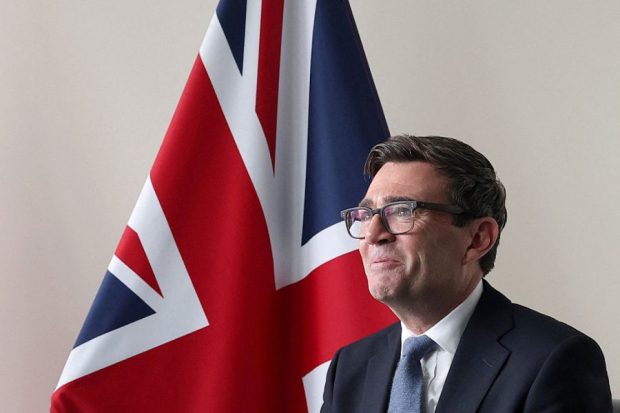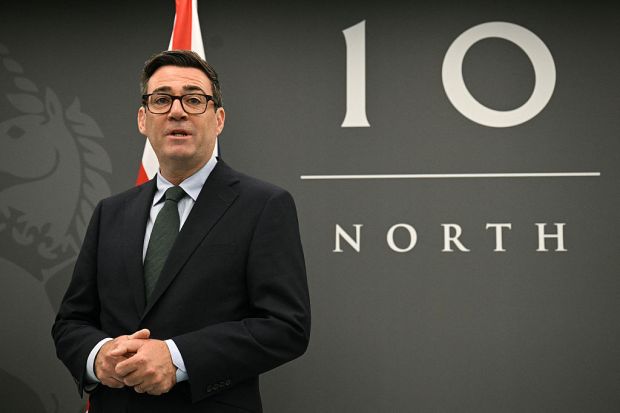

For Andy Burnham the biggest challenge is to avoid going down like Gordon Brown, who passed up the chance of calling an election in autumn 2007, when he was newly in office and public opinion of him was still quite high, only to crash to defeat two and a half years later. The memory of that time, when Burnham himself was health secretary, has no doubt fed into the reports that Downing Street advisers are considering the case for an election next spring.
Has the moment of the progressive alliance finally arrived?
The bad news for Burnham is that the decision is even more difficult for him than it was for Brown. He would be giving up a massive majority, and for what? Almost no one thinks that he can win any kind of majority. On the other hand, until he wins a personal mandate he will remain the prisoner of Labour’s 2024 manifesto, which he doesn’t seem to like very much, as it promised no changes to the main rates of tax, while offering little in the way of nationalisation.
Could Burnham settle for the much-fabled ‘progressive alliance’ instead? This has been a favourite of left-wing academics for years: the idea that parties of the left could unite and form a natural majority which keeps the right out of power pretty well forever after. But it has always been a bit of a fantasy for the simple reason that the parties of the left are a lot more divided than the left-wing academics like to believe. Labour and the SNP, for example, have a fundamental disagreement over Scottish independence. The Greens don’t like economic growth, and the LibDems are an incoherent alliance of big-state people, economic liberals, CND types and outright fruitcakes.
But has the moment of the progressive alliance finally arrived? What should terrorise the right is the astonishing differential in the fortunes of the Green Party in two by-elections in the North West this year. In Gorton and Denton they won with 40.7 per cent of the vote. In Makerfield they managed just 0.7 per cent; this, in two constituencies which are only 25 miles apart and which you might think would be similar political hunting grounds.
What happened? The Left was showing an astonishing discipline in tactical voting. It turned Green to try to force Keir Starmer leftwards, then backed Burnham to dump him and usher in what it felt would be a more left-leaning PM. It is as if there is a large blob of left-wing voters invisibly acting together to pull off a victory which no political strategist could ever plot.
Right-inclined voters, by contrast, are showing no such interest in tactical voting. This is in spite of arithmetic apparently being on the side of the right: Reform UK is peeling off many traditional Labour voters; the right-hand side of the political scales ought to have gained weight.Yet Reform UK, the Conservatives and Restore are all underperforming. Away from Clacton, they are not winning by-elections.
Plenty have called for Reform UK and the Tories, or Reform UK and Restore, to settle their differences. But that is not really going to work. Voters tend not to like parties ratting on their principles, doing deals with the opposition. The likelihood is that it would end up producing even more splinter parties.It is Judean People’s Front syndrome.
The point about tactical voting on the left is that it is not provoked by the parties of the left, but has bubbled up from the voters themselves. It is Marx’s great impersonal forces of history delivering for the left for once. With the political map atomised into a four-, five- or six-party system, the next election is sure to be won by whichever side, right or left, masters tactical voting most comprehensively. At the moment, the left is winning hands down, and Burnham looks like being the winner, at least initially.
The big negative is that a coalition with the SNP, should it come to that, will likely bring about the break-up of the UK and Westminster taking a permanent rightwards turn as Scottish MPs left. That is another risk that Burnham will have to factor in before taking the jump for an early election.