Since 2014, Oxford University Press has been tracking the Children’s Word of the Year, and the results reveal interesting truths about the emotional landscape young people are growing up in. Children do not choose toys, trends, celebratory events like the Olympics, or, well, anything remotely childish. Instead, they choose weighty words associated with current affairs and adult concerns: refugee, Trump, plastic, Brexit, coronavirus, anxiety, queen, climate change, kindness and peace. Many of the runner-up words – AI, war, conflict, chaos, challenging – also hardly encapsulate childlike wonder and joy.
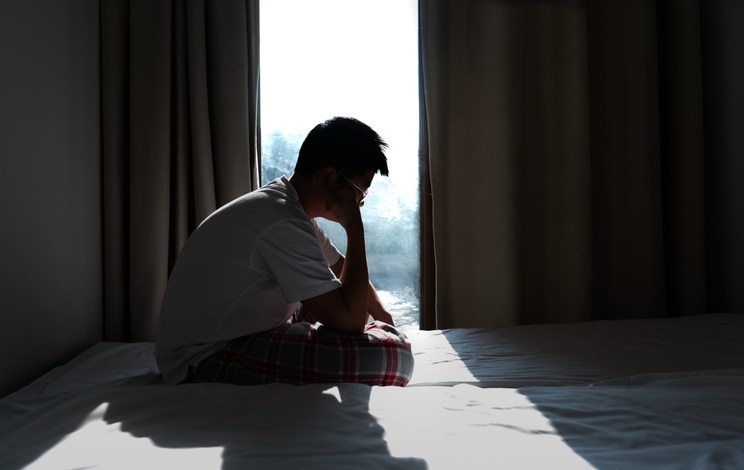
Children and young people are indeed unhappier than ever. For years now, research studies looking at unhappiness across our lifetimes have found a U-shape: happiness falls from a high point in youth and then rises again after middle age. Yet new research on wellbeing shows this established pattern has changed: we now see a peak of unhappiness among the young, which then falls with age – a change not due to middle-aged and older people becoming more satisfied, but because of young people becoming less so. This ‘happiness recession’ is particularly acute in the UK: a quarter of British 15-year-olds now report having poor life satisfaction (the highest in Europe), whilst a record 70,000 under-18s are prescribed antidepressants each year.
It’s easy to blame young people for not having a backbone, but they are our modern-day Frankenstein monster
It’s easy to dismiss young people’s unhappiness on them being ‘snowflakes’. Actress Jemima Kirke was once asked what advice she would give to unconfident young women, to which she replied, ‘I think you guys might be thinking about yourself too much’: a pithy response which encapsulates how young people can be seen as self-indulgent, self-interested and neurotic. Yet this week Professor Peter Fonagy, who has led an independent review into mental health, ADHD and autism in young people, said that we need to counter this narrative that young people are inherently fragile; younger generations face ‘real serious challenges’ which mean that the rise in ‘mental distress’ is ‘real’ and not just self-reported.
Indeed, when one thinks about the environment children are growing up in, sometimes it’s a wonder that more young people aren’t struggling. Let’s look at a modern-day upbringing, starting with toddlers, who are now more likely to spend time inside on iPads than outside on playgrounds. The average two-year-old watches screens for over two hours a day, with 60 per cent of pre-school-aged children using their own tablet by the time they are four. The loss of play-based childhood continues through primary school: our obsession with safetyism and supervision (how many playgrounds nowadays even have monkey bars?) means they no longer learn resilience and risk-taking: fewer than 25 per cent of children travel home from school independently, compared to almost 90 per cent in the 1970s.
Teenagers nowadays then have to face all the usual trials and tribulations of normal adolescence – raging hormones, complex social dynamics, awkward first sexual encounters – while still umbilically tethered to smartphones and social media. It is no surprise that young people are so risk-averse when growing up online means fear of digital humiliation: no one wants a forgotten comment, unwanted image or embarrassing moment going viral. This constant scrutiny means constant reputation management, but also constant self-comparison. Crucial life experiences or milestones, like going to your first gig or travelling abroad with friends, are diluted because, as the sociologist Sherry Turkle puts it, they are ‘forever elsewhere’.
This isn’t even taking into account the type of content teenagers are watching. Of course, there are the obvious dangers of more ‘extreme’ content like hardcore porn, radical ‘manosphere’ podcasts or ‘thinspo’ pro-anorexia blogs. But what about the more ‘normal’, but still tonally-conflicting mishmash that gets consumed everyday? What does scrolling between videos of funny cats, footage of children getting blown up in Gaza, clips of comedians doing bits and adverts for endless conspicuous consumption do to a developing teenage brain? What about all the messages broadcast on TikTok that glamourise and oversimplify mental illness, whilst pathologising normal adolescent behaviours like ‘struggling to concentrate’ or ‘having a messy bedroom’?
There are dozens of other environmental pressures I could mention: exam stresses, economic and employment uncertainty, loss of community and social isolation, schools and parents telling children to constantly check in on their feelings. It’s easy to blame young people for not having a backbone, but they are our modern-day Frankenstein monster. We have allowed this strange social experiment in which young people have been over-protected in the real world and under-protected in the online one, sustained by dopamine and distractions rather than endorphins and exercise. Every day, young people are exposed to levels of information, news and stimulation that were simply inconceivable a decade or two ago. It should be no surprise that their developing brains cannot cope, or that they feel despondent when all they see in their future is permacrisis. After all, wouldn’t it be lovely if the Children’s Word of the Year next year was finally something more positive, like hope?