Farewell to Eden, Sebastian Faulks’s 18th novel, is a timely masterpiece; a riveting story of war and lost love across two scarred terrains: postwar Britain and Palestine in 1946. It’s a profound meditation on morality, faith and music. And a murder mystery to boot.
It’s 1951 and we meet the solitary Philip Deval, an ex-army man with a degree in philosophy. London’s ‘shrapnel scars’ and paucity of work push him to take a job at a school called Witchelm. On his first night, smoking in bed, he murmurs a peculiar thought aloud: ‘Christ, how long can I get away with this?’ Clues snake through the novel to reveal an ingenious denouement.
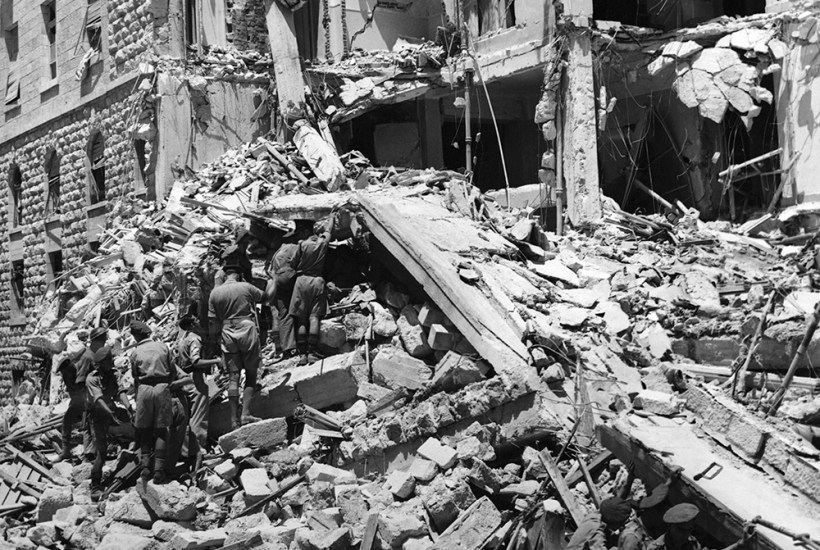
Faulks flashes back to Palestine in 1946. Philip has signed up to join the Sixth Airborne Infantry, deployed as ‘peacekeepers’ in the dangerous triangulation between the British mandate, Jewish resistance groups and the Arab population. He lodges in the Stella Maris monastery in Haifa, overlooking the Bay of Acre. Between carrying out inspections and the manual labour of pulling body parts from the rubble of the King David hotel bombing (by the Irgun), the Brits go duck-shooting, visit brothels, eat falafel and discuss the problem of dividing this ancient land that has been occupied by so many peoples over time: the Byzantines, Ottomans and Romans. We are reminded that Jerusalem is a city of ‘buried layers’, where ‘a mosque was built on a temple on a ruined church’.
Faulks presents the problem of Palestine as a Gordian knot. As the army officer Colonel Knox wryly comments: ‘It’s a promised land… I just wish it hadn’t been promised to quite so many people.’ Philip ruminates that mankind has split the atom and mapped the planets, yet ‘politics was the thing that people couldn’t do. In the end they would opt for massacre.’ Anti-Semitism is acknowledged as ‘at the root of everything. Without it, there would be no need for a Jewish state.’ But Faulks also offers the Arab counter-argument: ‘If you gave every country back to the people who’d lived there 2,000 years ago, you’d have to redraw the map of the world.’ An Arab, Mousa, reasons that in this case England would be handed to the Romans, Italy to the Visigoths and France to the Franks – a collection of West Germanic tribes.
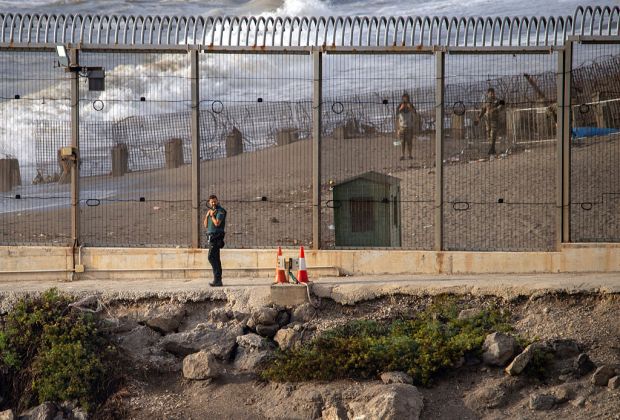
The spectre of the Holocaust hangs over this debate and Faulks does not shirk it. One harrowing scene depicts a boatload of Jews trying to ‘make Aliyah’ (return to the homeland); but due to the Jewish immigration quota into Israel, they are told by the British to go home, the bitter irony being that in many cases ‘home’ meant Germany. The Jews in limbo are housed in a camp with barbed-wire fences. Many of the girls are pregnant because the Jewish Agency prefers to usher in ‘two Jews for the price of one’. Some charitable men willingly oblige.
There are wonderful moments of lightness and wit. One vignette, worthy of Blackadder, tells of Philip and the British soldiers putting on The Importance of Being Earnest for Christmas Eve with Arabs, Jews and Christians in the cast and audience.
June 1947 heralds the arrival of ‘Unscop’ (United Nations Special Committee on Palestine), made up of 11 delegates from 11 countries, and the tensions in this cauldron have disastrous consequences that will haunt Philip for the rest of his days.
The absence of a physical description of the protagonist, coupled by the way women from Bath to Bethlehem are drawn to him, evokes a handsome, alluring man who ‘when it came to disappointing the hopes of women… was a veteran’. Why this may be is revealed through his friendship with a music mistress, Frances Darwood.
Philip’s tragic irony is that for a man with a philosophy degree from Cambridge, books cannot withstand barbed wire. Faulks is a true heavyweight. This is a novel that both entertains and educates. You finish it smarter, wiser and more compassionate towards our postlapsarian world.
Got something to add? Join the discussion and comment below.
You might disagree with half of it, but you’ll enjoy reading all of it. Try your first month for free, then just $2 a week for the remainder of your first year.