At the Federal level, the Coalition’s once-blurred battle line on Net Zero is gradually crystallising.
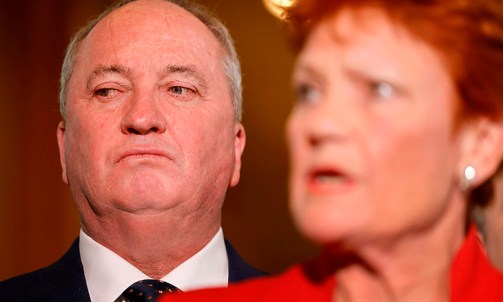
Although the ‘Modern Liberals’ have in Shadow Treasurer Tim Wilson one of the most senior Coalition MPs, the party is gradually adopting the One Nation policy of abolishing all imposts and regulations favouring renewables.
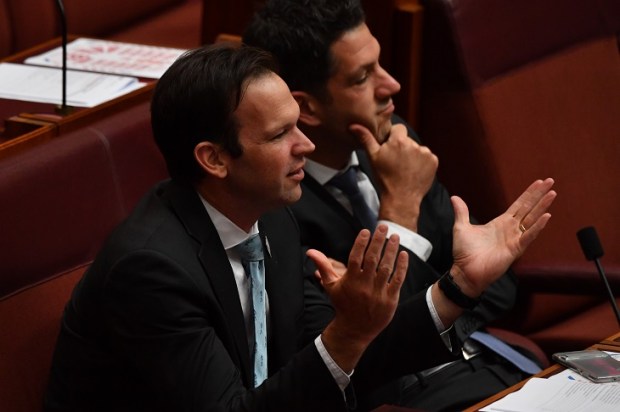
Backbench South Australian Senator Andrew McLachlan cuts a lonely figure in openly calling for an aggressive fossil fuel replacement policy. It is easy to forget that until a year ago, when the rise of One Nation notified all politicians of a change in national mood, this was the policy approach favoured by Turnbull, Morrison, Dutton, and Ley (as well as, ostensibly, Angus Taylor).
The Commonwealth has always taken the leading role on climate policy, but the states are also prominent. They were crucial when, during the Howard administration, Environment Minister David Kemp persuaded state governments in New South Wales and Queensland to prevent farmers from land clearing (in my view, essentially expropriating their property) so that Australia could meet its greenhouse gas abatement goals under the Kyoto Protocol that entered into force in 2005.
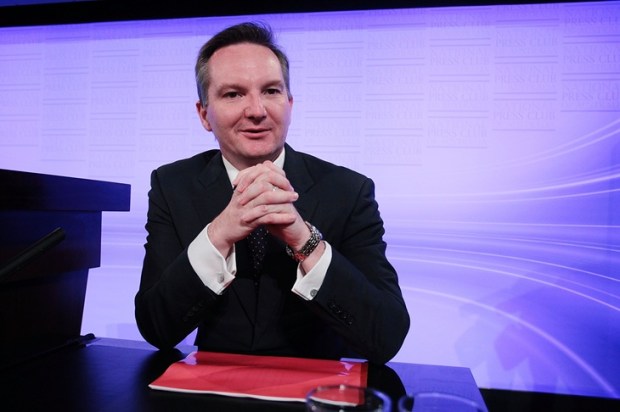
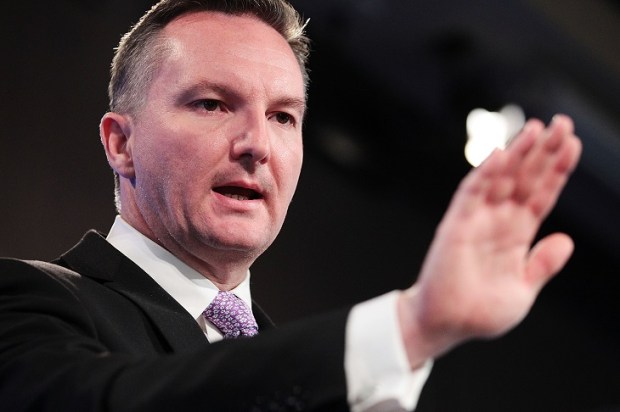
Canberra continues its ringmaster role under the increasingly ludicrous Chris Bowen, who, between officiating at costly ceremonial global meetings, announces a constant barrage of new domestic productivity-crushing energy policies.
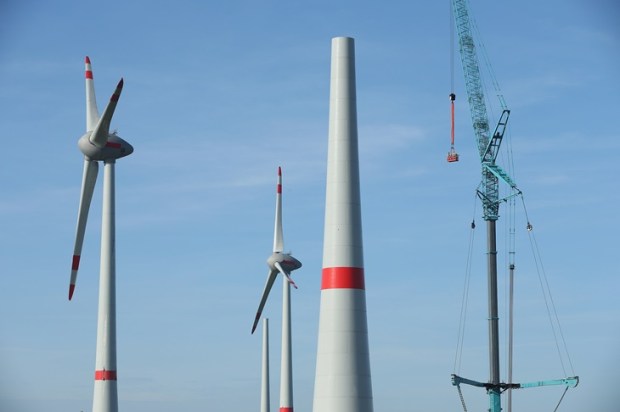
Commonwealth spending and regulations to support greenhouse gas emission reductions are now, by my calculation, about $18 billion a year. This comprises regulations requiring the use of wind/solar subsidies for these forms of energy, and for hydrogen – about which Minister Bowen has rebadged himself as a forever sceptic. Increasingly it also includes bail-outs of industries destroyed by the cost burden of wind and solar, supposedly the cheapest forms of energy.
State governments, however, remain an essential auxiliary. In the main, they have been even more enthusiastic for greenhouse-abating measures with the localised sugar hit they entail. By and large, state Liberal MPs (and for that matter state Nationals) have gone along with Net Zero measures.
Victoria’s Jess Wilson’s view has been, in the past, barely distinguishable from that of Labor. The same is directionally true of Kellie Sloan in New South Wales. Coalition leadership in all states is now shifting away from support of Net Zero.
Not only have state governments been willing accomplices of Net Zero policies, but their own regulations and taxes have been prominent. The Australian Energy Market Commission (AEMC) – responsible for the rules governing the electricity and gas markets – previously provided annual estimates of the costs to electricity consumers of state-based regulations requiring green energy usage. But in 2021, a change of AEMC leadership reallocated the resources to modelling the future price of electricity.
Collecting the data was difficult because states, like the Commonwealth, are opaque about how much they spend on regulatory measures on their behalf. Fortunately, the AI revolution has made the process easier.
The estimated annualised costs of state government measures to promote Net Zero are as follows:
Most of these costs in Victoria are for renewables-related transmission links (the costs of which are recouped from consumers). Such links also account for close to half of the expenditure in Queensland and New South Wales. In all three cases, the costs of transmission links and their local unpopularity is bringing about re-thinks.
The state-based $6.4 billion, like the $18 billion Commonwealth costs, is more than simple expenditure like that for Defence or Education. It comprises funding designed to undermine conventional energy and replace it with high-cost and unreliable wind/solar (as well as hydrogen in Minister Bowen’s earlier incarnation).
Winding it back will attract concerted efforts in the media and the courts. But if the nation is to restore its previous success in income growth, it has to cut out the cancer of climate policies.