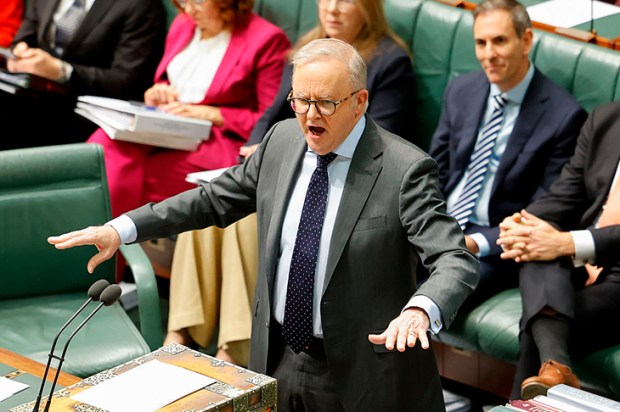
That the Australian economy is in a mess should not surprise. It should also not surprise that the Albanese government rarely misses an opportunity to make things worse. However, it would be far too generous to pretend that the mess was born in 2022. Australia’s economic issues have been in the making for more than twenty years, and both sides of politics are equally culpable.
Higher taxes, increased government spending, expanded welfare, increased subsidies, more public servants and more regulation were all implemented under the guise of creating happier, healthier, and wealthier Australians. Unfortunately, finding these happier, healthier, and wealthier Australians has proven to be quite difficult. What has been produced instead by this toxic combination of bipartisan policy is debt.
In August 2026, gross Commonwealth debt cracked $1 trillion for the first time in history. It was a breach without fanfare. There were no press releases from ministers regarding this milestone. No media conferences. There was no ribbon-cutting ceremony. It arrived with a simple government bond auction.
Meanwhile, debt will continue to exceed $1 trillion beyond the lifetime of this writer and likely that of you, the reader. Worse though, the $1 trillion represents only the Commonwealth’s share. Add in the states and territories, themselves borrowing apace, and the Parliamentary Budget Office projects national gross debt exceeding $2 trillion within four years.
Australia used to have a debt ceiling, a statutory cap limiting the amount of Commonwealth debt. Labor legislated for it in 2008, setting the limit at $75 billion when debt stood at a modest $55 billion. Within a year, the limit was $200 billion. By 2011 it was $250 billion, and by May 2012 it was $300 billion. Each increase came with assurances that this one would be the last.
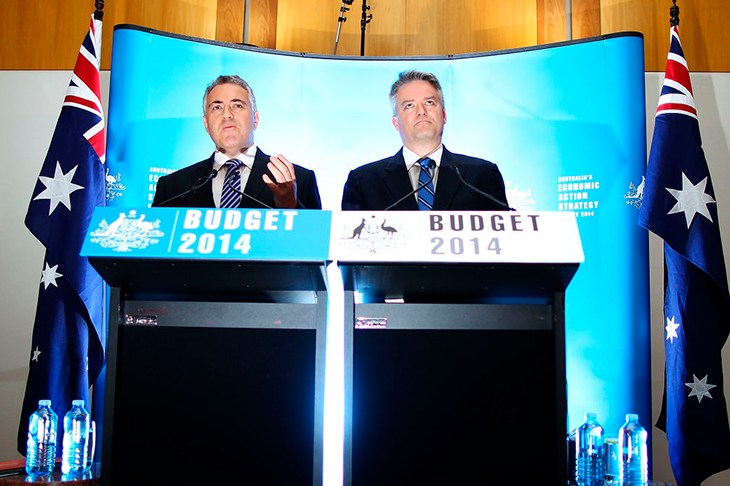
Then, in November 2013, newly installed Treasurer Joe Hockey asked parliament to lift the cap to $500 billion. Labor, having legislated for the cap and raised it three times, suddenly discovered a sudden passion for fiscal fidelity and refused. Hockey warned the ceiling would be breached before Christmas, but unable to legislate for an increase, the Abbott government, elected on a platform of reversing Labor’s ‘debt and deficit disaster’, instead arrived at a different solution.
Rather than raise the limit on borrowing, the Abbott government abolished the limit altogether. And did so with the support of the Australian Greens.
Hockey’s defence was that the ceiling was an artificial construct which had never constrained Labor’s spending. True. But what he did not mention was that its absence would not constrain the Coalition either.
By June 2019, before a dollar of pandemic support had been spent, Commonwealth gross debt was $542 billion. When the Coalition left office in 2022 it was $895 billion. The Coalition, which was elected to end the debt and deficit disaster, tripled the debt.
For more than a decade this was not a pressing problem because money was essentially free. Real interest rates were zero or negative, and a government could refinance almost anything at almost nothing. However, real interest rates are no longer zero, and they are rising. Not only in Australia, but globally. The ten-year Australian government bond now yields more than 5.2 per cent, its highest level in 15 years.
The average yield across the existing debt pile is lower because much of the debt was issued when governments could borrow cheaply. But bonds mature, and when they do, they are refinanced at whatever the market demands on the day. The cheap debt of the past will converge on the expensive debt of the present.
Take $2 trillion. Apply a modest five per cent, a rate below the current market rate. That translates to $100 billion a year in interest before a dollar of principal is repaid. It is $8.3 billion a month. It is $274 million a day, every day, weekends, and public holidays included. It is $11.4 million an hour. It is $3,171 a second. Meanwhile the average full-time worker earns about $2,000 a week.
The government will point out that Australia’s net debt is modest by international standards, that S&P and Moody’s have reaffirmed the AAA rating, and that gross debt has fallen as a share of GDP since 2022. True but not reassuring.
The ratio fell because nominal GDP was inflated by a commodity windfall and the worst inflation in thirty years not because the budget was managed responsibly. And justifying a large mortgage on the grounds that the neighbours have larger ones is not particularly compelling.
It is also worth considering Australia’s macroeconomic characteristics. We are a relatively small, trade-exposed, geographically isolated nation that has voluntarily made itself strategically and economically vulnerable through energy, welfare and defence policies of remarkable innovation and incompetence. On top of which, a not insignificant share of the electorate would happily shut down the mining industry altogether and replace the taxes and royalties with printed money. Australia’s is not an economy that can absorb much bad luck.
Meanwhile the interest compounds, especially when money is borrowed to pay interest. Debt servicing is already the fastest-growing item in the federal budget, forecast at $29.6 billion this year and $42.3 billion by 2029-30, both larger than the deficits projected for those years, and this is just the Commonwealth’s share. The states have their own debt piles which need servicing.
Interest is the most expensive thing the government buys for which Australians receive absolutely nothing.
But someone will pay for all of this. Unfortunately, it will not be the ministers who announced the programs. Nor will it be the bureaucrats who facilitated the mess. Both will be comfortably retired by then, many on government-guaranteed, inflation-indexed, defined-benefit pensions. It will be the young and the not yet born who pay. And pay dearly they will.
There is no plan for repayment because repayment was never the plan. The plan is a fresh announcement, a lectern, and a minister explaining that this is not spending but investment, that the alternative would cost more, that people will die without the excessive spending and regulation, and that the numbers will improve in the outyears.
All the while, nothing has improved in twenty years of outyears. The outyears remain undefeated.
Got something to add? Join the discussion and comment below.
You might disagree with half of it, but you’ll enjoy reading all of it. Try your first month for free, then just $2 a week for the remainder of your first year.