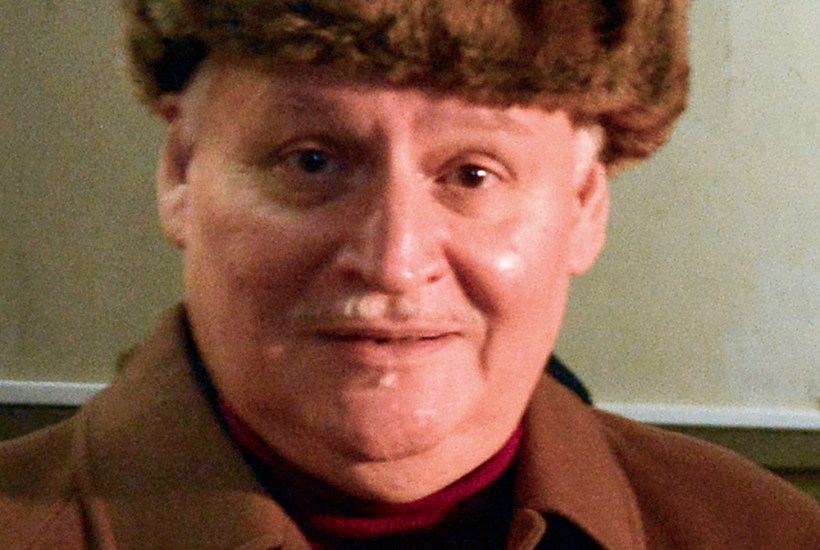
If you remember the 1970s you might also remember Carlos the Jackal, an international terrorist notorious for taking the Opec oil ministers hostage in Vienna in 1975. He also murdered two French policemen in Paris, later claiming to have personally murdered 83 people, plus another thousand killed on his orders during his terrorist career. But that may be wishful thinking.
His name is not Carlos and he didn’t award himself the ‘Jackal’ sobriquet. That came about through the discovery of an arms cache he had hidden in a girlfriend’s flat in London. The Guardian reporter who broke the story noted that a briefcase full of weapons was placed next to a bookshelf displaying Frederick Forsyth’s 1971 thriller, The Day of the Jackal. From then on, the man using the alias Carlos Martinez became the Jackal. That pleased him.
He was born Ilich Ramirez Sanchez to a wealthy Venezuelan family, his Marxist father having named him after another mass murderer, Lenin. He left Venezuela after being expelled from college and making a girlfriend pregnant, and subsequently attended a private school in London, where one teacher thought him a ‘snide little blighter… podgy and pasty’. He cheated and was lazy, but in adulthood he was also charming, well-spoken, always perfumed and expensively dressed. ‘When you look rich, everything is easier,’ he said later.
His father next used his influence to get him to university in Moscow. Although he lived well there, plentifully supplied with alcohol, cigarettes and prostitutes, he became a nuisance to the authorities and was expelled for demonstrating outside the Venezuelan embassy. KGB records show that they considered recruiting him but rightly concluded he was unreliable.
Meanwhile, under the leadership of Wadi Haddad, Palestinian extremists were exporting their campaign against Israel to overseas territories via aircraft hijackings and the murder of Jews. They chose western democracies because they were a softer touch than the Soviet bloc, which anyway generously and discreetly supported them. Carlos found an ideological home in the Palestinian cause and travelled to Lebanon for terrorist training. Although much of it bored him, apart from the weapon training, it offered him the kind of role he envisaged for himself – a starring one which did not involve abandoning his playboy lifestyle. To his Palestinian patron he was a new and puzzling kind of revolutionary, not wholly trust-worthy: ‘Did he fight for a cause, or for himself, to be an idol? I do not know.’ But so far as Carlos was concerned, he had found his cause: ‘I have been in the Middle East learning how to kill Jews,’ he told his mother.
His initial brief when he returned to London was less exciting than he had hoped: he was to compile a list of influential Jewish targets. By reading publications such as the Jewish Chronicle he eventually had 200 names. However, in December 1973, things looked up. He was tasked with assassinating 68-year-old Joseph Sieff, the head of Marks & Spencer and an influential Jewish figure. Armed with a Beretta 9mm pistol, Carlos forced his way into Sieff’s house and, finding him in the bathroom, shot him in the face at point-blank range. He attempted to shoot again but the gun jammed. Luckily for Sieff, the bullet struck his teeth and lodged in his neck muscles. He survived.
Carlos claimed to have personally murdered 83 people, plus another thousand killed on his orders
This was the first of a number of occasions when Carlos shot mostly unarmed people point-blank. Despite later claiming that ‘snuffing out life from two human eyes that are staring at you is not easy’, he was able to accustom himself to it. Indeed, he went further: in 1974, elegantly suited as usual, he leant over the balcony in a Parisian shopping centre and lobbed a grenade among the people below before walking nonchalantly away. The victims were not Jewish businessmen or government ministers or officials but children and pregnant women, fathers and shop assistants.
In this well-researched and readable account Joby Warrick accurately chronicles Carlos’s involvement in later outrages, such as the Opec hostage-taking, an aircraft hijacking, the bombing of Radio Free Europe and various less-remembered incidents. He describes how Carlos’s Eastern European hosts, and later his Middle Eastern contacts, gradually became less welcoming as his self-discipline – never great – and ideological veneer faded. ‘For the rest of his career,’ Warrick notes, ‘Carlos would murder and terrorise on behalf of wealthy and powerful clients who would pay well.’ He eventually sought refuge in Sudan, the only place that would have him, until surgically removed in a joint operation between the CIA and French Intelligence.
He now lives in a French prison which he will never leave, in apparent comfort – a celebrity to inmates and visitors. (He was permitted to marry his now-dead lawyer, a woman who protested his innocence.) Warrick interviewed him, finding his memory of his crimes highly selective, but his resentment of those he sees as his betrayers intact. He has, it seems, no regrets – ‘I always had a good life, all my life’ – and regards his survival into old age as proof that God not only exists but is somehow on his side. God moves in mysterious ways.
Got something to add? Join the discussion and comment below.
You might disagree with half of it, but you’ll enjoy reading all of it. Try your first month for free, then just $2 a week for the remainder of your first year.