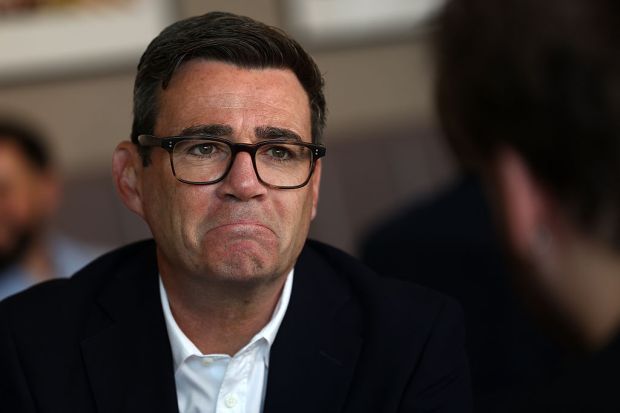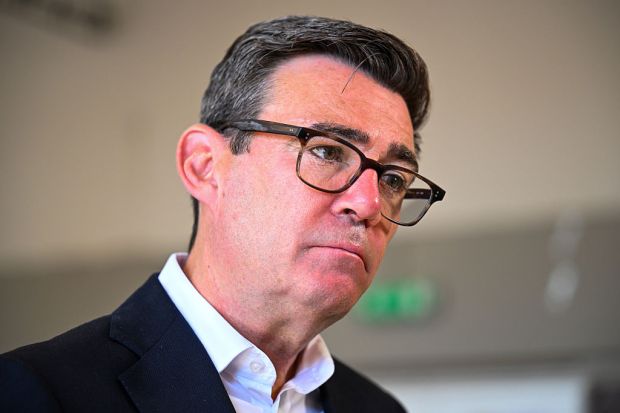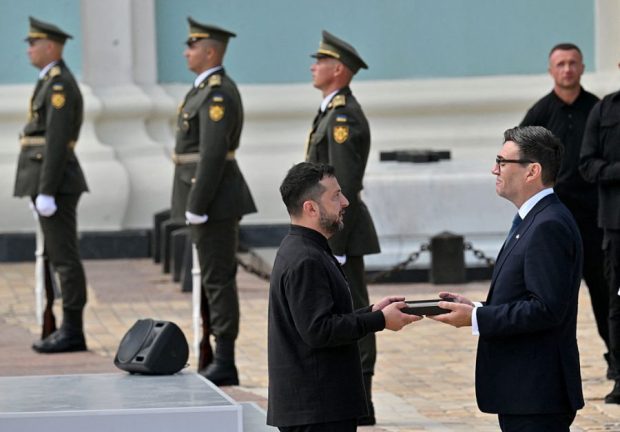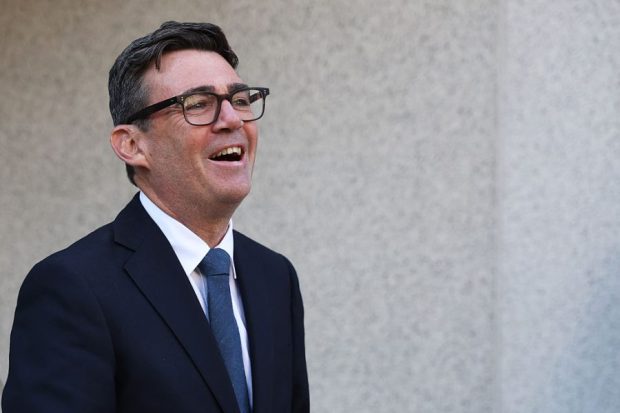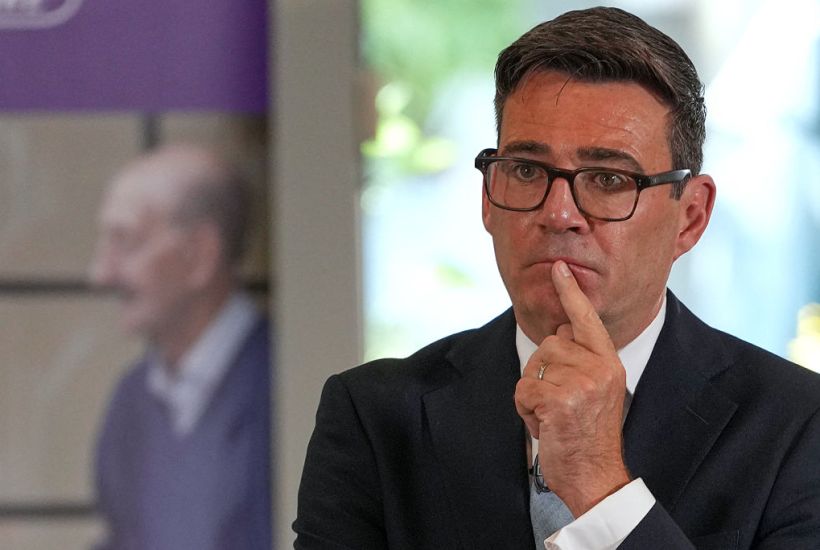
It is hard to imagine many people will miss Sir Keir Starmer now he has gone. Perhaps, like phantom limb syndrome, he will continue to cause pain even though it was generally agreed that amputation was the best option. This week, however, after new boy Andy Burnham delivered a windy address on social care in Golders Green, there were exchanges in the subsequent question-and-answer session which made it feel as if Sir Keir had never left at all.
The new Prime Minister was asked whether he would commit to spending 3 per cent of GDP by 2030. He would not. Wes Streeting, the new Defence Secretary, has also refused to make such a promise, although he has said more vaguely that he would resign if the Defence Invetstment Plan is not ‘fully funded’.
If the government cannot increase spending from 2.6 per cent this year to 3 per cent by 2030, why should anyone believe it can meet the more difficult Nato-agreed target of 3.5 per cent by 2035?
Why is the 2030 defence target significant? Nato has set no target of expenditure for the end of this decade. What was agreed at the Hague Summit in June 2025 was that Nato members would ‘invest 5 per cent of GDP annually on core defence requirements as well as defence-and security-related spending… to ensure our individual and collective obligations’. The ‘core defence requirements’ represent 3.5 per cent of GDP, with the other areas to come to 1.5 per cent.
The summit declaration went on to say that the ‘trajectory and balance of spending under this plan will be reviewed in 2029, in light of the strategic environment and updated Capability Targets’.
However, two factors make 2030 an important milestone. The first is that Starmer, visiting a drone manufacturer in Swindon in June 2026, told his audience that ‘it is our intelligence assessment, and the assessment of other countries in Nato, that there could be an attack by Russia on Nato as soon as 2030’. That short time span before possible aggressive action ought to focus politicians’ minds.
The second factor is that a target of spending 3 per cent of GDP on defence, and the fact that Sir Keir Starmer would not support such an interim target, was one of the reasons that John Healey quit as Defence Secretary last month. In his resignation letter, he said:
‘I am certain that a headmark date for 3 per cent of GDP on defence in 2030 is what Britain must set. This commitment would have strong cross-party support. Other European allies are stepping up in this way… you know what defence needs… I would not be able to accept a DIP [Defence Investment Plan] settlement that does not give our Forces the resources they need.’
Healey is, of course, now Chancellor of the Exchequer.
Spending 3 per cent of GDP on defence by 2030 is important. Setting aside the suggestion of Russian aggression around that time, the target would be a demonstration of seriousness and commitment. Last year the government spent 2.3 per cent of GDP on defence, and this year it is expected to increase to 2.6 per cent. Nato documents are reported to show the United Kingdom 31st and second-from-last in measurements which are ‘based on the extent to which they are meeting their rearmament promises’, and in the same position in a table showing ‘each country’s progress in hitting the alliance’s capability requirements’.
In both cases, the UK outperforms only Iceland, which has no standing armed forces. We are failing, and failing badly.
The figure of 3 per cent of GDP by 2030 is somewhat arbitrary, but it is significant for one reason: if the government refuses to commit to a 2030 target, it must be because ministers are not confident they can meet it in the current fiscal climate. If the government cannot increase spending from 2.6 per cent this year to 3 per cent by 2030, why should anyone believe it can meet the more difficult Nato-agreed target of 3.5 per cent by 2035?
Andy Burnham has inherited a complex knot of problems from Sir Keir Starmer in terms of defence spending, and his predecessor also seemed to try to bounce him into some commitments by decisions made in the final days of his premiership. But Burnham was not forced to appoint John Healey, who had made the figure of 3 per cent by 2030 a resignation issue, Chancellor of the Exchequer. That was a choice. More broadly, as far as Burnham goes, the old maxim applies: if you can’t take a joke, you shouldn’t have joined. He worked hard to prise Starmer out of Downing Street and now has to own all of the consequences.
The new Prime Minister seems to have much less interest than recent predecessors in foreign affairs and defence; perhaps the least interest since Stanley Baldwin. But there are some basic truths he cannot ignore. The armed forces currently do not have the financial resources to carry out the tasks required of them, nor to implement last year’s Strategic Defence Review. Considerable spending is required just to get the services to a healthy tick-over. Moreover, the UK joined its 31 Nato allies in making spending commitments for 2035, and failing to meet them would be reputationally catastrophic.
Whatever government is in office by 2035 must meet the target of spending 3.5 per cent of GDP on core defence requirements. Burnham has to find a way to show he intends in good faith to meet the Nato target. An interim commitment of 3 per cent by 2030 would probably be the easiest way to do that. The Prime Minister should just bite the bullet.