Part 1 – The Paradox
One Tuesday morning in winter – it was July – I went with my mother to look for children’s books in the Classics section of the shop at the National Library in Canberra. I had studied there during my undergraduate days – enjoying whole days among its archives. The shelf was random. May Gibbs, Banjo Paterson, Stephanie Owen Reeder, Ruth Park, Ethel Turner. I couldn’t find the author I was seeking.
We asked at the counter. The young woman behind it was friendly and apologetic and said she had not heard of my author. She typed the name into a database, frowning, and read out what she found: an Australian children’s writer, mid-20th Century, currently out of print. Did I want to try, perhaps, a second-hand bookstore: Canty’s in Fyshwick or Book Lore in Lyneham?
The National Library is the country’s flagship repository for its own publications, ten minutes’ drive from the Australian National University. I went to the second-hand bookstores she named – and others – to no greater success. I felt increasingly compelled to track down the writer. I travelled to her home state, to its capital city. My writer had lived not so far away. There was no copy in the shops containing new books, and almost no copy anywhere. I found one, a scrappy edition, in the antique shop on Macquarie Street, which has books to make the shelves look busy.
The result was similar at major dealers who attended both national and international book fairs. Mostly I would just get a quizzical stare. If I mentioned H Rider Haggard, the face would light up. If I mentioned my author, there would be a slightly apologetic silence.
So, I looked online. The author’s works surfaced occasionally there, as a worn library copy – with plastic wrappings and age stains – or a collectible oddity, priced for scarcity rather than readership. There had been twelve novels as well as two readers and a small book on bees. Several copies of one or two survived to be hawked over the internet. And that was it.
I visited her home in the scrub – a largely forgotten valley. Even if my local cousins had visited before, it was decades earlier, when they were much younger. There I found a single biographical study, a small 79-page illustrated book published in 2000. It was available almost exclusively in the house, which a charming couple managed with a mix of love and care.
This is the disappearance of a writer who, between 1948 and 1969, won Australia’s most prestigious children’s book prize three times – the first author to do so – as well as numerous subsequent commendations. She was groundbreaking as the first Australian writer to be recognised internationally: given the Diploma of Merit at the Hans Christian Andersen awards in 1962 – a prize focused upon children’s literature of particular excellence. Her recognition on the international stage opened the path for later writers.
She saw her novels translated into more than a dozen languages, and had her first book – which sold over 50,000 copies – adapted into a film that won Best Children’s Film at the Venice Film Festival. It remains the only screen adaptation of a children’s book to win such a central prize on the global stage. A later book was adapted as part of the official children’s television series to celebrate the bicentenary in 1988 – and took first prize at the Chicago International Festival of Children’s Films. By my rough count, scarcely five children’s authors in the entire span of Western writing have secured public awards at comparable levels through sheer force of nature.
The author did things few writers, if any, of her era – children’s or adult, Australian or otherwise – were willing to attempt. First, she put the Indigenous population at the heart of a moral reckoning with colonisation across three books, raising as a key element, then core theme, the exploitation, harm, and destruction of their civilisation.
She did so years before others would touch Indigenous subjects in any high-profile fashion, decades before other writers in her or any mainstream genre would tackle the issues with a similar level of frankness or critique, and multiple generations before ideas like ‘the stolen generation’ or ‘traditional owners’ would enter ordinary Australian conversation.
Second, she reversed the stereotype of an entire state and its landscape – both physical and intellectual. Victorian-era writing had already delivered a damning verdict, and later writers of the 20th Century, whatever their sophistication or skill, have tended to align with this verdict or fall adjacent to it. The author depicted instead a state where children could grow up well, families could live in right relation to nature, where people might stay and flourish and belong as an ordinary condition of life rather than an epiphany available afterwards – a literature of habitation.
Third, she gave Australian children something they had been denied: a realistic domestic literature of the bush. It was not colonial. Nor was it exotic, magical, or anthropomorphic. Previous generations had been raised principally on a mythic England – danger and mystery in the wilder countryside, hedgerows in the home counties, adventures in the Lake District.
Ethel Turner had given Australian children domestic realism as early as 1894 in Seven Little Australians, but Misrule’s realism stopped at the bush’s edge: the one time the narrative went properly into the trees, a gum fell, killing Judy. Mary Grant Bruce also depicted the country in 1910 in her novel, A Little Bush Maid, but in this case the bush was a prosperous estate and the period’s racial vocabulary was on full display. My author pictured a bush that made the child and mended the adult. She offered the textures of local setting, the rhythms of local speech, and the unresolved questions of a migrant society with intrusive settlers.
It was a life full of achievement and firsts – forging new paths and introducing new ideas that others would follow at least chronologically; creating space that others could fill. And despite this, she has almost entirely disappeared.
The critical record is bare. She is absent from Jack Zipes’s Sticks and Stones, Alison Lurie’s Don’t Tell the Grown-Ups, Seth Lerer’s Children’s Literature: A Reader’s History, Peter Hunt’s An Introduction to Children’s Literature, and Kimberley Reynolds’s Radical Children’s Literature – even though the very issues she explored were central to some of these studies.
The 1984 Oxford Companion to Children’s Literature promised on its jacket that among its nine hundred biographical entries, ‘major figures are given extensive and penetrating consideration’ and that ‘equal attention’ was paid to works from Australia. Inside, it gave my author one paragraph – about a hundred and seventy words, filing her first novels as ‘conventional adventure stories’ and reducing some of her greatest work to ‘a series of tableaux’. In contrast, it gave almost four pages, with a photograph, to Arthur Ransome, whose most famous book the same entry judged ‘indirectly responsible for a great deal of undistinguished hack-work’. Even the more focused 1993 Oxford Companion to Australian Children’s Literature allocated the author just a column and a half, against a page and a half or more for others, including Ivan Southall, Colin Thiele, and Patricia Wrightson.
The disappearance of my author is not unique. I have come across such lacunae before, but previous times have felt less personal – the other authors were not so much part of my growing up.
Barbara Pym was the clearest precedent. In the 1950s, Pym published a series of novels – Some Tame Gazelle, Excellent Women, A Glass of Blessings. These books achieved something rare: moral and psychological depth in the observation of everyday parochial life. Her content was parish teas, jumble sales, the quiet dramas of unmarried women in North Oxford or London.
Pym was widely read and well-reviewed. Then, in the 1960s, her publisher dropped her. The literary climate had shifted. Social realism, experimentation, political urgency – these were the new currencies. Pym’s parish world looked quaint. Her work looked thin – not urgent. For nearly two decades she could not find a publisher at all.
Her recovery came through a single act of attention. In 1977, the Times Literary Supplement asked prominent writers to name the most underrated authors of the century. Philip Larkin and Lord David Cecil – independently of each other – named Pym. The effect was immediate. Her books were reissued. New novels were published. She was shortlisted for the Booker Prize. The literary establishment, which had ignored her for twenty years, discovered – almost overnight – that it had been wrong. The technique had been there all along; just nobody had been looking.
Elizabeth Jane Howard followed a similar trajectory across a longer arc. She published The Light Years in 1990, the first of the Cazalet Chronicles – a family saga set in wartime England that achieved its effects through accumulated domestic detail, social choreography, and a near-Chekhovian layering of multiple emotional dynamics within single scenes.
Howard was widely read – the Cazalets sold in the hundreds of thousands – but it was critically invisible. She was classified as a women’s novelist. Her marriage to the higher-profile Kingsley Amis overshadowed her name. The literary establishment dismissed her as someone who wrote on families and feelings rather than important things like ideas and structures.
Her partial recovery came thanks to Hilary Mantel, who championed the Cazalet Chronicles publicly, identifying in Howard’s work a technical sophistication the critical establishment had been unable to see. Howard’s recovery remains incomplete. Though she is now read with more respect, she has still not achieved the canonical standing her technique warrants. The gap between reputation and achievement, though narrower than it was, persists.
I have a personal stake in all this. My mother grew up not far away during the years the author was writing and establishing the property that became her home, in a landscape that became the inspiration for much of her fiction. Her father – Charles Edward Masterman, an English engineer – emigrated to Australia as my own maternal grandfather did in a later generation. My grandmother shared French lessons with the writer’s youngest sister, Eve Masterman. My mother and her siblings would holiday at Eve’s house along the coast.
There were other connections – on my father’s side – which ran through the writer’s oldest brother, Kay Masterman. He met my paternal grandparents aboard the ships that tied the world together in those days and encouraged my grandfather to send his children – including my father – to Geelong Grammar School, where Kay had taught and where I, too, would eventually go.
I grew up reading the author. When I talk with people of my generation or older, many do recall her work, though not everyone. They appreciated the strength of the stories, the vividness of the bush, the seriousness with which she treated her child readers. At least for me she claimed an important place on the shelf. Today I reckon she occupies no place.
The teacher at school I remember most – who arrived in my Year 9 class like a breath of fresh air and swept away so many of the cobwebs – was John Marsden. He introduced us to corners and alcoves of literary brilliance that had become overlooked, whether due to fashions, commerce, or simply the march of time.
If Marsden had not shone his torch this way and that, however briefly, I and others would not have known the great expanse of literature that lay, waiting to be discovered, outside formal texts. Marsden later became a celebrated children’s writer himself, and one of his causes was the recovery of my childhood author. He tried to raise her profile, promoting her work in interviews and writing introductions for the Text Classics reprint series in 2013.
Two years later the Children’s Book Council declared a ‘Year of Celebrating’: a travelling exhibition about the author which toured the state’s libraries. There were sell-out screenings of the 1962 film, in which the young Peter Conrad appeared as the boy, ‘Brick’. Marsden delivered a great speech facing a packed house. These efforts helped, but only for a moment. The tide went out again – and she remains, for all practical purposes, invisible.
The question that her surprising absence in the National Library bookshop posed me – and poses to anyone who has read this author – is how does a writer this significant disappear? This essay is an attempt to understand. My view is that her disappearance was not accidental but structural – a result of multiple forces working together to produce an erasure more total than any one of them could have managed alone. But before the diagnosis, the books. And before the books, the writer.
Part 2 – The Writer
Nan Chauncy was born Nancen Beryl Masterman in 1900 in Middlesex, England, into the charmed world of the English upper-middle class. Her father, Charles Edward Masterman, was an engineer by training – an entrepreneur and consultant by profession. Her mother came from a line of lawyers. Her father’s side was proud of its Quaker heritage – and its practical achievements. The family emigrated to Tasmania when Nan was twelve. It was part of a broader movement of English professionals seeking opportunity in the colonies, even if circumstances, more than anything else, drove the Mastermans – a financial reversal that, by 1912, had ended Charles’s ambitions for life.
Although at first they lived in Hobart, where Charles briefly had a respectable though pedestrian job, ultimately they settled on a property near the small town of Bagdad, in the hills above Hobart.
The area, where Nan would later establish Chauncy Vale, was no gentleman’s estate. It was a piece of rough hill country in the dry sclerophyll of central Tasmania – a creek, ridgelines, sandstone caves. The first house was a slab-timber three-room hut with a stripped tree-bark sheet roof, which the family would build as best they could. Nan’s mother, Lilla, named it Cherry Tree Cottage.
They went to school in the city. At St Michael’s Collegiate, students taunted the new migrant as ‘Chinky’ and ‘Queen Hayseed Pommie’. Nan’s formal schooling ended at sixteen. The family had neither the resources nor the capability to let her keep studying, and she did not go back – the only one of the children to have their formal education cut short. Instead, her education became life on the farm and in the bush.
She got involved with the Girl Guides – perhaps because her father had gone to school with Baden-Powell. She worked at a new factory that Cadbury’s, a Quaker institution, had established near their final family home in Austins Ferry – the company’s first attempt to replicate their social model, the factory in a garden, overseas.
She went several times back to England, crossing paths with Lady Baden-Powell in Vancouver in 1923. She lived for much of the 1930s on a houseboat along the Thames outside London, before it was fashionable. AP Herbert had just published his famous novel, The Water Gipsies. She visited northern Europe and the still-new Soviet Union. She taught for four years at a Girl Guide finishing school in Denmark. In 1938, at the age of thirty-eight, she returned home. Her father was ill; Europe was combusting. On board the Dutch merchant ship, she met a German Jewish refugee – Helmut Anton Rosenfeld.
He was twenty-six. His family’s Königsberg business had been confiscated by the Nazis. He was making his way to Australia ahead of the gathering catastrophe. Nan married him in September 1938, four months after the death of her father in Adelaide. Her brother Kay gave the couple, as a wedding present, his stone cottage at Bagdad called Day Dawn and the surrounding land. He had bought his own place near Cherry Tree Cottage, but would never use it.
After marrying, Nan adopted her grandmother’s family name, Chauncy – rather than either her birth name or her husband’s family name. It would be an act of household reinvention during the war years when the Bagdad neighbourhood’s hostility to a ‘German’ meant threats and attacks. But the name she adopted was her inheritance already – from her much-admired grandmother, Ellen Chauncy, who had married Henry Masterman in 1845. Nan christened their new home, Chauncy Vale.
Nan gave birth to a daughter, Heather, in November 1939 so that the household at Chauncy Vale was a household of two adults and a young child by the late 1940s when she turned to publishing. By this time, only one other of her family had chosen to remain in Tasmania. Her father and two of her brothers had moved to Adelaide in the 1930s. Lilla and Nan’s twin brother, Jan, returned to England. And Kay would end up in Canberra. Of the Mastermans who had arrived at Hobart in early 1913, only the youngest, Eve, stayed, along with Nan.
Chauncy’s first novel, They Found a Cave, was accepted in 1947 and published after she turned forty-eight. She had lived, with her husband Anton, in the bush near Bagdad for ten years, not just building up the property but writing radio scripts under contract for the ABC’s youth education service. The family’s history continued to influence her life. It was her cousin, JC Masterman – then Provost of Worcester College, subsequently Vice-Chancellor of Oxford University – who took her manuscript to the Oxford University Press. The book didn’t arrive in Australia until 1949.
Nan wasn’t the only late arrival to a successful publication. EB White debuted in his mid-forties; CS Lewis published The Lion, the Witch and the Wardrobe at fifty-two. But her voice carried the clarity of someone who had experienced the many facets of a complicated world. She had endured hardship, faced challenges, cared for land, worked with children, and interacted with other peoples and cultures.
She processed everything in a positive and constructive manner. Whereas many writers in children’s literature look backward, imposing abstract ideals and unfulfilled desires onto the world of childhood, Chauncy looked forward, drawing directly from experience and lived truth. Her approach inverted the traditional pyramid: she did not write from the top down, but rather from the bottom up, anchoring her stories in reality.
And despite the recognition she eventually achieved, Chauncy remained where she was – less integrated than many of her peers who reached comparable visibility. She wrote from the isolated bush of a small island at the far edge of an already peripheral continent. Astrid Lindgren had Stockholm; Philippa Pearce had the BBC; Rosemary Sutcliff had a network of English literary connections. Nan showed minimal interest in becoming a celebrity. She remained deliberately peripheral – geographically and aesthetically.
She went on to write twelve novels, two readers, and a book about bees. She died at Chauncy Vale in May 1970, a few weeks short of her seventieth birthday, still leading the life she had chosen – one that presented an alternative model for a literary career: grounded not in cultural centrality, but in fidelity to place. Her literature revealed twin convictions: that the world could be defined by its margins and that a centre might be redefined from the periphery.
To understand why that conviction mattered, we need to look at what she actually wrote.
Part 3 – The Books
Across her twelve novels, Chauncy did four things that her contemporaries – Australian or otherwise – did not attempt.
She entered the consciousness of an Aboriginal civilisation under destruction, and stayed there. They Found a Cave (1948), Tangara (1960), and Mathinna’s People (1967) trace an arc with no parallel in mid-century children’s literature. In her first novel, the Aboriginal presence enters through a sole figure: a skeleton in a cave, treated – for the era – with a quiet gravity by the children and by Mad Dad Williams, the bush hermit who has studied the people who lived there.
In Tangara, the scope expands to a living community: a settler girl, Lexie, meets an Aboriginal girl, Merrina, from before the destruction of her tribe. Chauncy refuses every available mechanism for managing the encounter – no portal, no time-slip device, no magic object – insisting the reader hold two incompatible realities at once.
The novel includes the massacre of Merrina’s tribe by two convict escapees – bushrangers – handled with devastating economy through Lexie’s misperception, and ends with Lexie’s months-long breakdown – a structural enactment, in the body of a child around nine, of the historical silence that has held the official record of the Tasmanian Aboriginal genocide in place for a hundred and fifty years.
In Mathinna’s People, Nan’s scope becomes civilisational. Chauncy narrates the entire trajectory of the Toogee people from first sighting of Tasman’s ship to Mathinna kicking off her painful European shoes when her Old Ones come for her, running free with her sister, Djuke, along the beaches of the west – a vision of freedom achievable only in death because the living world has been taken entirely. The novel is told from within Aboriginal consciousness throughout.
Chauncy spent two and a half years on the manuscript, including a research trip to Wybalenna on Flinders Island. Her editor at Oxford, Mabel George, called it potentially the best book Chauncy had ever written, and noted that its publication history – issued in a children’s format which Chauncy had not requested and which her publisher would not change – ‘lamentably detracted from the recognition of its author’s vision’.
It is notable that as a woman and trying to surface the terrible history of Indigenous Tasmania, Chauncy was unable to secure any grant from the Commonwealth Literary Fund. The establishment could not imagine that the project might have value.
A structural, close reading of Tangara and Mathinna’s People – the time-slip without mechanism, the architecture of genocide rendered in narrative form, the structural critique of benevolent colonialism through the figure of George Augustus Robinson, their contrast with The Nargun and the Stars (1973) by Patricia Wrightson, who won the Hans Christian Andersen Medal in 1986 – are the subject of another, separate essay, The Architecture of Childhood, in a set of four I’m writing.
What matters here is the trajectory. Chauncy was the first Anglophone writer, let alone children’s author, in any country to put Aboriginal experience at the core of a high-profile novel, and to the extent possible translate its own suffering to a larger audience. And, in writing Mathinna’s People, she would anticipate by decades the semi-fictionalised biographical form that would later appear in writers such as Hilary Mantel and Nathalie Léger.
Chauncy also reversed the verdict on Tasmania. The island that Marcus Clarke had cast in 1874 as a natural penitentiary, and that authors like Hal Porter, Christopher Koch, Peter Conrad, and Richard Flanagan would, in their different ways, refine without reversing, she wrote as a place where children could grow up and flourish.
Her child protagonists – Cherry in They Found a Cave, Dallie in World’s End Was Home (1952), Badge in Tiger in the Bush (1957) and Devil’s Hill (1958) and The Roaring 40 (1963), Vicky and Tess in High and Haunted Island (1964) – did not escape the island; they were made by it. The case for this reversal as the most consequential single act in the history of Tasmanian literature during the 20th Century is the subject of the third essay of my set, Stories from the Edge of the World.
Chauncy gave Australian children a realistic domestic literature. The Lorenny trilogy – Tiger in the Bush, Devil’s Hill, The Roaring 40 – rendered a subsistence-class Tasmanian family living in the remote upper Gordon River country with an attention and respect almost unique in the literature of Australia up until that point and for years afterwards.
John Marsden called the rendering of Badge Lorenny ‘the most successful portrait of a child whose family lives off the map’ in Australian children’s writing, and credited Chauncy with the gift, rare in any literature, ‘…of being able to write about a peasant class in Australia, and to do so with respect and warmth, and without sentimentality.’
And she wrote the migration of her own family and Anton’s into her fiction. She did so openly in Half a World Away (1962) – in which the Mastermans appear as the Lettengars, with Westerham unchanged, Highover unchanged, and the four eldest children calling themselves the Braves exactly as the historical Mastermans would have. She did so under transposition in three of her best novels: They Found a Cave, World’s End Was Home, and High and Haunted Island.
The case for reading these three books as a sustained roman à clef, indeed as an imaginative return to the same events over and over but drawing upon different levels of experience and understanding, is the topic of the last essay in my set, The Refusal of Rescue.
Domestic realism, the treatment of Indigenous Tasmania, the portrait of forced migration – what today we might follow as the fate of political or economic refugees – and the rewarding nature of the Tasmanian wilderness constitute four threads that run across most of Chauncy’s twelve novels in various interlocking patterns. Her books, read together, amount to one of the most sustained, ambitious, and singular literary achievements in children’s writing – not just mid-twentieth century but children’s literature more generally.
And she has been almost entirely forgotten.
Part 4 – The Disappearance
Three forces converged to erase Nan Chauncy from the literary record. None of them had anything to do with the quality of her work.
The first was geography. Tasmania was doubly marginal: remote from Australia’s cultural centres, which were themselves remote from the metropolitan gatekeepers in London, New York, and Boston who determined which children’s writers entered the international canon. Even within Australia, Chauncy was outside the Sydney-Melbourne literary networks that produced and sustained reputation. She had no university affiliation, having left school at sixteen. She did not move to the mainland. She did not cultivate a literary scene. Her readers loved her books; her institutional advocates were few.
The second force was the divide between children’s literature and adult literature. It works as a canon-forming mechanism, and it is remarkably efficient. Serious structural innovation in children’s writing is systematically undervalued by the literary establishment at large.
When Chauncy entered Merrina’s community for ethical confrontation with colonial violence in Tangara, she was doing something no adult novelist in Australia had yet attempted. When she narrated an entire civilisation’s destruction from within Aboriginal consciousness in Mathinna’s People, she was, in doing so, anticipating the semi-fictionalised biographical form that would later appear, critically acclaimed, in our most avant-garde writers. But these achievements were invisible to literary critics because they appeared in books marketed for nine-year-olds.
The point here is just a diagnostic one. Children’s literature is reviewed in different publications, discussed in different academic corners, shelved in different sections of bookshops and libraries, and judged by different prize committees from adult fiction. A children’s writer can win every award in her field and stay almost unknown to the wider community next door.
Her own publisher confirmed the divide in real time. Chauncy had wanted Mathinna’s People and Half a World Away published as adult fiction. Oxford University Press refused, issuing the books in a children’s format. This structural decision, by a business unable to see what kind of works they were holding, meant that both novels missed a key audience – readers who might have recognised the full value of Chauncy’s efforts.
The third force was institutional. Literary reputations need maintenance: advocates, organisations, or networks to sustain them after a writer’s death. CS Lewis had a university chair at Oxford and a body of adult theological writing that kept his name in circulation. EB White was enmeshed in metropolitan publishing circles through The New Yorker. Astrid Lindgren enjoyed a sustained international publicity infrastructure and eventually became a national symbol. Even less prominent writers often had family members, literary executors, or academic champions who tended their legacies, as though a flame for the unknown soldier.
Chauncy had almost none of this. Her history as a Masterman had got her going; the OUP had published her books. But she lived in the bush on the opposite side of the world, clearing scrub, raising a family, and writing in relative isolation. She showed little interest in literary celebrity. She had no special affiliations, no regional publisher invested in the outcomes of her long-term reputation, and no surviving personal network that fought for her posterity.
Her Quaker formation probably led her to see little value in putting herself forward or pushing herself on others. She would enjoy the success that was granted her, but otherwise not seek it out. When she died in 1970, there was no one who saw gain in highlighting what she had built. The books went out of print. The critical references thinned. The silence settled.
The interaction of these three forces – geographical marginality, the children’s/adult divide, institutional weakness – created an erasure more total than any one of them could have accomplished on its own. An author at the periphery of the periphery, working in a genre the literary establishment did not take seriously, with minimal institutional investment or personal gain after her death, was always going to be vulnerable.
Other factors compounded the situation. Chauncy was a woman writer in the postwar period when conventional roles were reasserting themselves. She wrote on mundane subjects – hiding in a cave, finding and replacing a cow. The storyline could resemble, on the surface, others – not least Swiss Family Robinson and Arthur Ransome. She refused the grand themes we find threaded through CS Lewis or JK Rowling. And she wrote in a simple, direct fashion, without narrative intervention or formal flourish, adopting a style that rewarded attention to action and detail.
The situation maps onto a certain pattern I have already hinted at. Chauncy, like Pym, worked through implication: her characters revealed themselves in what they did, not what they thought. And she, like Howard, wrote about domestic and relational worlds with a structural control that has been consistently mistaken for simplicity.
The pattern – a repeated undervaluation of quiet, domestic, female-authored, technique-driven, place-based, morally serious fiction – extends well beyond the three writers discussed here. Susan Castillo published in the 1990s a study of literary marginalisation in North America, showing how canonical biases represent wider social structures. She noted the persistence of both metropolitan and Aristotelian judgement in determining what counted as serious.
The pattern is consistent enough to constitute not an argument about individual neglect but about how literary culture itself is organised. Geography, genre, gender, and access combine, determining what is visible; focus and style enter, influencing what is taken seriously. Writers at the intersection of multiple disadvantages are almost guaranteed to disappear, regardless of quality.
What makes Chauncy’s case extraordinary is not that she disappeared – given the forces arrayed against her, disappearance was almost inevitable – but that she disappeared despite achievements that, by any neutral measure, should have been impossible to ignore.
Her erasure is a useful test case – a demonstration of how canons fail. If current frameworks for evaluating children’s literature cannot hold the place of an Australian writer who was the first to win three domestic literary prizes among others, the first to capture international recognition of any major kind, a key writer in establishing a domestic rather than colonial literature, and someone who tackled the dispossession and destruction of Aboriginal Australia decades before anyone else in high-profile fiction, and one of the most important writers to reverse – against the tide – the symbolic meaning of their landscape, then something appears wrong with the frameworks themselves.
Chauncy’s disappearance does not reveal a limitation in her art. It reveals a limitation in the way we remember. Recovering Chauncy, then, is not an act of nostalgia or a sentimental return to a simpler literary age or even a patriotic reclamation of an Australian voice. It is an act of critical honesty – it is an acknowledgement that our frameworks for evaluating literature have failed in specific, demonstrable, and instructive ways.
Her case points toward the need for a different kind of evaluation – one that looks again at narrative architecture and lived coherence rather than metropolitan visibility, one that can hold children’s literature alongside adult fiction without condescension, and one that recognises achievement from the periphery without requiring it first to be validated by the centre. Pym needed Larkin. Howard needed Mantel. But Chauncy still needs someone to look more closely.
Part 5 – Why It Matters
A while ago, my cousins and I drove up to Bagdad with my daughter. The road stretched away from Hobart and the air thinned; bitumenised stretches gave way to dirt; we crossed the cattle grid into the valley and parked down from the timber house that Chauncy and her husband had built, course by course, after the war.
The couple who tended the place met us on the veranda. They were kind – curious about why we had come. Visitors came more for the walk than the house. On the side table inside lay a small stack of books – some of Chauncy’s novels, Berenice Eastman’s biography.
After the visit we walked up the valley. One of my cousins remained behind, still interested in the Chauncy Vale house. The track ran beside the creek for a while before climbing into the sclerophyll. Stringybark, peppermint, gum – the trees she had put into the book. Wattle, here and there, just starting to gold up. The cliffs above were pitted with the holes Chauncy had placed within her first novel: sandstone caves, some shallow, one or two opening into the rock further than we were willing to follow.
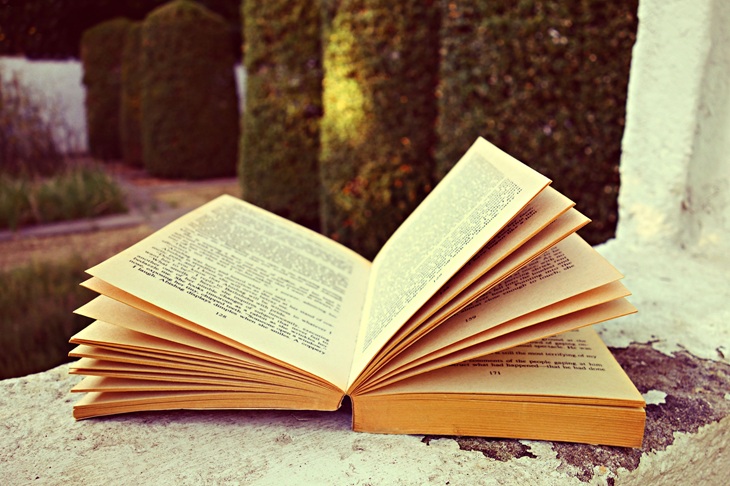
I sat at the mouth of the largest one and opened the book that I had brought with me. It was They Found a Cave. I had read it many times before; I read it again, here, where she had written it. The prose worked differently in the valley than it had at home. When I had embarked on this project, the gap on the shelf at the National Library was the whole story; now, the extraordinary alignment between page and place took over.
Cherry’s cave was likely one of these. The hidden shelter would have been above my head, where a ledge blocked it from view. The tarn was, perhaps, the wide creek pool along the way. We could see the ridge where the goats had walked. None of it was invented. None of it Chauncy had created as a result of abstract research. The bush in the book was the bush around me; and the moral seriousness of the book was not authorial overlay but the seriousness of the country itself, registered by someone who had inhabited it for more than thirty-five years and loved it for longer.
This is what we mean, or should mean, by lived coherence. She did not write about ecological care from a city apartment. She did not write about Indigenous dispossession from a position of comfortable ignorance. She did not write about the moral education of children without having spent decades in their company. She had walked up this track carrying tools, or a notebook, or a child’s hand, and the books that came out of it carry the weight of what she actually did.
The qualities we now praise in children’s literature – ethical complexity, ecological seriousness, the dignity of marginal voices, the insistence that children are capable of moral reckoning – she put into print between 1948 and 1969. She had no theory, just a valley. The vocabulary arrived later – in the case of Mathinna’s People two or three generations later, when ‘traditional owners’ became a phrase the country could finally say.
I closed the book and walked back down. The afternoon was soft. My cousin was still out on the veranda, talking. The couple who tended the place were showing her something – a ledger, a photograph, I could not see from the path. The bush obscured my view.
The mechanisms that were supposed to identify and preserve literary work like Chauncy’s – prizes, reviews, surveys, syllabi – did their job in her lifetime and then went silent. The forgetting was not her failure. It was ours. And the cost of it is not just one writer’s reputation; it is our sense of what literature can do, and where it can be made, and what kind of life it can come out of.
On our way out I put my book on the kitchen table of her old house. Someone new might borrow it and enjoy it like I had.