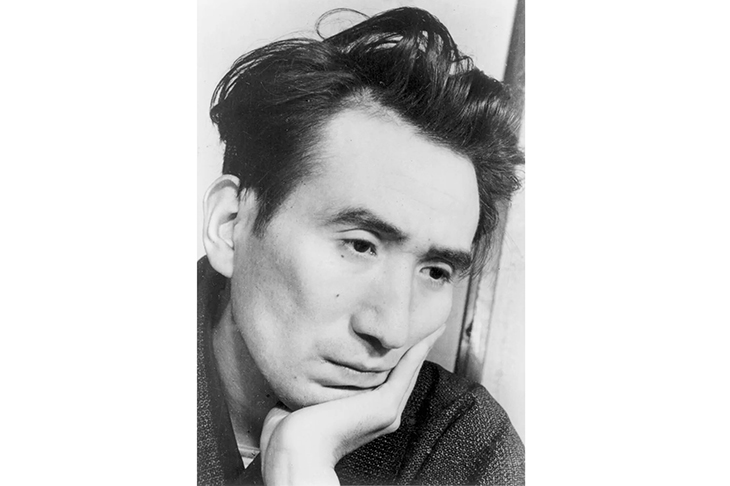
In June 1948, the writer Osamu Dazai and his last love, Tomie Yamazaki, drowned themselves in the Tamagawa Aqueduct near Tokyo. It was a murky ending to a life which had begun in wealth and social status but which rapidly descended into alcoholism, depression, impoverishment – and literary genius.
During his short life – he died at 38 – Dazai produced a substantial body of work: novels and stories which helped define Japanese literature of the 1930s and 1940s and which are enjoying a significant global reputation now. Often autobiographical in nature, playing games with the blurred borders between reality and illusion, they chart disordered, chaotic lives, exploring isolation, poverty and debauchery with a sly wit and brutal honesty. No Longer Human, published shortly after Dazai’s death, is still his most celebrated work: a disturbing study of human alienation told with tortured jocularity.
This collection of six stories, written on the eve of, or during, the second world war, maintains the persistent theme of estrangement, while also dissecting concepts of patriotism and nationalism and scrutinising attitudes to Japanese identity and social conformity. In the titular story, from 1939, which shot its author to stardom and a place among the literary elite, Dazai transfers his own existential crises into the life of a Tokyo schoolgirl. She candidly relates her mundane day to us – waking, bathing, reading, taking the bus – but her narrative veers off on dark tangents that reveal her resentments, anxieties and frustrations, which are both ordinarily adolescent and chillingly suggestive of wider problems. It is a brilliant piece, Dazai’s own life skilfully relocated into another to explore universal questions of individuality and Japan’s own particular sociopolitical complexity as war loomed.
The other stories are no less powerful, including one featuring a woman who leaves her artist husband because of his obsessive ambition (which might be read as an allegory of Japanese militarist determination). In another, a woman waits on a station platform, and her concerns about the war metamorphose into more profound issues of existential dread, Dazai exploiting to the hilt the intensity and ambiguity of the short story form to leave us in a state of deep unease.
All the stories have been wonderfully translated by Polly Barton, who perfectly captures Dazai’s curious rhythms and idiomatic language, drawing us into the characters’ angst-ridden souls and their alarming confessions.
Got something to add? Join the discussion and comment below.
You might disagree with half of it, but you’ll enjoy reading all of it. Try your first month for free, then just $2 a week for the remainder of your first year.