What drives the anger and hostility of the more radical progressives? What makes them become impervious to facts and celebrate the death of Charlie Kirk? What causes people who believe they are so infinitely good to act in horrible ways towards people with different opinions?
I used to think the reason, when reduced to its essence, was guilt. But it goes deeper and it gets sadder. Let me explain.
I once held a left-wing worldview so I feel qualified to comment on this. I now recognise their need for moral enemies, the allure of ideology and the strange satisfaction of righteous anger. Much of what I describe below, including the pitiful aspects, happened to me.
Through all this, guilt was like a captor.
Progressives, particularly well-to-do progressives, are consumed by guilt and shame. They feel guilt in ancient colonisation. Some feel guilty for the privilege afforded to them by their gender or race. They feel guilty because they went to university, had a supportive family and happy childhood while others didn’t. They feel guilty that their very existence is contributing to overpopulation.
They engage in climate doom: a toxic mix of misplaced personal guilt and excessive anxiety. They are obsessed with planetary Armageddon and this mindset matches the gloom they feel in their own lives and futures.
Some of this guilt is performative and can be seen in their avid participation in Acknowledgement of Country shame rituals.
Guilt is fine when it is reasonable. You should feel guilty if you cheat on your partner or wrong others. But ceaseless and consuming irrational guilt – often for things which one cannot possibly be personally responsible for – is a kind of sickness.
And it spreads. The guilt-ridden always try to make others feel guilty also. They can’t stand it when people appear to be ignoring the problems in the world which cause them so much angst. Progressive teachers can transmit this guilt to children. As an example, a friend of mine living in Melbourne told me how their 4-year-old child was being taught about the Stolen Generations. They came home from school and asked whether they were bad because they were white.
Progressives want others to join the cause and stop living in their ignorant peace. They think that if others become like them, something will change. But of course, this only spreads the misery.
While some guilt may provide troubled people with a masochistic thrill and virtue credits as they publicly self-flagellate and submit to minorities, it is ultimately unhealthy.
Misplaced or excessive guilt is unresolvable and eats away at you. It’s like a poison that builds in toxicity and inevitably leads to shame and anger. It is impossible for the mind to carry this heavy and dark burden of responsibility for long. It is much easier, and indeed necessary for survival, to blame other people or external forces.
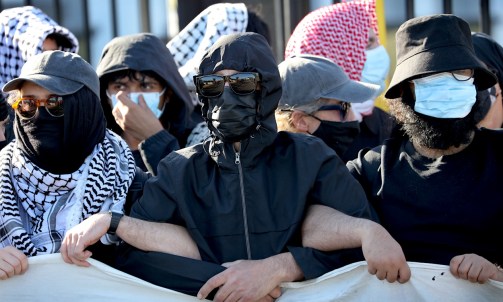
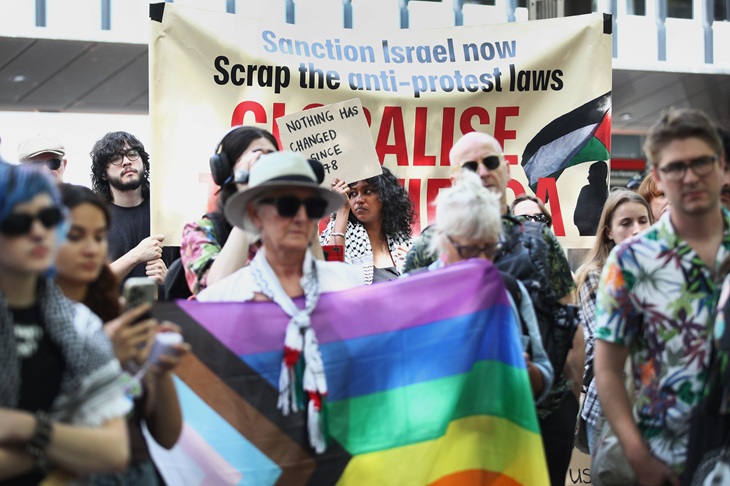
This is where the real anger starts. Progressives rage against those they deem responsible for the problems in the world. They take up the fight and become righteous warriors. They join movements, attend weekly hate marches and find community with the other afflicted. And before long, so sure of their righteousness, they are cheering the death of people who don’t agree with them.
Well-functioning and stable people don’t indulge in abstract guilt for things that happened centuries before they were born and for which they cannot possibly be responsible.
But while this speaks to the perverse guilt felt by privileged white progressives, it doesn’t account for all progressives. Some feel like they are the paragon of victimhood (a black disabled lesbian might provide good reference) and believe that only other people deserve to feel guilt.
Well-functioning and stable people don’t make excuses for their personal failings and adopt a victim mindset.
So there must be something fundamental which both the guilty and the victims share – and also which causes both of these states. This shared element is something akin to discontent. And their discontent is a result of a lack of meaning in their lives.
It is not hard to imagine how progressives would lack meaning when that movement has spent decades tearing down all the meaningful foundations we once had in our lives. They don’t believe in the pillars of society which have served us for millennia like religion, service to country, a unifying social story or the nuclear family. They despise traditional gender roles, even though those offer a clear path and purpose.
They have torn down traditional systems and structures, but never built new ones that might offer a similar sense of meaning.
They see our very culture as evil and corrupt. Yet one’s own country and culture should be the first and easiest points of meaning to grab onto. If you eschew them, you’re already searching for meaning in the dark.
This creates emptiness, powerlessness, ennui, discontent, unhappiness, and ultimately depression. Their sadness causes them to develop a heightened attention to suffering and injustice – particularly in relation to themselves. And this poor mental state provides fertile ground for guilt and victimhood to thrive.
Progressives need their movements and their safe spaces because those are like group therapy for troubled people. Their noble anger and the good fight provide an outlet for their internal animosity and chaos. They claim to scream at societal injustice, but really they are screaming out in pain.
Because they lack personal direction and a sense of themselves, they adopt the group identity of the movement, submit fully to the ideology and dissolve into the hivemind. Their identity and the ideology become indistinguishable. An attack on the ideology is an attack on them. They become defensive, nasty and aggressive when their belief-identity system is slightly questioned.
They stop thinking logically. Reality must be bent to fit an ideology that has already been decided as true in their minds and in their group doctrine. Debate is impossible. They can’t bear opposing opinions.
They are disciples of a movement and they must learn who is and who isn’t on their side, who is evil and who is good, what can and cannot be said – they must be an ally at all times, lest they be ostracised and their identity be lost again. There is no room for nuance, discretion or questioning. The ideological playbook must simply be memorised, spread and defended at all costs. The disciple is now a warrior with an almost divine mission.
Their selfless hero status, Defender of the Oppressed, gives them something to finally feel good about. They get hooked on righteousness and virtue. They seek more ways to be virtuous, look for more causes and more victims to save. They attack the responsible – almost always those with power – and obsess over their apparent evil.
But without an enemy, there would be no release for them. The person truly responsible for their sorry state would reveal themselves and a crisis of identity would ensue. Without someone to blame, they would need to begin to fix the problems within themselves, find true purpose and remake themselves into something more stable. This would be extremely uncomfortable for someone with the ego of a self-crowned social saviour.
Inevitably, they find reasons (often tenuous) to be victims themselves as this bestows the highest virtue in their value system. This virtue is their new meaning. This is what puts them above others and allows them to bring others down. This is what makes them right; this is what justifies the horrible actions of their means because their end is right. This is what allows them to brand whole groups of people victims and other groups as villains.
But while this may make them feel righteous and superior, it never leads to contentment. It is not fulfilment. It is not meaning. It just creates more conflict, more division, more anger, more bitterness and more resentment.
Nietzsche spoke of this in his concept of ressentiment. This, he said, was a deep, suppressed bitterness felt by people who see themselves as weak, powerless or unable to act directly against those they envy or resent.
These people cannot be strong, dominant or excellent, therefore strength, dominance and excellence must be evil.
For Nietzsche, ressentiment is resentment that becomes moralised. The weak person turns their frustration into a moral judgment against the strong.
Power becomes oppression. Confidence becomes arrogance. Excellence becomes privilege. Strength becomes cruelty. Weakness becomes virtue. Submission becomes goodness.
They judge others not from truth but from wounded envy.
All this reinforces the victim mindset and value system. It is toxic both for those who believe it and for society as a whole. It is toxic for individuals because victimhood only generates excuses, inaction and disempowerment. It is toxic for society because under each noble cause or fight sit accusations, judgments, villains and the virtuous. It only promotes conflict and division.
It keeps people trapped in angry discontentment.
We should all aspire to stability, meaning, and peace within ourselves before trying to bring peace to a vastly complex, varying and uncertain world.
A good place to start to find meaning would be to realise that our country is not rotten and, while we need to improve the lives of Aboriginal people, we should not look at the past centuries before our birth in shame. A great country has been built by the descendants of those Aboriginals, settlers, and later immigrants. That is nothing to be ashamed of. It is something to celebrate, teach children about and believe in.
Progressives should consider that the traditional meanings and structures we have in society, rather than deserving destruction, are there, and have endured for centuries, because they offer us rare and reliable support in a reliably unstable journey through life.
Travis Kelly is a Melbourne-based writer who writes about politics, culture and Western society. Substack: Western Drift