More than 80 years after it ended, we are still living through the aftermath of the second world war. When people use the word ‘postwar’ they invariably mean this war and the changes it wrought upon international relations, trade, economics, domestic politics, social values and much more besides. Yet it remains all too easy, certainly in the English-speaking world, to cleave to a rather parochial view of that conflict as something that ended up spreading to lots of exotic places while still ultimately concerning the great battle between good and evil that was the Allies vs the Nazis. Can there be any corner of Hitler’s psyche, any charming detail of the home front in Britain, which remains unprobed in books, TV programmes and museum exhibits?
Less common, even now, is a view of the war as a conflict that was global from the ground upwards – defined by interconnected economies and by the differential impact on people around the world of the same technological and ideological innovations, from air power to workers’ rights. Attempts to tell a global story face daunting challenges, as Jonathan Fennell admits early on in Collapse, the first part of a trilogy that sets out to offer just such an account of the war. Scholarship is now so extensive that no one can reasonably claim mastery; the archival material available is so vast that one must make choices early on about focus and texture. A historian must also put their head above the parapet and advance a foundational argument, or at least an organising thought, for the complex narrative weave to come.
Richard Overy managed this in his own global history of the second world war, Blood and Ruins, arguing that the period from Japan’s invasion of Manchuria in 1931 to the end of major hostilities in 1945 should be understood as the last great imperial war: an attempt by Germany, Italy and Japan, as relative latecomers to empire, to challenge Britain, France, the US and the Netherlands.
The great strength of the approach taken by Fennell, who is professor of the history of war and society at King’s College, London, can be summed up in a word: sentiment. In seeking to integrate not just regions of the world but also types of history – military, economic, cultural and more – he presses the idea that tens of millions of people actively gave shape to events through their ‘hopes, fears and attitudes’, which fired ‘processes of radicalisation and escalation that cumulatively led to a worldwide total war’.
Sentiment works because desiring a better life or striving to protect loved ones in profoundly uncertain times connects people living in cultures as distant from one another as Ethiopia and Japan, without blurring meaningful differences between these societies. It adds colour to what could all too easily become a dry recitation of quasi-familiar facts in compressed form. And by gradually building up in readers’ minds an emotional portrait of each participating country and its people, it makes it easier – for this reader, at least – to retain a grasp of what is happening where and when during the regular shifts between locations that a history of this type demands.
Collapse unfolds across 14 lengthy chapters, whose abstract titles and lack of dates may frustrate some readers but which are impressively global in structure right from the start. We are picked up and moved to another side of the world every few pages; but by focusing on common concerns across nations, from strategic interests to economic fortunes, Fennell makes these transitions feel smooth and meaningful. His judgment in condensing complex moments is impeccable and his eye for a telling personal story unerring, from the Ethiopian woman who goes from making flatbread to being conscripted by her husband for war against Italy to the Japanese soldier who writes with disgust about the casual violence meted out by boorish senior officers. Indeed, morale is a big theme for Fennell, and much of the impressive archival work that has gone into this book focuses on letters, censorship and the concern shown by national authorities for their populations’ shifting feelings about the war.
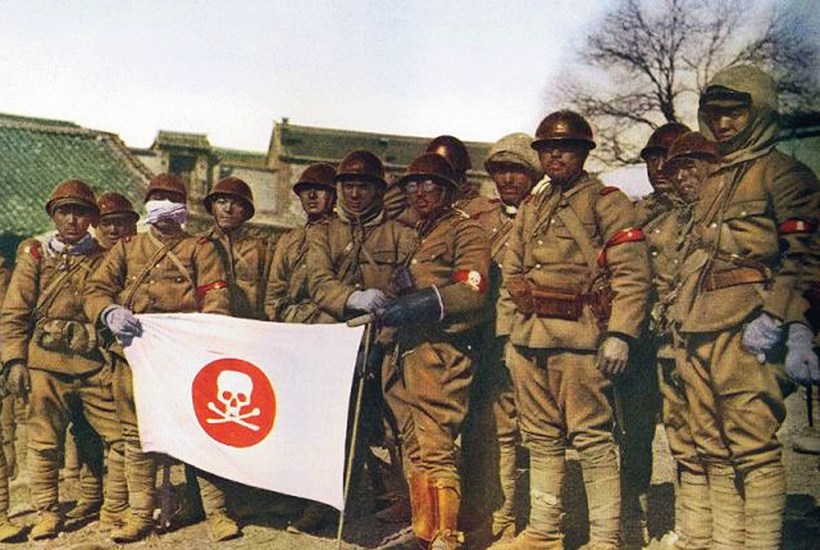
Readers who are relatively unfamiliar with the general history of the second world war might find Collapse a little abbreviated and episodic; and anyone wanting to understand the conflict from a particular country’s point of view would of course do better with a national history. But for the no doubt large number of people who want to get an idea of a world at war, rather than a European war playing out across the world, the book is sensitive, thoughtful and admirably well-informed. China at last earns its rightful – if distinctly grim – place in this story, as do other parts of Asia and Africa, making for a weighty achievement which will have readers clearing space on their bookshelves for parts II and III.
Got something to add? Join the discussion and comment below.
You might disagree with half of it, but you’ll enjoy reading all of it. Try your first month for free, then just $2 a week for the remainder of your first year.