The highly charged debate about multiculturalism, monoculturalism and Australian values is generating more heat than light because people are arguing at crossed purposes. Culture and values are used interchangeably, but they are not the same. Values are the principles that underpin a society. Culture is how people live in it.
Values are peacefully casting a vote, even an invalid one. Culture is eating a democracy sausage on the way. Voting is compulsory. The snag is optional.
Opposition leader Angus Taylor wants immigrants to adhere to core ‘Australian values’, democracy, the rule of law and basic freedoms. This is what political scientists call civic nationalism. Taylor is defining Australia by its institutions and principles.
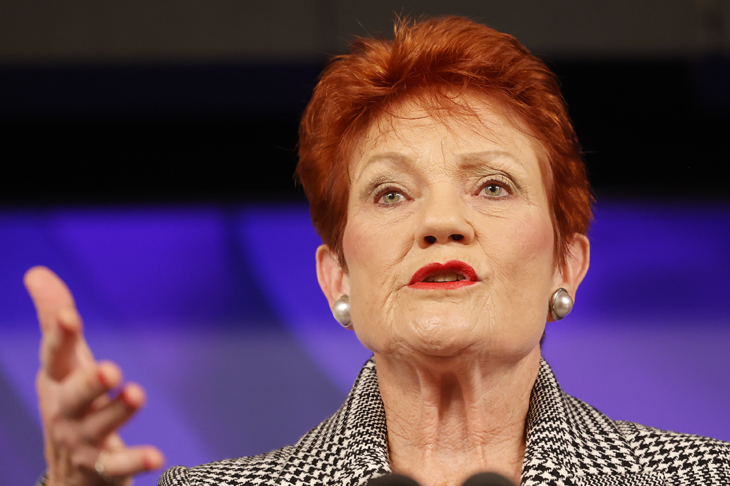
Senator Pauline Hanson says monoculturalism is about ‘the culture of the nation and who we are’ and says that, ‘Our traditions, our own cultures, our language, our dress, our laws, these are all monocultural.’
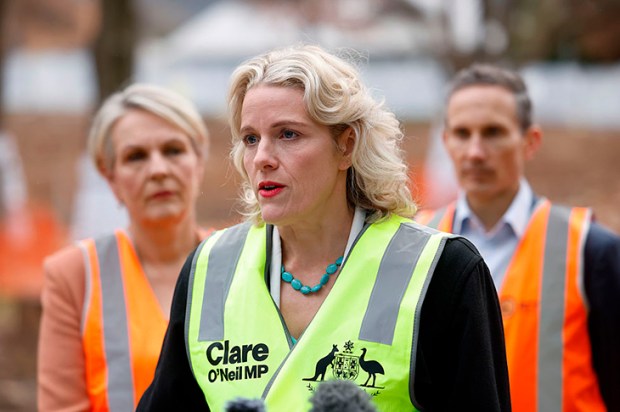
What does this even mean? How can there be monocultural ‘cultures’? Isn’t that a contradiction in terms? What is our monocultural dress? A hi-vis vest and a hard hat? An Akubra and moleskins? A bikini or board shorts? Once the questions are asked, it becomes apparent that what unites Australians is not a national monoculture but a commitment to respect our laws and our way of life.
Multiculturalism’s meaning depends on who defines it. Descriptive multiculturalism is simply the observable fact that Australians have ancestry from hundreds of countries.
Normative multiculturalism is a political philosophy. It argues that the state should recognise, support, and sometimes preserve distinct cultural communities rather than requiring them to assimilate into a common national culture.
Critics of normative multiculturalism argue that it slides into cultural relativism because Western governments are too frightened to criticise illiberal practices that are part of another culture.
Cultural relativism is the idea that no culture should be judged by the standards of another, or considered better than another, that values are not universal and need to be understood in their cultural context.
Taken to its logical conclusion, cultural relativism makes it difficult for Western societies to defend their principles, such as the equality of all before the law. Instead, they are persuaded or pressured by cultural relativists into, for example, instituting parallel courts for indigenous people or Muslims.
If multiculturalism has multi meanings, monoculturalism is even more contested.
Multiculturalism originated in Canada in the early-1970s when Pierre Trudeau rejected the idea that Canada was a bicultural nation of English and French peoples and instead adopted a policy of ‘multiculturalism within a bilingual framework’.
Monoculturalism emerged in opposition to multiculturalism, advocating that a nation be united by a single dominant culture rather than recognising multiple cultures.
Was Australia, or Britain, for that matter, ever monocultural? Not if you listen to Donald Swann and Michael Flanders. As they cheerfully sang in their satirical ‘Song of Patriotic Prejudice’:
The rottenest bits of these islands of ours, We’ve left in the hands of three unfriendly powers, Examine the Irishman, Welshman or Scot, You’ll find he’s a stinker, as likely as not.
Asked whether monoculturalism was ‘too strong’ a term and Australia should ‘accept people of all ethnic backgrounds and cultures as long as they embrace our values’, Senator Hanson replied, ‘What’s the difference with it if they’re going to embrace our values?’
This suggests that there is less substantive difference between Hanson and Taylor than you’d think from the semantic stoush that ensued last week.
Taylor said, ‘I judge people on their character and their conduct.’ Fair enough, but then he said, ‘If she (Hanson) wants to judge people based on the colour of their skin or their race, One Nation needs to explain that….’ That isn’t what Hanson said.
For her part, Hanson attacked Taylor, saying, ‘I think that Angus Taylor, to actually criticise this (monoculturalism), I think he’s actually sitting on the fence; he can’t make a decision about this. Are you Australian or are you not Australian?’ That isn’t what Taylor said.
Importantly, each should note that this war of words did neither of them any good. They both fell in the polls, while Albanese, who championed multiculturalism, advanced.
There is a difference between ethnic nationalism – a nation defined by ancestry, language, ethnicity or religion; and civic nationalism – a nation defined by shared political institutions, laws and public values.
Historically, Australia has had elements of both, but since the abandonment of the White Australia policy, under the Liberal government of Harold Holt in the 1960s, political leaders have increasingly framed Australian identity in civic rather than ethnic terms.
People can eat different food, celebrate different festivals, worship different gods – or none – and speak different languages at home. But if Australia is to remain a liberal democracy, everyone must accept its non-negotiable civic principles: the supremacy of Australian law, equality before the law, the equal dignity of every citizen and so forth.
That position is neither multiculturalism in a culturally relative sense nor monoculturalism in an ethnic sense. It is a commitment to a shared civic culture grounded in liberal democratic values. It allows for cultural diversity in private and community life while insisting on common public rules and institutions. It explains why appeals to ‘Australian values’ resonate with many people: they shift the focus from ancestry and cultural practices to the principles that enable people of very different backgrounds to live together peacefully as equal citizens.
The paradox is that the civic values that unite Australians were not invented in Australia. They evolved over centuries in the constitutional traditions of the British Isles. Those institutions proved sufficiently successful that they spread far beyond their place of origin through British trade and empire, uniting people as diverse as those who support the Umbrella Movement in Hong Kong, resist the CCP in Taiwan, support the rule of law and democracy in India, fled communism in Vietnam, or Islamist fundamentalism in Iran. Indeed, the Australians who cherish freedom the most are frequently those who have experienced the terror of tyranny in their lifetime, or whose parents have.
Australian values belong not to one ethnicity but to everyone committed to uphold them. Australians become one people through their shared commitment to liberty under the law.
Or to paraphrase Bruce Woodley of The Seekers and Dobe Newton of The Bushwackers in their unofficial national anthem, I am Australian, ‘We are many, but we are one.’ We share a democratic dream, and sing with one voice, ‘I am, you are, we are Australian.’
Got something to add? Join the discussion and comment below.
You might disagree with half of it, but you’ll enjoy reading all of it. Try your first month for free, then just $2 a week for the remainder of your first year.