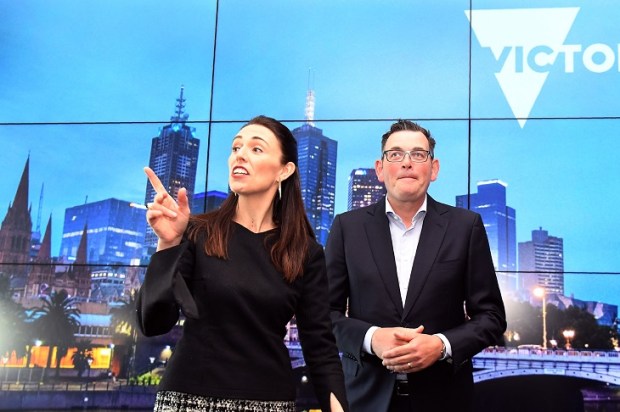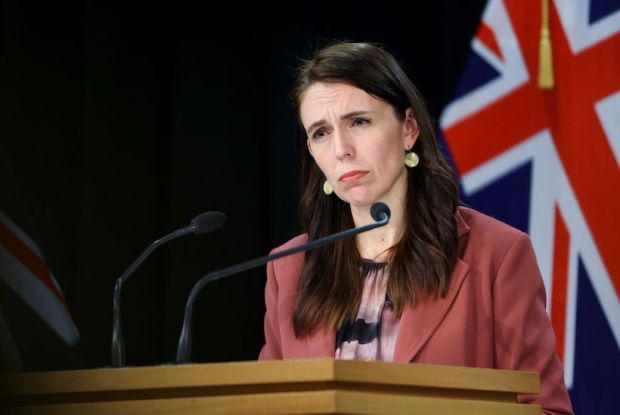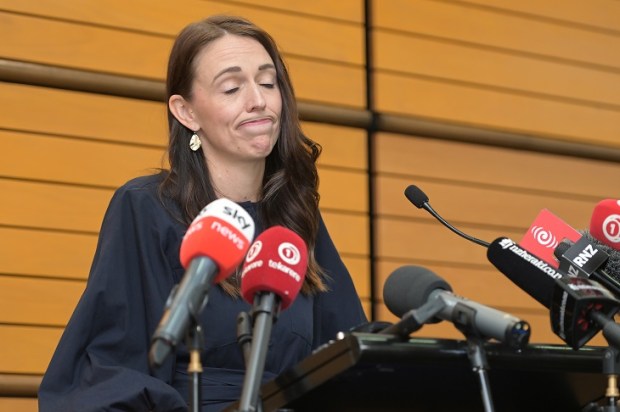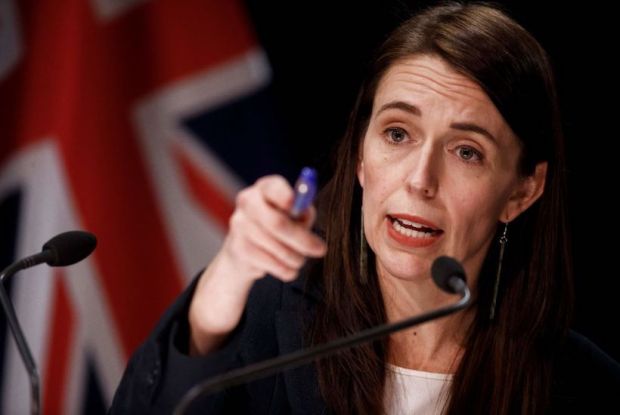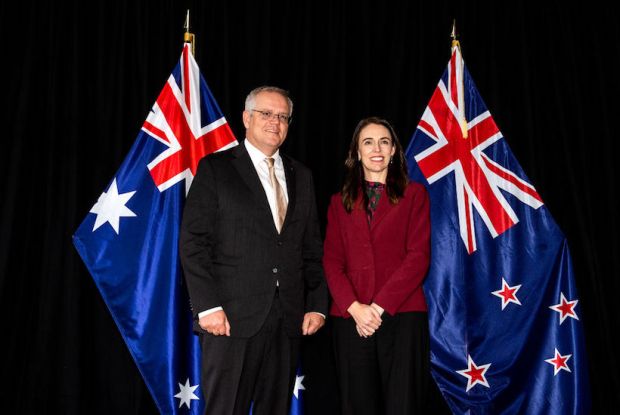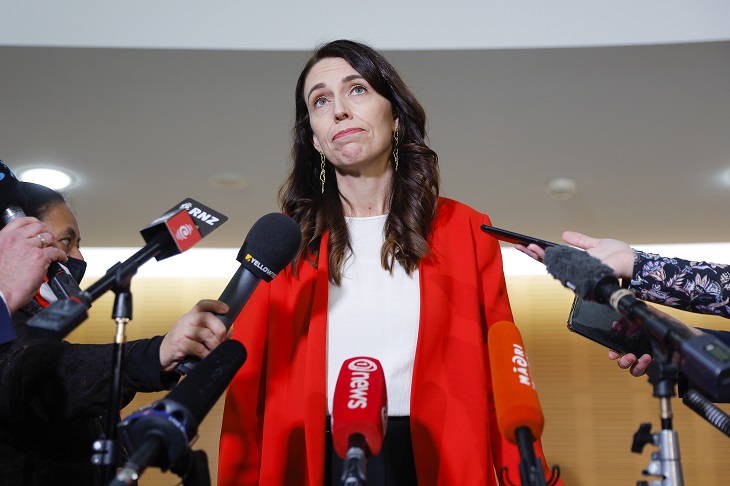
New Zealand’s former Prime Minister, Jacinda Ardern, believes the nation will become a republic within her lifetime.
We have heard similar, and equally unlikely, sentiments from Australian politicians.
Like many of her disposition, Ardern leans toward socialism.
By ‘leans toward’ we mean she was elected as president of the International Union of Socialist Youth in 2008 before leading the Labour Party to victory in 2017 as the youngest Prime Minister in their history.
At the time, she described herself as a ‘social democrat’ and ‘progressive’. How much there is to choose between these identities is anyone’s guess.
Socialism and monarchy are mutually exclusive, and yet there have been pro-monarchist socialists, particularly in the UK where the unique culture of their birth leads to ideological incoherency.
Many who were enthusiastically socialist during university have lived to watch ‘freed’ nations descend into butchery and despotism. The guardrails applied to power in republics are famously weak, often giving way to dictatorial or even Islamic theocratic rule far more oppressive than a ceremonial monarch.
Even the US, held up as the beacon of republicanism, has its problems. The security of the American republic is stitched together largely with the thread of instilled values bred into its people. Values that have strained in recent years thanks to illegal migration and the dirty work of homegrown socialists. While conservatives are attempting to save the republic through the Maga movement, left-wing revolutionaries aren’t doing their Commonwealth republican kin any favours by calling their President a ‘fascist’ or hosting ‘No Kings’ protests … implying that republics can give birth to kings with uncontrollable power.
Suffice to say this doesn’t exactly sell the strength of the republican system to the far more stable constitutional monarchies…
Despite reservations about the monarchy, Jacinda Ardern accepted the title of ‘Dame’ with the Dame Grand Companion of the New Zealand Order of merit as part of King Charles’ 2023 Birthday Honours. The recognition came shortly after her resignation as Prime Minister and before Labour lost the election to the conservatives who won promising to walk back many of her progressive reforms.
One rarity of Ardern’s reign is serving under two monarchs: Queen Elizabeth II and King Charles III.
At the time of Her Majesty’s death, nostalgic popularity for the Royals exploded across the Commonwealth. Even America, the famous problem child of the colonies, seemed to mourn her loss. And while her son, King Charles, lacks the same support, his children, who are the future monarchs, are popular in their own right. Certainly it was enough to dampen the hopes of Australian-based republicans. Even Albanese appears to have abandoned Labor’s plans for a referendum after the Assistant Minister for the Republic was quietly discontinued in 2024.
Why then does Ardern believe New Zealand could be headed for a republic?
After sharing the advice that Queen Elizabeth II gave her – you just get on with it – Ardern had this to say:
‘It’s not top of the agenda for New Zealand because there are so many other really important things going on. But if you ask the question, many would say it’s something that should be in our future. It’ll take time. It’s a complex picture because of the Crown’s relationship with Indigenous New Zealanders.’
It is a view she (unsurprisingly) shares with the Labour leader who replaced her, Chris Hipkins.
Both have admitted in the past that it is not a leading topic of debate in New Zealand. No doubt that is because the monarchy does not constrain the people of New Zealand, only the political class. The best argument the socialist-leaning left can come up with relates to decolonisation, just don’t ask them about the benefits of colonisation … like the system of government these politicians belong to. Parliament is not indigenous.
It is easy to see why Labour leaders don’t talk about republicanism unless pressed. The movement has been far more fringe than in Australia and constitutional reform is complicated by the Treaty of Waitangi.
While technically it would be easier for New Zealand politicians to trigger the change, socially and practically it may be more complex.
Back in 1973, the Labour Party had a crack at changing everything at once: the flag, the anthem, and the head of state. They failed. As did other Prime Ministers and ministerial agitators over the years who tried to use the turn of the millennium as an excuse for change or even, on at least one occasion, the perplexed reaction of Asian trading partners. The last bill for a New Zealand republic was put forward, and defeated, in 2010.
It is interesting that while New Zealanders of European origin fantasise about a republic, many within the Māori have a deep love of the British monarchy. In 2004, Governor-General Dame Silvia Cartwright said, ‘We often overlook the intense loyalty and love the Māori people have for the Queen – probably more intense than many people of European descent. This is a history that’s never going to die.’
And keep in mind, those advocating for republicanism have no answer when it comes to the constraint of power offered by the monarchy … the political safety net that outright prevents Prime Ministers and Presidents from slipping on the crown of Dictator.
Scepticism toward republicanism did not only intensify due to the death of the Queen. The event coincided with the Covid pandemic which opened many people’s eyes to the already frightening power of government and the callous way in which that authority was expanded and enforced upon the public. Asking those who lived through Covid to grant politicians more power is a tough ask.
Ardern’s government declaring itself the ‘sole source of truth’ did not help the republican cause.
Republicans have far more chance of changing the flag or the anthem than they do implementing a full republic.
Before New Zealand explores the possibility of a republic, it will have to deal with the far more divisive problem of Indigenous vs Colonial rights and a cultural unrest that has been exacerbated by aggressive Marxist policies in recent years.
A once largely unified nation has been torn apart to the point that even water rights and the name of their nation have divided along racially charged lines.
Flat White is written by Alexandra Marshall. If you would like to support her work, shout her a coffee over at donor-box.