We have been hearing that word ‘deradicalisation’ tossed around again of late, normally as a question:
‘Will they undertake a deradicalisation programme?’
The allied question is: ‘Will they be forced to be part of it or invited?’
Both questions sit on unstated assumptions. If my guesses are anywhere near accurate, those hidden beliefs make the discussion around this procedure shallow, or even worse, blunt manipulation.
Without having access to the ‘curriculum and processes’ that are actually involved in these proposed programs in Australia, I suggest the following mistakes in the concept of ‘deradicalisation’.
Firstly, the proposed programs are largely (though not entirely) in response to people coming to Australia who have political commitments different to our Judeo-Christian heritage. In particular, the West increasingly finds itself confronted with the more extreme ‘Sharia law’ framework promoted by what some call ‘political Islam’.
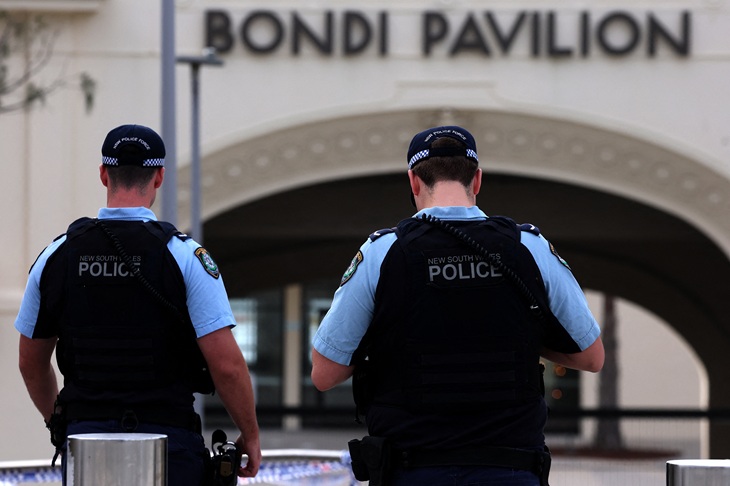
Further, Islamic radicalisation, a common link between terror attacks throughout the West, has brought this contrast of beliefs to a head since the murder of 15 people at Bondi Beach.
Therefore, it appears the purpose of deradicalisation programs pertains to ‘converting’ someone with one set of values to another set of values. If we are engaging in discussions about our values, we are also inviting consideration of our beliefs, because these give us the framework for what we consider is important in our lives – the choices where we give privilege to one set of actions over another set.
On what do we base our beliefs? Our faith, generally, where ‘faith’ represents the unstated assumptions we have that prop up our hopes for today and tomorrow. In this understanding, what the government is proposing is a conversion program, which is ironic because state-level governments have banned such activities in other contexts.
How is such a conversion achieved?
Is it possible to simply describe and explain a new set of beliefs, and then to demonstrate the superiority of the alternative to what the person is currently committed? Sometimes that might have an impact, but in our current context, it is doubtful. Belief in Islam as a social, religious, and political structure has probably been taken to heart. Instruction alone does not shift commitments when the heart is set. As others have commented, we cannot force the soul of another.
It is what Victor Frankl described in his Search for Meaning. Those in a concentration camp who would not, in their hearts, give into the antihuman treatment they received, survived more than those who let go.
And this kind of human reflection exposes the pretence of governments who say they can run such programs and see such deep and personal turnarounds. Do they believe that psychologists have the scientific knowledge to structure such experiences? Let us remember history clearly in this space – whenever social engineers have played in these kinds of spaces, we see coercive manipulation. In the most intense instances, we see physical harm, or more bluntly, torture.
If humans were animals, retraining would be possible. Even then, the training would need to be within the predetermined instinctual inheritances of the species that was involved. Going outside of those parameters would lead to neurotic actions being the new pattern of behaviour.
However, humans are not animals. We are at our most ugly when we act this way (and if you haven’t read it for a while, go to the classic description of the conflation of animals and humans in Huxley’s Animal Farm, or more subtly in Golding’s Lord of the Flies).
This poses a difficulty for atheists. How can they appeal to the heart of someone when they believe we are simply physically predetermined beings shaped by our social contexts? They deny that we have agency in the face of our physical and social natures, because to accept that we do, would introduce the necessity for us have self-consciousness beyond our socially contextualised physical selves.
And, how can we explain that self-consciousness if we resist the idea of us being ensouled creatures? Philosophers still debate, wrestle and in truth at times, run away from such discussions. I have rarely heard politicians being willing to engage in such reflection.
It is part of why we find ourselves in such conundrums about ‘What is a woman?’ or, ‘Let’s agree with social cohesion…’ without any clear basis of understanding on what such cohesion can be built. The ‘deepest’ the conversations go is in the realm of values. However, values reflect beliefs, which come from that in which we put our hope and vision for the future (our faith).
Deradicalisation programs? CS Lewis warned what the politics of this looked like in his adult fantasy novel, That Hideous Strength. It is not pretty, but it is realistic.
Speaking of Frankl, one of his lessons from surviving a concentration camp was to have a redress of the rampant individualism that enables people to ignore that society needs a common mind, based on a common faith, to survive:
Freedom, however, is not the last word… Freedom is but the negative aspect of responsibleness. In fact, freedom is in danger of degenerating into mere arbitrariness unless it is lived in terms of responsibleness. That is why I recommend that the Statue of Liberty on the East Coast be supplemented by a Statue of Responsibility on the West Coast. (Frankl, 1959, pp. 155-6)
Are deradicalisation programs ways of growing freedom in relation to responsibility? No, that is only achieved when we voluntarily commit our hearts to one another in good faith. It is only sustained when we actively remind those already here on what our civility is based. It is only sustained when we slow down and stop those who wish to come and upend those beliefs. It is not achieved by government-run mind-game activities.