Mary Beard opens this book with a recollection of her first meaningful encounter with the ancient world. It was 1960, and she was five years old, visiting the British Museum with her mother. Peering into one of the glass cases, she spotted an unassuming, oddly triangular loaf of bread from ancient Egypt. Seeing her struggle to obtain a better view, a curator lifted the object out. ‘Never under-estimate how powerful the simple act of unlocking a museum case can be,’ Beard reflects 66 years on.
She describes Talking Classics as ‘more a memoir than a thesis’, but it is also a thought-provoking meditation on wonder. It was thauma, she reflects, that Aristotle held responsible for sparking philosophical thought to begin with. The theme takes her from the New Kingdom loaf to the streets of Pompeii, where many another bread roll is preserved after being carbonised in the eruption of Vesuvius in AD 79. The buried city, which Beard has studied in detail, fascinates as one of the places where the ancients can be seen ‘sometimes literally with their pants down’.
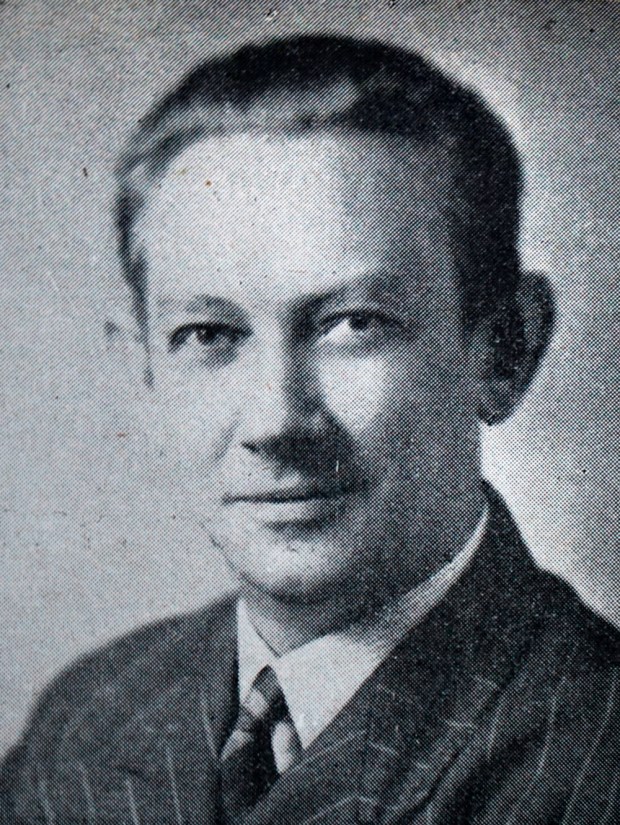
In her love of the seedier, seamier, more mundane side of the past, Beard cites a number of unexpected allies. On the one hand she is with Arthur Hunt, the papyrologist immortalised in Tony Harrison’s play The Trackers of Oxyrhynchus, for seeking traces of the day-to-day while his colleague Bernard Grenfell lusted after lofty works of literature. On the other, she is with E.R. Dodds, the Irish philosopher and mystic, who shocked the old guard of Oxford by becoming Regius Professor of Greek in 1936, despite his scholarship being considered excessively recherché even by academic standards.
An endearingly eccentric character, who kept a pet parrot, Dodds established his expertise in Neoplatonism and ancient Greek belief. He was also obsessed by the occult and by contemporary poetry, befriending T.S. Eliot, Louis MacNeice and W.H. Auden. His prizewinning The Greeks and the Irrational helped him straddle the gap between the academy and the public. Beard wrote her doctoral thesis at Cambridge on religious belief in the Late Roman Republic and is also a superb straddler. While her focus has continued to be predominantly Roman, the irrationality that lurks beneath the orderliness of the ancients is a major aspect of their appeal for her.
This irrationality underpins not only why Beard researches them – ‘I don’t study the Greeks and Romans because I love them (any more than virologists love viruses, or astronomers love black holes)’ – but also why she finds them so slippery. She makes the point that an academic may achieve a firm understanding from archaeology of how a Pompeian bar operated, but would never be able to ‘fit in’ if they could be transported there. ‘It was all so unimaginably different,’ she quotes MacNeice, ‘and all so long ago.’
Readers may be surprised by Beard’s admission that she finds imagining the world the Romans inhabited as difficult (but as exciting) as imagining the infinity of space. But the statement hints at two of the conflicts with which she has grappled throughout her career. Namely, how does one reconcile the sense of wonder at what being a Roman felt like with the impossibility of ever truly knowing; and how does one embrace the propulsion of that wonder while acknowledging the unacademic nature of even asking what it was like to be alive back then?
Talking Classics is not memoir-like in the way of Dodds’s Missing Persons or MacNeice’s The Strings Are False. Aside from the anecdote about the bread, it contains relatively few childhood or family reminiscences. Growing partly out of a lecture series delivered at the University of Chicago in 2023, it feels more like a philosophical reckoning between Beard and her scholarly persona, and is all the more interesting for that. We feel her tussle in a deceptively intimate way over the very meaning of history and the expectations of a historian.
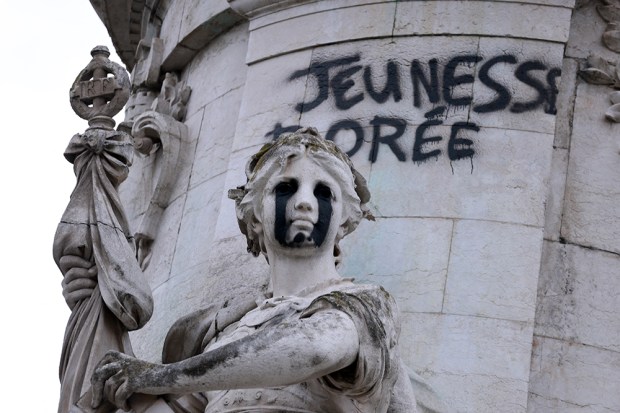
The book arrives amid heated discussions of the Classics being imperilled. A note at the end reveals that the University of Chicago has now paused admissions to its postgraduate Classics course. A number of universities in the US have abandoned the word ‘Classics’ altogether in preference for ‘Ancient Mediterranean Studies’ or something similar; and there have been calls to denounce the subject as a tool of racism, fascism, imperialism and other-isms.
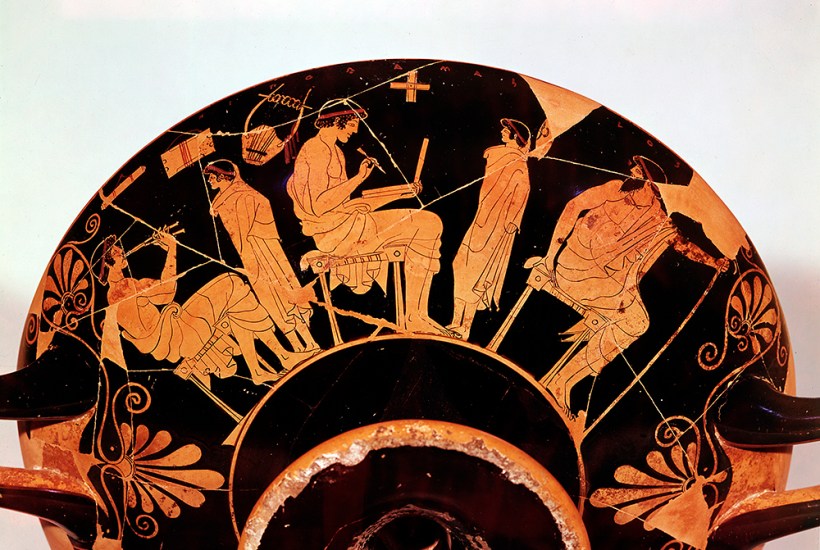
Beard offers an intelligent defence by engaging directly with the history. ‘Classics’, she explains, derives from the Latin adjective classicus, which was used to denote the best writers in a text of the second century. Removing ‘Classics’ may reduce its elitist undertones, but the words ‘classroom’ and ‘classes’ are still in use. Trigger warnings have similar limitations. ‘If you want Classics,’ she writes, ‘you have to take the troubling topics, too, and you will miss a lot if you don’t ask what they mean to you. This can be about looking our demons in the eye.’ Beard is less staunch in her argument for studying the ancient world in the original languages, but reflects that ‘there has never been an occasion on which I haven’t learned more that way’.
Is the challenge of entering the Romans’ world so different to acclimatising to another culture now?
Her passages on the modern history of the subject are especially enriching. She notes Mussolini’s adoption of Roman fasces to symbolise authority and describes the rearrangement and restoration of Roman monuments under his aegis. It was interesting to learn that, whereas Mussolini knew nothing of ancient Rome’s architects, Hitler, touring the sites with him, could at least name Vitruvius.
Reading this book feels rather like peering into Beard’s cerebral cortex through an opened glass case. It produces a contagious sense of wonder, yes, but also a deeply human desire to reach in and attempt to relieve her of those conflicts, as intractable and essential as they are. Is the challenge of entering the Romans’ world so very different from that of acclimatising to another culture today? Might it yet lie within the parameters of academia to examine the past from a more humanising perspective? Ought Classics to defend itself more robustly against criticism, given that there are so many other fields with fraught histories? I don’t have the answers to those questions, but I am very glad to have been prompted to ask them.
Got something to add? Join the discussion and comment below.
You might disagree with half of it, but you’ll enjoy reading all of it. Try your first month for free, then just $2 a week for the remainder of your first year.