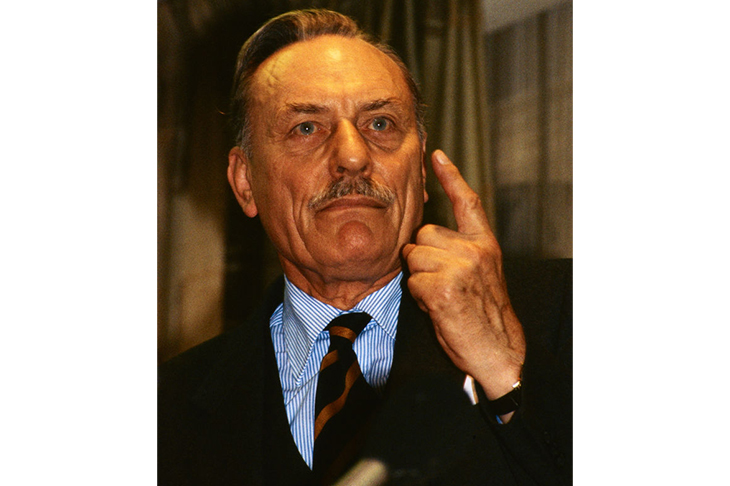
‘You don’t tax a loss. You only tax a profit.’ That was the great insight of Enoch Powell six decades ago, when Harold Wilson’s Labour government seemed determined to tax British industry progressively into decline.
Powell was the brilliant British maverick intellectual-turned-politician – the subject of Simon Heffer’s magisterial 1998 biography Like the Roman: The Life and Times of Enoch Powell, republished this month. His point was less ideological dogma than economic reality. Profit was not a social evil to be punished, but the indispensable source of national wealth.
Profitable businesses employ workers, generate investment, expand industries and, ultimately, provide governments with the revenue required to fund hospitals, schools, pensions and the modern welfare state itself. A society that steadily erodes the incentives to invest, build and create wealth eventually undermines the foundations of its own prosperity.
Remove the rewards for risk-taking and entrepreneurship, Powell warned, and decline becomes unavoidable.
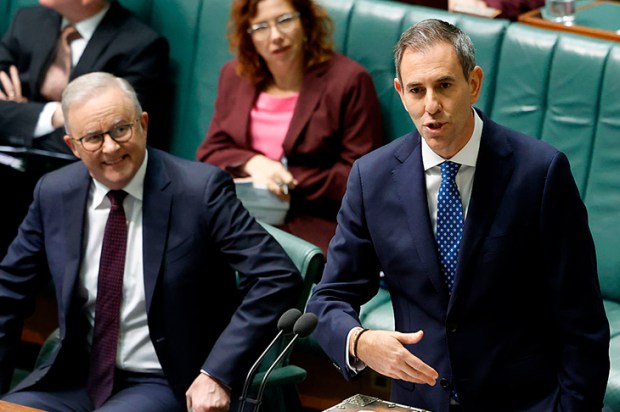
Six decades later, the Albanese government’s budget – and its increasingly faltering attempts to defend it since Jim Chalmers delivered it on May 12 – suggest that this lesson still has not been learned by many left-of-centre governments.
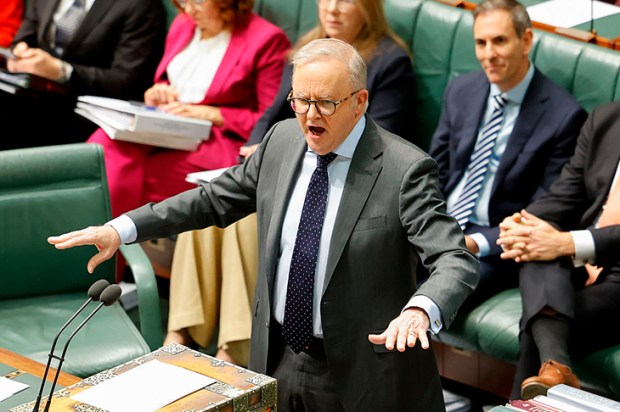
Labor’s budget has quickly evolved from an economic gamble into a political fiasco. A Prime Minister who repeatedly assured voters that negative gearing and capital gains tax concessions would remain untouched now asks the electorate to accept precisely the opposite. Governments are entitled to change policy. What corrodes public trust is when they seek office explicitly denying any intention of doing so.
Yet the larger problem lies deeper than political credibility. It concerns Labor’s instinctive suspicion of profit, markets and entrepreneurial success.
The Prime Minister and his Treasurer –both life-long wage-earners who have spent virtually their entire careers within politics or the public sector – appear to regard capital formation less as a national necessity than as a convenient revenue source.
Their rhetoric suggests a failure to distinguish between income secured without risk and wealth created through risk.
But entrepreneurs, investors and business owners are not merely ‘the wealthy’. They are the people, as Powell recognised, who build firms, expand industries, employ workers and generate the taxable wealth upon which the care economy ultimately depends.
This is the crucial point so often missing from Labor’s big-government agenda. Investment is not a parasitic activity. It is productive activity. Those who establish companies, back new ventures or risk capital in the hope of future returns accept the possibility of failure, bankruptcy and financial ruin. Many do fail. But without those prepared to assume such risks, economies stagnate.
History suggests that excessive state interference in economic life rarely produces renewal. More commonly, it leads to sclerosis: the suppression of enterprise, the starvation of investment, declining innovation and gradual economic stagnation.
As governments expand their reach into productive life, incentives weaken, capital retreats and dependency on the state deepens. Political figures as varied as Nigel Lawson, Peter Costello, Tony Blair and Bob Hawke all understood that nations cannot tax and regulate themselves into dynamism and prosperity.
Labor’s proposed tax changes will not merely affect property investors – and renters, eventually – despite the government’s efforts to frame the issue narrowly around housing. The measures reach far more broadly, touching share investors, small business owners and entrepreneurs seeking to sell businesses they may have spent decades building.
That is why the backlash from small business has been so fierce. Many see the government effectively arriving at the end of the journey – after years of stress, uncertainty and personal sacrifice – to claim an ever larger share of the reward, despite having borne none of the risk along the way. The state, as ever, arrives late to the party but somehow still expects the largest slice of cake.
Politically, the damage may prove even greater than the economic consequences. Albanese was elected in part because voters believed he represented caution, moderation and stability after the Morrison years. But each reversal, each broken assurance, deepens the suspicion that this government says one thing before elections and another once safely in office.
One also suspects that had a Liberal prime minister performed a similar post-election pirouette, the ABC would now be in full state-of-the-nation mode: solemn panel discussions, rolling analysis, constitutional anxiety and perhaps a Four Corners exposé on the collapse of public trust.
But Labor should still be worried. Political history is littered with leaders who discovered that electorates are profoundly offended by blatant deception.
Remember Paul Keating’s retreat from the promised L-A-W tax cuts, which damaged Labor’s credibility in the mid-1990s? Or Julia Gillard’s declaration during the 2010 election campaign that, ‘There will be no carbon tax under a government I lead’? It became the defining political wound of her prime ministership.
The point is simple: voters rarely forgive political leaders who mislead them. A government that repeatedly breaks explicit promises eventually loses something far more valuable than a policy argument: public trust.
That trust will erode further once Australians recognise the deeper contradiction at the heart of Labor’s agenda. Attacks on wealth creation may generate applause on inner-city panels and in the ABC green room, but they ultimately produce less investment, weaker growth and fewer revenues for the very public services governments claim to cherish – hospitals, schools, pensions, welfare and defence.
Governments that forget this lesson eventually discover there is a limit to how much prosperity can be redistributed once the incentives to create it are steadily diminished. Perhaps that helps explain why the Albanese government is now learning that political capital, like economic capital, can be exhausted rather quickly.
Got something to add? Join the discussion and comment below.
You might disagree with half of it, but you’ll enjoy reading all of it. Try your first month for free, then just $2 a week for the remainder of your first year.