Our existing political elites fundamentally broke trust over the Covid debacle. They panicked, threw the manual out the window, and then used the full power of the state, and state adjacent institutions like universities and media, to impose panic on the whole population and make it effectively compulsory.
Now the lies and incompetencies have become apparent but as most voters aren’t prepared to verbalise this, and most politicians aren’t prepared to admit it, the bond of trust between most elected figures and the electorate has been corroded.
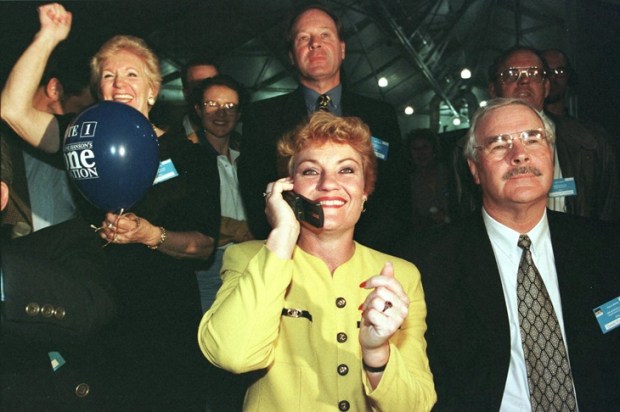
The resulting quest for authority with authenticity is flowing around the world and resulting in the popularity of politicians like Donald Trump, Nigel Farage, and Pauline Hanson.
In January, before the last federal election, voters had high hopes that Peter Dutton was the authentic real deal. By May they realised he was offering much the same as Labor, just with a slightly different fabric, so they chose the original and voted Labor.
This wasn’t an enthusiastic choice, this was a government elected with one of the smallest first preference votes in the modern era, even though it resulted in a two-party preferred vote of massive proportions.
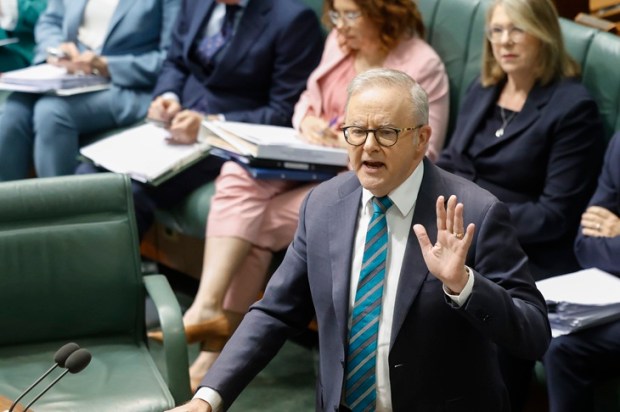
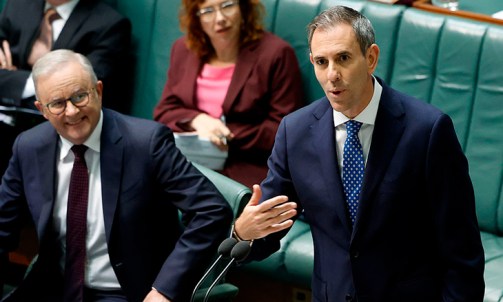
The result built a tall, but rickety pile of government on shaky foundations, which looked deceptively powerful to its owners. This led our Daggy Dad PM and his youthful Treasurer Tonto, to decide to burn some political capital in pursuit of policies they’d dreamt about for years.
Policies like increasing the tax on capital gains and abolishing negative gearing, even though they’d denied they would do that at least 53 times during the election campaign.
They felt they could justify this on the basis of what they term ‘intergenerational inequity’, which purports to describe a situation where older Australians are getting an unequal share of the economy at the expense of their kids and grandkids.
One of the ways this inequity manifests is in the difficulty young people currently have buying a home.
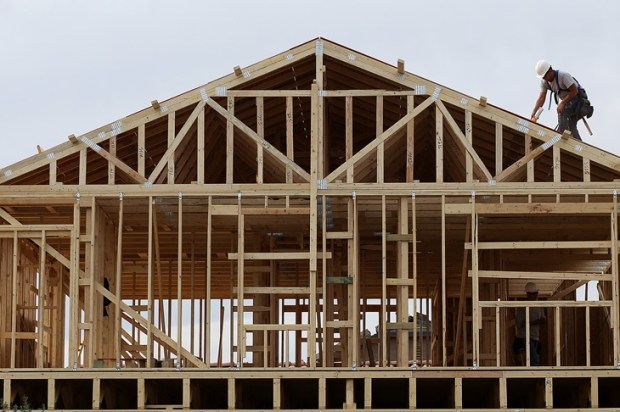
There is a problem with this justification for the policy change. Everyone agrees that the major problem with home ownership is the supply of new housing but not only do the budget papers predict there will be fewer houses as a result of this new policy, but rents will rise.
On this basis house prices will probably rise as well, but it will be harder for young Australians to save a deposit because their already horrendously expensive rents will be even more horrendously expensive.
And it gets worse. People used to save for a deposit by putting their money in the bank. But interest rates have been so low for so long, and deposits so much more expensive that the task has become herculean and would-be homeowners have looked to ways to accelerate their saving.
Cryptos and ETFs appear to be the favoured avenues, but now not only will these forms of savings have their capital gains clipped by the top marginal rate of the would-be homeowner, but they will be taxed at a minimum of 30 per cent, even if the taxpayers’ personal rate is lower than that.
As a policy meant to help first home buyers it doesn’t make any sense, but it does make sense in other ways, and that 30 per cent minimum is the key to it.
So let’s look at another change to tax laws which will make little difference to many young Australians but will to others who are wanting to legitimately share income, limit liability, protect the beneficiaries of their estate, or go into business with other parties. That is the imposition of a 30 per cent tax on trusts.
There is a fundamental problem here in that it misunderstands the whole purpose of a trust which isn’t to hold assets for yourself as the trustee, it is to hold assets on behalf of someone else who is entitled to them.
On this principle trusts have been expected to distribute all their income each year to the beneficiaries who then deal with the tax on that at their own rates. If the income isn’t distributed, and only then, is it taxed at the company rate of 30 per cent.
The elements of separation, and fiduciary duty to a beneficiary, are abrogated by this tax change. It’s as though the government doesn’t understand the concept of holding something on behalf of someone else and owing that person a duty to be careful with it.
And of course they don’t. When they get less tax than they think they might have been able to get away with, such as when there is a discount on the rate paid on capital, they label it as a ‘cost’ to the budget, as though they are giving you something of theirs, rather than just not having, by design, the right to collect it.
In Labor’s mind taxpayers retaining as much of their income as they have a right to is an affront to the politicians’ right to spend as much as they want.
Narcissism is a mental condition where the narcissist does not see the boundaries between themselves and the world. It’s not that they exploit other people, it’s that they don’t see them as being anything but an extension of themselves.
The Treasurer is short of income for his grand designs, so instead of recognising the boundaries imposed on him by the reality of the available tax pool, he just grabs more on whatever justification he can make.
This is a form of political narcissism, and as with any narcissism, when we, the subjects of it, work it out, we see it as a breach of our trust.
The Covid policies were also narcissistic, with governments full of Karens enforcing their phobias on everyone by mostly left-wing governments.
But the Marx, the font of most of today’s collectivist politics was a classic narcissist, so it is no wonder that people of a similar inclination would be drawn to his general philosophies.
But there is more at play here, and it is in the formula, enunciated most succinctly by Tanya Plibersek, and more verbosely by Albanese and Chalmers, that, ‘People who work for a living should not get taxed more on their wages than people who are living on their assets.’
That is why the slogan matters. It is not merely a tax argument. It reveals a moral suspicion and even vilification of capital itself and comes directly from Marx’s surplus value theory of wages which holds that the capitalist and the entrepreneur bring nothing to the table except what they have appropriated from the worker.
It gives no value to innovation, savings, knowledge, or organisation, the domain of the capitalist, all of which are essential to the worker being able to earn any wages at all. Without them we would be reduced to hunter gatherers pillaging and scavenging our living off the land.
The necessity for capital is the major reason that we tax it less than wages. (We also tax it less because it often includes inflation, delayed consumption, risk premium, retained earnings already taxed, and returns from assets bought with after-tax income.)
Capital formation is what leads to productivity and leads to higher sustainable wages, yet everywhere you look in present day Australia this government penalises capital and awards unsustainable wage rises to workers in preferred, unionised, workforces.
With one exception.
If you put your money into superannuation, and that superannuation fund, likely to be run by a union, is less than $3 million, then you can have all the benefits of the old system.
But then it’s not really your money then, it’s theirs, and they will determine how it is invested.
These days we interpret many of the causes of the left through the prism of post-Marxism. The idea is that as capitalism lifted all boats, traditional class warfare based on class and economic deprivation no longer motivated citizens, so they had to find new classes of oppressed – sex, gender, race, disability, and so on.
In this budget that class is the young, and they’ve found classic Marxist tropes to express the ‘exploitation’ based on wage earners versus savers and retirees.
This is a final breach of trust. The Australian promise is not that everyone will be equal (the subtle connotation of that word ‘equity’) but that everyone will have a fair go. That fair go has from the beginning included the promise of home ownership and savings. The chance to get ahead. A fair go for those who have a go.
By trying to set up a war of wages against capital not only do they betray that promise, but they betray the workers because their real wages will suffer over time. But that’s okay by them because the poorer people are, the more likely they are to vote left.
And it’s not really about you, it’s always been about them. You can trust me on that.