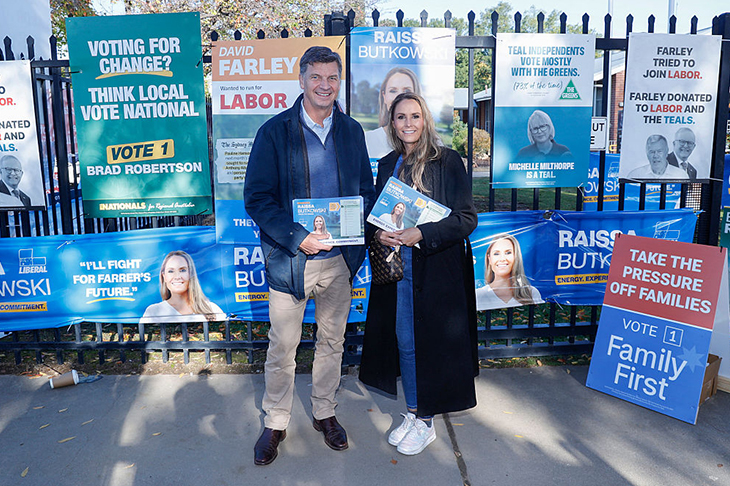
It is with a tone of despair, but some optimism, that I have been cogitating on the result of the Farrer by-election, the decline of the Liberal party, One Nation’s resurgence as a major political force and how the Liberal party should handle that combined result.
On the one hand, One Nation has obviously touched a chord with enough of the Australian voting public to influence the result in a significant by-election, with the implication that it might continue to do well, or even better, at the next general election. On the other hand, it might be doubted that One Nation will hold onto that result: Farrer was, after all, only a by-election, which voters tend to see as a convenient vehicle for making a protest vote without giving any long-term commitment to vote the same way in the future.
So, what should the Liberal party do about it? The first thing is to recognise that it was an appalling result for the party, which scarcely needs stating. If the result at the by-election was repeated at a general election, the party would be decimated, and to the extent that it might as well pack up and go home, for it would be the end of the party as a viable force.
Secondly, how did this appalling result come about? My view is that it is the result of the Liberal party steadily departing from its basic principles and not arguing for the very principles that were the reason for it existing at all. The overall impression of the party is that it no longer believes in free enterprise, the strength of the individual or small government. In that regard, I cannot remember the last time that any of its front-benchers stood up and argued for any of those principles. But there have been countless occasions where the response has been to oppose even modest reductions in spending and to do so on the ground that cuts in government spending are unfair or uncaring or some other such bromide for which a political party can at best earn short-term support but with long-term rejection. What will help the Liberal party escape from its long-term demise is to re-commit to its founding principles and argue for them, which at the present it simply does not do. So there must be a re-statement of the party’s fundamental beliefs and a campaign of arguing for them.
In that regard, it will naturally be asked exactly where cuts in government spending should be made. A good first step would be to make an assessment of all federal spending and, where legitimate cuts can be identified, to make a firm commitment to make them and stick to the argument until it is won. It is only by sticking to the commitment to smaller government that the Liberal party can have any hope of restoring its lost reputation as a party that puts the individual first.
Moreover, there is no reason why the case for cuts to government spending should stop at strictly federal matters. The overall Australian regime for government spending is now such a hodge-podge that the party should also look at state spending as well.
In particular, Victorian spending is now at scandalous levels and the outcome of the next federal election will be largely determined in that state, where virtually no federal electorate is safe for the Liberal party. Indeed, in that state the public concern at government spending being too high is largely a criticism of the state and not solely of the federal government. My solution is for the federal party to declare that extravagant projects like the pointless Victorian Suburban Rail Loop with its potential budget of $30 billion will simply not go ahead and that its cost will be deducted from federal payments to the state. Likewise, the federal party should demand that the trillion-dollar debt of Victoria will be substantially reduced by similar deductions. Yes, these proposals will be received with outrage, which is exactly the electric shot that the Liberal party needs to restore its shattered reputation as a responsible spender.
Another candidate for ending wasteful spending is the Victorian government’s scandalous quasi-Voice, now well underway as a process of destroying democracy by setting up a rival indigenous government. The federal Liberal party should simply announce that federal money for Victoria will be reduced by whatever the state government is spending on it. Again, after the shock, this will show that the Liberal party is serious about reducing government spending.
The problem the Liberal party has got itself into is that by being just as reckless on spending money and expanding government as the Labor party, it is seen in exactly the same light as a party of big government, big spending and a party that seems to think that human prosperity come from shutting individuals out of improving their own prosperity while the government expands. If the case for reversing this perception is advanced, and persisted with, the people will support it.
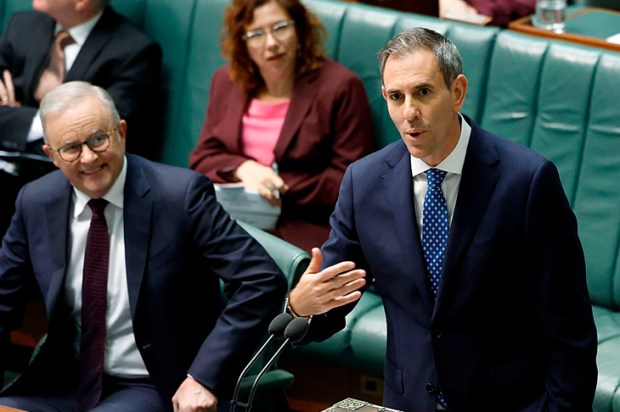
What then should the Liberal party say about its attitude to One Nation? The response so far has not been encouraging. Treating it as a political leper, which seems to be the official position, will achieve nothing. For instance, the arrival of Tim Wilson as shadow treasurer is welcome and at least he can make out a persuasive case when he needs to. He should keep it up. But stridently rejecting One Nation and all its works as beyond the pale and rejecting any notion of working with it, will not help and will permanently alienate its voters who are a new and permanent feature of Australian politics. Its general brand and tone have obviously attracted wide support and the Liberal party should recognise this and act accordingly. At the very least it should restrain its criticism and leave open the prospect of working with One Nation and garnering its voters, who may well decide the next general election. And the Liberal party should get on with it before there is nothing left to rebuild.
Got something to add? Join the discussion and comment below.
You might disagree with half of it, but you’ll enjoy reading all of it. Try your first month for free, then just $2 a week for the remainder of your first year.