Over the last couple of years, there has been a noticeable trend of voters moving away from traditional ‘legacy’ parties and towards a more populist style of politics. This trend can be observed both within Britain, with the rise of the new Reform UK, alongside One Nation in Australia.
This shift of voters’ preferences mainly comes from the belief that ‘legacy’ parties make rhetorical election promises that dwindle and are rarely followed through. Many believe they have been influenced by lobbyists, or that politicians act mainly in their own interests rather than those of the public. Overall, they no longer feel they represent the interests of the people.
This has resulted in people wanting a more dramatic change away from the traditional mindset and towards a more populist (meaning ‘what the people think’) style of politics. It is becoming less about ideology and more about perceived betrayal by mainstream parties and media, which has opened space for outsider figures who promise authenticity over political rhetoric.
This pattern can be traced back to the rise within the American political scene, with the popularity of a polarising figure, Donald Trump. Trump positioned himself not as another politician but as an ‘outsider’, not someone who sits within the traditional legacy framework. During his election campaigns, he framed both parties, the Democratic Party and the Republican Party, as disconnected and not listening to what voters wanted.
This gave Trump a rise in voter popularity due to people feeling as though they were finally being heard, not receiving the same political messaging they were used to. This resulted in not just his 2016 win but also the continued influence of the Make America Great Again movement.
Although Trump is loved and hated depending on political views, it shows how people globally feel less represented within their political systems.
This has also started to appear in Britain, where in 2024 the British Social Attitudes survey conducted by the National Centre for Social Research found that 45 per cent of people almost never trust governments of any party to put the nation above party interests, and 40 per cent do not feel close to any party.
Support for Britain’s traditional governing parties has declined. The Labour Party (UK) has lost roughly 14 points since its 2024 election victory, while the Conservative Party (UK) has remained at a historically low level of support since 2024, according to polling analyses by The Independent and polling data from Ipsos.
This is seen in the rise of Reform UK, which has polled between 24 per cent and 30 per cent across several 2026 surveys. In Australia, One Nation has also risen from 6.4 per cent at the 2025 federal election to over 20 per cent in later polling, according to analyses by The Conversation and ABC News.
These trends are also visible in the media. With the rise of political podcasts, there has been a shift, especially among Gen Z, where a large proportion now receive news primarily from social media, while legacy media influence has declined.
Instead of relying on traditional media, people are increasingly turning to podcasts and independent commentators to shape political views. Figures such as Joe Rogan, Pod Save America, and The Diary of a CEO are now major sources of political discussion. This shift was particularly visible during the 2024 United States presidential election.
This shows that legacy media no longer holds the same influence it once did. Instead, political narratives are increasingly shaped outside traditional institutions.
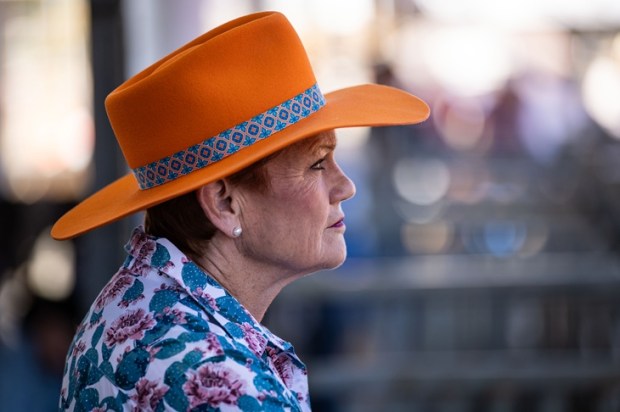
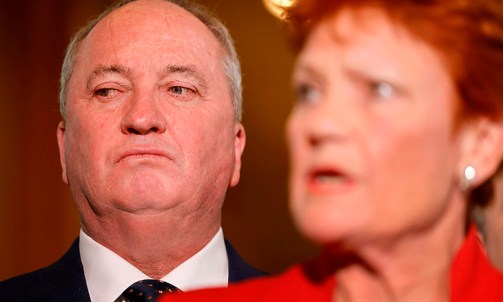
These ‘new age’ media and political movements are now a driving factor in how politics is viewed today. In Australia, Pauline Hanson has said that ‘people see me as a person that’s basically one of them’. This reflects the populist mindset, where people feel they are finally being heard rather than spoken at.
This, however, also leads to frustration with the system, where trust in legacy parties continues to decline.
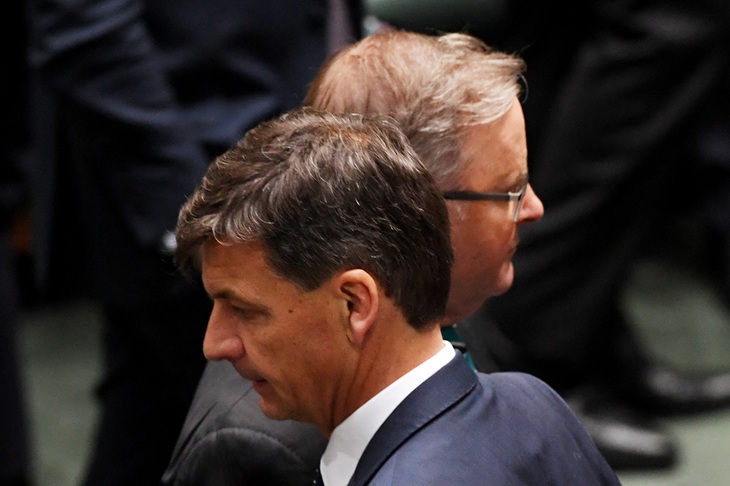
A clear example of this can be seen within the Australian Liberal Party, where opposition energy spokesman Angus Taylor is now advocating for energy independence and oil production. However, he previously served as Energy Minister from 2018-22, which leads some to question why these issues were not addressed earlier.
Similar frustrations exist with both the Australian Labor Party and Britain’s Labour government under Keir Starmer, particularly around issues such as immigration and cost of living.
This overlap of issues creates frustration in the system and reinforces the belief that legacy parties are unable to represent people effectively. As a result, outsider figures such as Nigel Farage and Pauline Hanson continue to gain traction by positioning themselves as alternatives to the political establishment.
Conclusion:
This leaves many people at a point where they are no longer trusting the main parties, but instead opting for new political movements that act as disruptors.
The way forward for legacy parties may require a level of disruption and a return to grassroots politics, rather than centralised political messaging. This can already be seen in some political figures within the system who emphasise stronger local and community engagement, such as Australian politician Matt Canavan, who has focused on regional issues and grassroots concerns within broader national debates.
Ultimately, legacy parties may need to reconnect with their base in a more direct way if they are to remain relevant. If not, the continued rise of populist movements may not be a temporary shift, but a long-term restructuring of modern politics.