
The worst thing about the government’s plans to force pension providers to invest their money in particular assets is that ministers and MPs themselves don’t have to worry about it. They, of course, are members of a gold-plated pension scheme that is underwritten by the taxpayer. They will receive their index-linked pensions whatever the economic performance of the country or of any particular assets. As for the rest of us, how well we do in retirement very much depends on how investments perform.
That is why it is so obnoxious that the government is trying to force pension funds to invest some of their funds in UK assets and in particular public sector ventures. True, it is only a small percentage – five or ten per cent – but you can be sure that it will grow in future if a government feels short of cash.
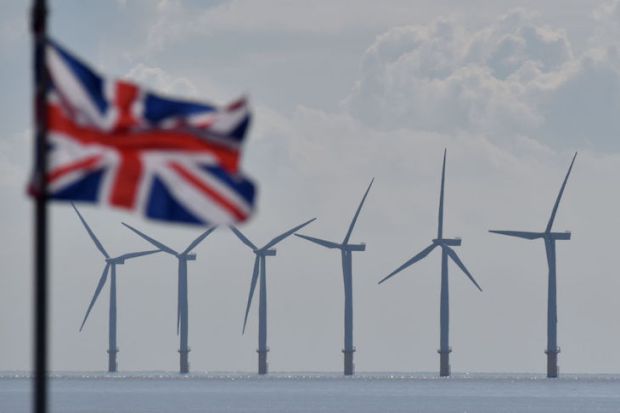
Pension savers won’t in future be forced to put their money into ill-conceived projects like HS2 or wind farms which cannot feed their power into the grid
But thank God for the House of Lords, which has been resisting the proposals for some time. The government has now decided to water them down so that it can get its Pension Schemes Bill through Parliament without further ping pong between Lords and Commons. It means that pension savers won’t in future be forced to put their money into ill-conceived projects like HS2 or wind farms which cannot feed their power into the grid. Under the wording of the bill, pension funds will continue to have to put savers’ interests above all else.
That said, pension funds have hardly covered themselves in glory in recent decades. Many have horribly under-performed – in part because Gordon Brown forced them to invest more in bonds, but also because of their own incompetence. They have helped undermine the UK stock market by abandoning it en masse. In the 1990s, pension funds and other UK institutional investors held over half of all UK shares. By last year this was down to just four per cent. Over and over, the same happens: a UK company’s share price collapses for no obvious reason, while it is still making good profits. Then private equity comes along and buys it for a song. Why? Because UK pension funds have dumped the shares, often buying low-yielding bonds instead. They were supposed to be a safe option, but we learned after the debacle of the Liz Truss mini-budget just how exposed pension funds had become. In order to try to boost returns they had been borrowing heavily to buy their low-yielding bonds. When bond yields rose, they found themselves in danger of collapse and had to be bailed out by the Bank of England. Everyone blames Truss and Kwasi Kwarteng for what happened in 2022, but pension funds deserve their own part of the blame.
Pension funds need to improve their game. But government intervention to tell them how to invest is no answer. Rather we, their customers, need to take a greater interest in what they are doing with our money.