Australia has been here before. Time and again, the country has stumbled upon extraordinary good fortune – gold in the 19th Century, wool, then iron ore, coal and gas in the 20th and 21st Centuries – and time and again it has struggled to turn those booms into lasting national strength. Wealth has arrived quickly, been spent freely, and then faded. The harder work of converting temporary bounty into enduring capability has too often been left undone.
Over the next quarter-century years, the problem Australia faces is not scarcity. It is stewardship. The country already possesses extraordinary natural endowments, deep human capital, and access to global markets. What has been missing is discipline: the ability to treat resource wealth as capital, not income; to plan beyond electoral cycles; and to insist that extraction translates into productive capacity at home. If Australia is serious about being prosperous, environmentally sustainable and strategically secure by 2050, it must learn from its own history and govern abundance far more deliberately than it has in the past.
Lessons from a century of booms
A review of Australia’s economic past reveals a familiar pattern. Resource revenues have tended to flow straight into consumption – higher living standards, tax cuts, asset inflation – rather than being systematically converted into long-term assets. This has made the economy richer in the short run, but left it exposed when prices fall or demand shifts.
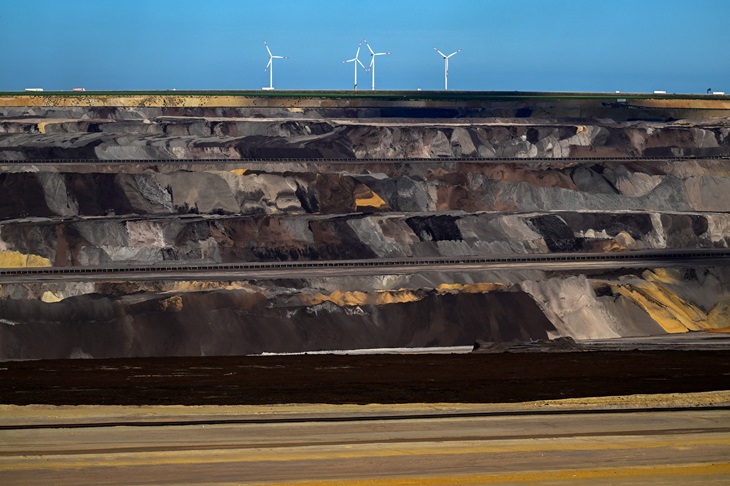
At the same time, Australia has consistently underinvested in what happens after extraction. Iron ore is shipped overseas and turned into steel elsewhere. Gas is exported with limited domestic value added. More recently, lithium and rare earths have followed the same path: dig, ship, repeat. The result has been strong headline export figures but limited industrial depth.
Finally, policy instability has compounded the problem. Shifting tax regimes, stop-start energy policy and uncoordinated federal-state decision-making have made large, long-dated investments harder than they should be. Capital that might have funded advanced processing or manufacturing has instead gone elsewhere.
Breaking this cycle requires a change in mindset. Non‑renewable resources are not ordinary revenue. They are finite national capital and they should be treated accordingly.
Locking in intergenerational wealth
A credible long-term strategy should begin with a sovereign wealth fund of real scale. Australia already has precedents – the Future Fund among them – but the ambition needs to be larger and more explicit. A fixed share of resource rents, collected through royalties, resource rent taxes and direct equity stakes, should be channelled into a fund explicitly designed to last for generations.
The rules matter. Contributions should be automatic, not discretionary. Withdrawals should be capped at a sustainable return, insulating the fund from political pressure. Transparency and independent governance should be non-negotiable.
Handled properly, such a fund would achieve several things at once. It would smooth the public finances, buffering budgets from commodity price swings. It would convert depleting resources into a perpetual financial asset. And it would provide a stable funding base for national priorities – research, infrastructure, defence – that typically suffer from short-termism. Compounded over decades, even conservative contributions would build a fund of global significance.
Moving beyond the quarry
Australia sits on some of the world’s most important deposits of iron ore, lithium, rare earths and other critical minerals. In a world transitioning away from fossil fuels, these materials matter more, not less. The question is how much of their value Australia chooses to capture.
By mid-century, exporting raw materials as the default option should be the exception, not the rule. Lithium should be refined domestically into battery-grade chemicals and, where commercially viable, turned into cells and packs. Iron ore exports should increasingly be replaced – or at least complemented – by green steel produced using hydrogen. Rare earths should be separated and processed locally, feeding downstream manufacturing rather than foreign supply chains.
This is not about protectionism. It is about competitiveness. Advanced processing is capital-intensive, energy-hungry and technically demanding, which means it will only happen where policy settings are predictable and infrastructure is in place. That calls for long-term energy pricing frameworks, industrial precincts with shared services, concessional finance where markets alone will not move first, and a serious commitment to skills.
Energy as the platform, not the bottleneck
Few countries are better placed than Australia to build an economy powered largely by renewable energy. Sun, wind and available land provide a natural advantage that many competitors simply do not have.
The prize is larger than decarbonisation alone. Abundant, cheap and reliable clean energy is the foundation on which new industries can be built. Green hydrogen production offers one pathway, supporting exports as well as domestic heavy industry. Energy-intensive sectors – aluminium, advanced manufacturing, data infrastructure – are far more likely to invest where long-term power costs are low and predictable.
For this to happen, energy policy must stop oscillating. The emphasis should be on stability, system reliability and cost reduction over decades, not point-scoring over technologies.
People as the decisive input
Physical capital and natural resources are only part of the equation. Without skills, education and research capability, industrial ambition will stall.
This means rebuilding vocational education so that it is closely aligned with emerging industries rather than treating it as a second-best option. It means universities working more closely with industry to translate research into commercial outcomes. And it means an immigration system that fills genuine skills gaps while deliberately building domestic capability over time.
Regional Australia deserves particular attention. Too many resource towns have ridden booms only to face decline once projects wind down. Anchoring processing, manufacturing, and research facilities in these regions – supported by education, housing, and transport – can create resilient local economies instead of repeating the boom-bust cycle.
Infrastructure that enables growth
Infrastructure is often discussed, but rarely planned with the necessary time horizon. Over the next 30 years, Australia needs integrated transport, energy, digital, and water systems that are built for future demand, not past habits.
Freight networks must link ports, industrial centres and regional communities efficiently. Digital infrastructure needs to be robust and secure enough to support a data-driven economy. Water security will become increasingly important as climate variability intensifies.
In cities, population growth has to be matched with transport, housing and public amenity. Poor planning is not just inconvenient – it is economically costly. Decisions should be grounded in long-term analysis rather than short-term politics.
Making sustainability an advantage
Resource extraction has long carried an environmental cost. That reality will not disappear, but it can be managed far better than in the past.
Australia should aim to be a global benchmark for sustainable mining and low-emissions industry. That means strong standards, transparent reporting, and ongoing investment in rehabilitation and recycling. Using renewable energy at mine sites, extending material lifecycles through recycling and integrating circular economy principles should be standard practice, not niche experiments.
Markets increasingly value clean and responsibly sourced products. If Australia can credibly offer green steel, low‑carbon batteries, and ethically produced critical minerals, it will not only reduce emissions but also strengthen its competitive position.
Resilience in an uncertain world
Economic policy and national security are no longer separate conversations. Supply chain disruptions, strategic rivalry, and technological competition are likely to intensify in the decades ahead.
Australia therefore needs sovereign capability in critical areas: defence manufacturing, cybersecurity, essential inputs, and advanced technologies. Alliances and trade partnerships matter, but dependence without domestic capacity carries real risk.
Energy independence through renewables, diversified export markets, and sustained investment in research all contribute to resilience. A sovereign wealth fund can help finance this effort without destabilising the budget.
Getting governance right
None of this will happen by accident. Australia’s federal system can be a strength, but it has often produced fractured decision-making and policy drift.
A credible national development strategy – agreed across jurisdictions and, as far as possible, across political cycles – is essential. Clear targets, independent oversight and genuine accountability must underpin the plan. Citizens need confidence that resource wealth is being managed wisely and shared fairly. Without that trust, long-term policy simply will not hold.
From good fortune to deliberate design
Australia has been lucky. Geography and history have delivered extraordinary advantages. The harder task is to turn those advantages into something enduring.
If the country treats resource wealth as capital, builds depth rather than just volume, invests in people and infrastructure, and takes environmental responsibility seriously, it can emerge by 2050 as a more resilient, more capable and more secure nation.
The choice is ultimately between drift and design. With discipline and foresight, Australia can move beyond riding booms and begin shaping its future deliberately.
Peter Bain is a Melbourne-based businessman. He holds a degree in economics from Monash University.