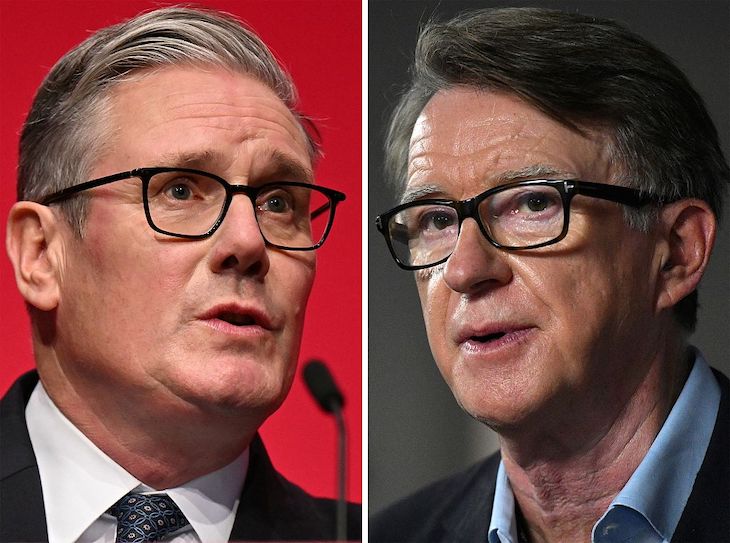
It is judgment day in the Commons for the Prime Minister, Keir Starmer, over what he knew, and when, about the process that led to Peter Mandelson being appointed as ambassador to Washington. Starmer has promised to “set out all relevant facts in true transparency” to MPs this afternoon. It is a tall order. Starmer has to make a convincing case of his version of events – which basically comes down to saying he did not know until a few days ago that Mandelson had failed his security vetting – to a sceptical audience of MPs from all parties. The PM must also lay to rest, once and for all, the potentially deadly charge that he intentionally misled the Commons (an offence that usually ends in ministerial resignation) when he insisted that “due process” had been followed. The stakes could not be any higher.
The PM must also lay to rest, once and for all, the potentially deadly charge that he intentionally misled the Commons
Starmer and his advisers have been in a tail-spin after newspaper revelations last week that security officials recommended the former Labour peer be denied vetting clearance, but were overruled. The top mandarin in the Foreign Office, Sir Olly Robbins, was sacked by Starmer last week for not informing him of this decision. The Prime Minister says he only found out last Tuesday. Why was Starmer not told and sooner? Why did Robbins not inform David Lammy, the Foreign Secretary at the time? Was Sir Chris Wormald, the then cabinet secretary, informed? If indeed he was, why would he not tell the Prime Minister? If he wasn’t told, why not? Why would any senior civil servant decide to keep such a decision secret from ministers, and especially from the Prime Minister?
Such questions are a roundabout way of approaching the essential question about Starmer’s Number Ten operation: was all this done because everyone involved knew that Starmer had made clear he wanted Mandelson in the Washington job and that any and all objections would prove futile? Robbins is due to give his own explanation to MPs of the decisions he made – and why – on Tuesday. His allies have already made clear that he feels unfairly treated for following standard rules. If he were to publicly contradict Starmer’s version of events, that too could prove fatal for the beleaguered Prime Minister. Just as damagingly unclear is on what basis did Starmer say, publicly, that Mandelson had passed vetting. Who told him this and when? The opposition parties smell a rat, and are united in demanding he resign. Plenty of MPs on his own side have been left despondent.
The dangers for Starmer don’t end there. The Prime Minister must also account for the actions of his wider Number Ten team, past and present. Why, for example, did Tim Allan, then Downing Street director of communications, not tell him about the story in the Independent last September about doubts thrown up by Lord Mandelson’s vetting? Why did no one in government appear remotely curious about the reports? Did anyone seek detailed answers? At the very least, it would suggest a culture of wilful blindness in Downing Street. How does Starmer go about rebutting this widespread impression?
Sir Keir also faces questions over the decisions taken by Antonia Romeo, the new Cabinet Secretary, and Cat Little, the Permanent Secretary at the Cabinet Office. Both senior mandarins were aware of the Mandelson vetting problem in recent weeks but did not tell the Prime Minister until Tuesday last week. Why was he not told sooner? The delay has been explained away by the need to investigate properly all the issues raised. Even so, when Starmer discovered on Tuesday night that he had – inadvertently – misled parliament by saying that “due process had been followed”, why did he not come to the Commons at the earliest possible opportunity to set matters straight? Nor did he set out the latest damaging developments to MPs when he appeared in the Commons for Prime Minister’s Questions the next day. Again, why not? The Prime Minister certainly has a lot of explaining to do.