When war is in the air, young men traditionally sign up – and they traditionally sign up, disproportionately, from the north-east of England, where I grew up. The country must be prepared for war, says Air Chief Marshal Sir Richard Knighton, head of our armed forces. But what use is all this puffed-up talk of a battle-ready Britain if we have no soldiers? In the north-east, the supply of soldiers has slowed not just to a trickle but to a drip.
Sunderland, for instance, home to nearly11,000 veterans, sent just ten men into the army last year. A reporter called Fred Scul-thorp went to Sunderland for Dispatch magazine last month, to work out what had happened to the north-east’s fighting spirit, but all Fred found was apathy: why sign up when you can sign on? No loss to the army anyway, said the secretary of the Sunderland Gunners club. The lads these days couldn’t fight a cold.
What is Serco going to say when potential recruits ask why soldiers are being tried simply for following orders?
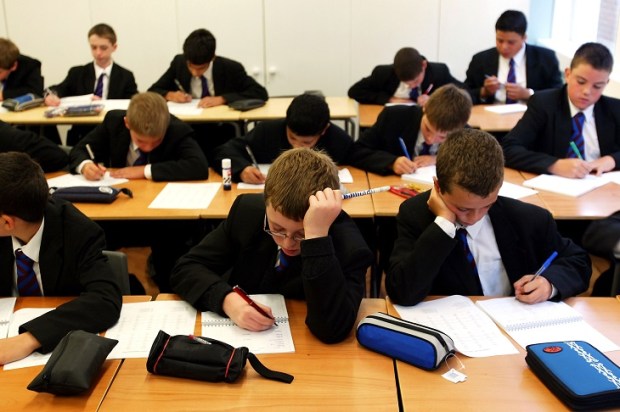
The stats paint an even bleaker picture just on their own. Of the north-east’s young men of prime enlisting age, 16 to 24, about one in five are considered not just unemployed but ‘inactive’. They’re Neets – not in education, employment or training, and there’s more and more of them every year. I keep looking at the numbers and blinking in disbelief. What in the world are they all doing? More than half the Neets report themselves as too ill to work with many claiming to be anxious or depressed, so what they’re doing is probably weed. But what have we done to our culture if the great-grandchildren of the men who served in the second world war are too anxious even to serve coffee?
The army needs the north-east, but the north-east desperately needs the army too. Those Neets need a way out. They need all the things that decent military training could offer: self-respect, physical strength, resilience, a future. They need far, far more than the army is currently offering them.
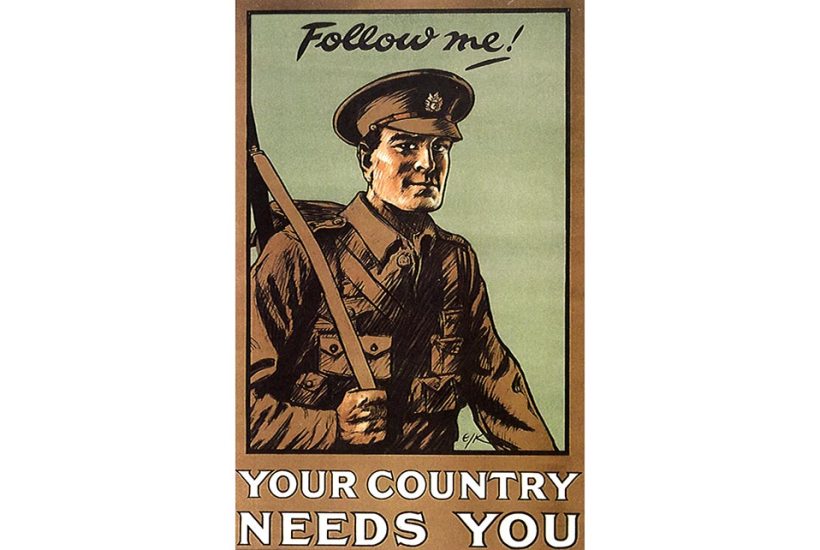
After Capita, which ran the last disastrous recruitment scheme, was binned, a billion-dollar seven-year contract was awarded to Serco, which announced that a new integrated Armed Forces Recruitment Service was being prepared, ready for delivery in 2027. The AFRS is to be a ‘next-generation recruiting solution’, Serco proudly announced, and it will be partnering with Pegasystems, Adecco, Akkodis, TMP… There’ll be a flashy ad campaign, perhaps like the flashy ad campaign of 2019 aimed at the iPhone generation: ‘Snowflakes: Your Army Needs You’. It was considered a great success. Over the next few years, the number of north-east men signing up fell by a further 40 per cent.
The AFRS contract will ‘carry obligations to meet recruitment targets set by the three Services’, says the Ministry of Def-ence, while also ‘embedding diversity requirements through compliance with the department’s wider inclusion strategy’. How our enemies quail at the thought of an embedded diversity requirement! And bang goes any chance of a concerted effort in the pale north-east.
At the heart of Serco’s AFRS is a ‘fully integrated digital system’ and a series of single entry-point, tri-service, civilian-run contact centres. Quite apart from the spiralling cost and certain failure of any grand IT project, do civilian-run contact centres really inspire young men?
I met a soldier recently who explained to me why and how he’d signed up, more than a decade ago. He was at a train station, bored and frustrated by his life, when he saw an advert for the army. On a whim, he walked into the recruitment office and was met first by a sergeant, then a whole series of impressive military men. ‘In the first two hours I spoke to four people. I never looked back.’ Would the same thing have happened in a civilian-run contact centre?
On Remembrance Day I interviewed, for this magazine, one of the most able soldiers the north-east has ever produced: George Simm, former Regimental Sergeant Major of the SAS. Simm was clearly unusual from the get-go, but as he told me the story of how and why he left the mining community he came from, another story emerged too, of the network of army men who once scoured the country for likely lads and pulled them into service, from the least likely places. Some of Simm’s best and bravest SAS colleagues now find themselves in court, as it happens, on trial for killing terrorists in Ireland.
What are those Serco civilians going to say when potential new recruits ask why soldiers are being tried for simply following orders? Start your new life in the army, end it behind bars.
On Monday, Richard Williams, once CO of 22 SAS, posted on X in reference to the state of Britain’s readiness for war. He quoted Solzhenitsyn: ‘The simple step of the courageous individual is to not take part in the lie.’ He continued: ‘Aleksandr Solzhenitsyn would recognise the consistent bullshit coming out of the UK’s Ministry of Defence on defence capability, defence investment and getting ready for war as LIES; and those that peddle them as nothing more than careerist con-artists. There is no plan, no money and no leadership.’
George Simm still believes in this country and in the spirit of men from places like the north-east. ‘I think it’s there. I have this belief, I see it,’ he told me. ‘We’re conditioned from within a pool that’s latent within society. It’s been the same since Alfred and the Fyrd, the army from the population.’
I’m in the north-east now, in the place I grew up on the Northumbrian coast. Yesterday my ten-year-old son and I looked at a plaque on the wall of the village church which commemorates the local men who died in the Great War, men of the Durham Light infantry, the Northumberland Fusiliers, the Yorkshire regiment. Under the list of names is engraved a line: ‘See ye to it they shall not have died in vain.’<//>
Got something to add? Join the discussion and comment below.
You might disagree with half of it, but you’ll enjoy reading all of it. Try your first month for free, then just $2 a week for the remainder of your first year.