Today is April 13th.
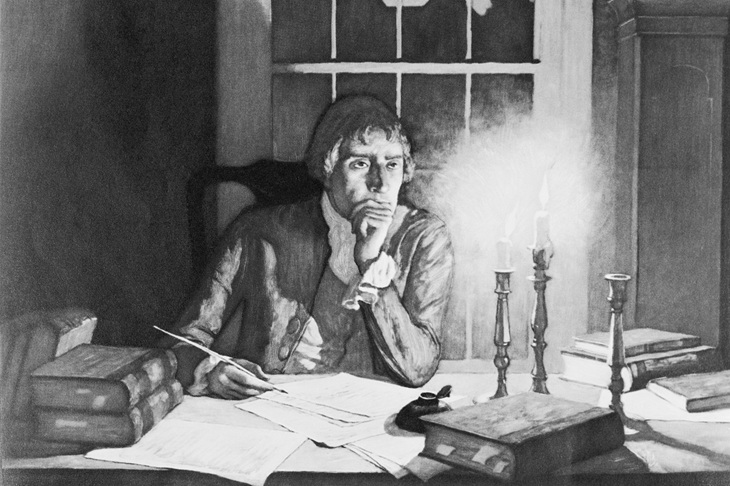
Thomas Jefferson was born on this date in 1743. Christopher Hitchens was born on this date in 1949.
That two great polemicists of the Anglophone tradition share a birthday is a cosmic compliment.
Jefferson needs no lengthy introduction, though he always rewards one.
He was a walking contradiction. A slaveholder who wrote the most consequential sentences in favour of human liberty ever committed to parchment:
We hold these truths to be self-evident, that all men are created equal, that they are endowed by their Creator with certain unalienable Rights, that among these are Life, Liberty and the pursuit of Happiness.
Yes, he borrowed from John Locke, from the Scottish Enlightenment, from a century of natural rights philosophy. But he was the one who brought it all together.
The synthesis was the genius. The world had the ingredients; Jefferson made the dish.
He was also a man of action as well as letters.
When the Barbary Pirates, also known as the naval mujahideen, operating out of the North African coast and extracting tribute from merchant shipping while holding trade hostage to extortion, proved themselves immune to diplomacy, it was President Jefferson who sent the United States Navy to settle the argument.
The parallels with others operating from the same geography are striking.
Christopher Hitchens arrived in this world as if he had been sent specifically to annoy the comfortable and comfort the annoyed. He was the rare polemicist who could be found on any given week defending a position that made both the left and the right equally furious, which is usually a sign that someone is thinking rather than performing.
He took on Henry Kissinger, Mother Teresa, Bill Clinton, and God himself, not out of contrarianism for its own sake but out of a genuine and deeply held conviction that received wisdom deserves to be received with suspicion.
What Hitchens gave to those of us who read and listened to him was not his conclusions but his permission. Permission to articulate the views we had long held privately, views that seemed contrarian until we discovered they were more widely shared than we had ever suspected, simply unspoken, waiting for someone to say them out loud.
This blog, and the voice in it, owes a direct debt to him.
Without Hitchens there would be no Spartacus. And without Jefferson, who demonstrated that a man could think at the highest level while also acting in the world, there might not have been a Hitchens.
The tradition is a long one. The birthday, it turns out, is shared.
Happy birthday to both of them.
They would have had an extraordinary dinner together, and the wine cellar at Monticello would not have survived the evening.