As Donald Trump’s 8 p.m. deadline crept closer by the minute, accompanied by increasingly furious posts from the president online, the last-minute scramble to achieve a ceasefire by diplomacy became ever more desperate. Within the final 90 minutes it was announced that there would be a two-week pause in the fighting, based on a ten-point plan submitted by Iran. Details emerged only gradually overnight, alongside predictable claims of victory from all sides. The truth, as ever, will take longer to emerge.
What is clear is that this is not a peace deal, nor even a fully implemented ceasefire. It is, at best, a pause – fragile, conditional and already under strain.
This is not a peace deal, nor even a fully implemented ceasefire. It is, at best, a pause – fragile, conditional and already under strain
Here is what the ceasefire means for now.
For Iran, the most important fact is survival. The Ayatollah’s regime remains intact and would likely have claimed victory under almost any outcome. It has secured a temporary respite from sustained strikes, buying time to regroup, even as heavy sanctions remain firmly in place. Crucially, Tehran retains control over the Strait of Hormuz, now with the added ability, under the terms reportedly discussed, to charge transit fees on shipping, an unprecedented shift in the economics of global energy flows. Yet the limits are equally clear: two weeks is not enough to rebuild damaged military or industrial capacity in any meaningful way. For the Iranian people, there are so far no clear answers about their future freedom.
Israel, by contrast, is left in a sort of limbo. Just as the hostages in Gaza were the ultimate throttle on Israel’s actions in Gaza, holding it back from total victory, in this war the Strait of Hormuz and global energy were held hostage by Iran, preventing complete victory. This pause at least gives Israel time, allowing for the replenishment of interceptor stockpiles after days of sustained missile exchanges, and offers a partial return to civilian routine. It provides breathing space to prepare for a potential next phase of the war. Significantly, Israel has made clear that the ceasefire does not extend to Lebanon, preserving its freedom of action against Hezbollah. But key uncertainties remain, not least the extent of the damage inflicted on Iran’s missile programme, and the outcome of the nuclear question.
For the United States, the ceasefire offers immediate relief from mounting international and economic pressure. It creates a window to reposition its forces, move its munitions and consolidate its military posture in the region. Oil markets, which had been bracing for severe disruption, are given a measure of temporary stability. Most importantly, Washington now has an opportunity to convert battlefield pressure into diplomatic leverage, provided that pressure remains credible.
Yet even as these strategic calculations take shape, the reality on the ground tells a different story. There is, as of now, no clearly defined start time for the ceasefire. American officials confirmed that US offensive operations had halted, but Iran continued to launch attacks in the immediate aftermath, targeting not only Israel but also Gulf states including Saudi Arabia, the United Arab Emirates, Qatar, Kuwait and Bahrain. Israeli officials, for their part, acknowledged that strikes on Iranian targets were still ongoing even after the agreement had been announced.
So far, the ceasefire exists at the level of leadership and official statements, but has yet to fully translate into operational reality. In a conflict spanning multiple theatres, synchronisation is elusive.
In Iraq, the Islamic Resistance, an umbrella group of Iran-backed militias, announced a two-week halt to its operations, mirroring the ceasefire timeline. Shortly afterwards, the release of an American journalist abducted in Baghdad by Kataib Hezbollah was confirmed, a gesture that suggests at least some alignment with de-escalatory signals from Tehran. But elsewhere, the violence continued. In southern Lebanon, an Israeli strike on the coastal city of Sidon killed at least eight people and wounded 22 more, underlining that the northern front remains active and explicitly outside the scope of the agreement.
Diplomatically, the picture is equally complex and hazy. The ceasefire itself appears to have been the product of intense last-minute mediation, with Pakistan playing a central role and China, Tehran’s largest trading partner, quietly encouraging Iran to find a path to de-escalation, working through intermediaries including Turkey and Egypt. At the United Nations, Secretary-General António Guterres welcomed the pause and urged all sides to comply with international law, while his envoy Jean Arnault was deployed to the region to support efforts toward a more lasting settlement.
But beneath the surface, fundamental disagreements persist. Iran’s ten-point proposal, which formed the basis of the announcement, appears to contain discrepancies between its Farsi and English versions – most notably over the issue of uranium enrichment. In Farsi, the plan reportedly includes language on the ‘acceptance of enrichment’, a red line for Washington, which has insisted that Iran’s nuclear programme must be dismantled entirely. Such divergences hint at dual messaging – one for domestic audiences, another for international consumption – and underscore how far apart the two sides remain. If the ceasefire holds and leads to an extended or permanent cessation of fighting, these details will determine the thorny question of who ‘won’.
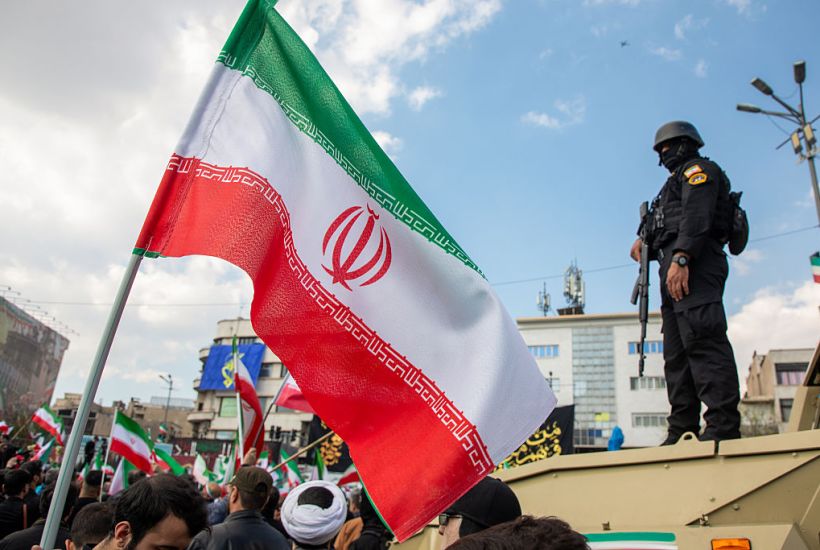
Both Washington and Jerusalem insist that Iran has already made significant concessions, agreeing to reopen the Strait of Hormuz without securing key demands such as sanctions relief or guarantees of a permanent end to the war. Iranian officials, by contrast, have framed the outcome as a historic victory that forced the United States to accept its terms, announcing that celebrations will take place on the streets of Tehran, where American and Israeli flags are reportedly already being burnt. As ever, competing narratives mask a more ambiguous reality.
What is certain is that the clock has been reset yet again. The war has not ended; it has merely paused. If the ceasefire holds, the next decisive moment will come in two weeks’ time, around 22 April, when the temporary pause expires and the question of whether it can be extended, or gives way to renewed fighting, will be answered.
If this is the Third World War, it is not over. It is a postmodern conflict between three blocs, spread across time and multiple theatres, conducted in ways that avoid direct decision, with those in positions of strength having repeatedly chosen to limit how far that strength is used. It will continue, because nothing conclusive has happened. It has not even properly paused. This is not the end state any of the parties set out to achieve.
Internationally, all parties will now take stock. The Gulf states will reassess their relationship with the United States. Russia will draw its conclusions about Europe and Nato. China will read across to Taiwan. Europe itself shows little sign of having fully woken from its semi-sleep. And in Syria, al-Joulani, the terrorist in a suit, returns from meetings in Downing Street and with the King already adjusting his behaviour alarmingly.
This ceasefire does not end the war. This is check, not checkmate.