In the not-too-distant future, if your T-shirt starts giving fashion advice or we’re all enslaved by a race of disease-resistant metahumans, then blame Martin Amis. More precisely, blame his obsession with Space Invaders. With a foreword by Steven Spielberg, Amis’s 1982 Invasion of the Space Invaders: An Addict’s Guide to Battle Tactics, Big Scores and the Best Machines gave intellectual heft to a pursuit – videogaming – that had hitherto been the preserve of glassy-eyed youths. His advocacy proved prescient. Over the next couple of decades, the best minds of a generation dedicated their lives to making pixellated worlds as compelling and realistic as possible.
Among their inventions were GPUs (graphical processing units), electrical circuits which enabled extraordinary visual innovation through multiple simultaneous mathematical tasks. These GPUs are the same technology which underpins the ‘neural network’ architecture of AIs such as Claude, ChatGPT and Google Gemini. And advanced AI, in combination with gene editing and genome synthesis, promises to shake biology to its core.
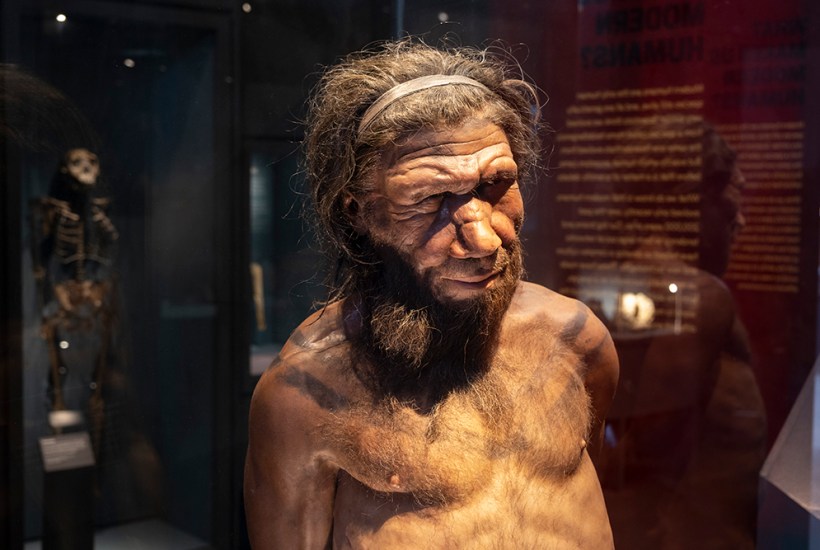
Its possibilities include sentient synthetic materials, giving us the ability to grow houses and clothing; the invention of entirely new species; the eradication of ‘monogenic’ diseases (those controlled by only one gene); and, most ethically dicey, the capacity to tweak the human genome to control factors such as height, weight and intelligence, or the wholesale ‘de-extinction’ of vanished human species such as Neanderthals and Denisovans.
That, at least, is the argument of Adrian Woolfson’s fascinating, frustrating On the Future of Species. The author, a British scientist educated at Oxford and Cambridge but now based in California, is the co-founder of Genyro, a start-up specialising in genome design and construction. His key idea is that we’re not far off the moment when AIs, working in concert with gene editing tools such as CRISPR-Cas9, can build us whole new species or map every possible genome.
Life, after all, is constructed of only four chemical bases. DNA is a far simpler toolkit than the 26 letters in the English language, and AIs have no trouble spitting out seamless prose answering cues as diverse as ‘What should I feed my dog?’ and ‘What’s my purpose in life?’. Mastering DNA manipulation, by contrast, should be a doddle. ‘A new age of synthetic biology’ is almost upon us, Woolfson writes. Artificial Biological Intelligence will leapfrog Darwinian evolution and ‘shape the future of our species’ as we ‘learn how to speak the language of life’.
In theory, anyway. But, as he points out, the challenges are considerable. In 2003, the Human Genome Project published its findings. It had successfully sequenced the three billion base pairs of the entire human genome, taking 13 years and costing $5 billion. It was an extraordinary achievement; but from the perspective of gene-editing technologies, it showed just how far we have to go. The human genome, it found, was not a neat sequence of DNA instructions, actions and results. Rather, it was a happenstance ‘spaghetti’ code, developed over four billion years of evolution, full of repetition, redundancies and genetic cul-du-sacs. Depending on where you come from, up to 4 per cent of your DNA may be Neanderthal. And nearly 10 per cent of our genes are dead viruses, remnants of the infections which afflicted prehistoric man. Nature is a bodge-jobber: it loves to reuse, recycle and make do. Stripping out these cobblings-together and making life run in a predictable, machine-like manner – ‘orthogonal’, in the jargon – is a formidable task.
So, too, is working out exactly which gene does what. Genes are co-opted across species, often with radically different results. For instance, the same gene which is responsible for cell adherence in sea urchins – ESRP – is responsible in human beings for the development of tissues such as lungs, inner ears and lips. Added to this is the difficulty that every life contains multitudes of other lives – viruses, bacteria, fungi and other microorganisms – which interact with genes in unexpected ways. For instance, wolves infected by the parasite Toxoplasma gondii are bolder and more likely to be pack leaders. In human beings, even diseases such as sickle cell anaemia aren’t clear cut. As a hereditary illness which results in severe pain and chronic organ damage and is caused by the mutation of a single gene, it would seem an excellent candidate for gene-editing therapy. Yet some studies suggest the mutated gene, common in those of African, Caribbean and Middle Eastern ancestry, confers greater protection against malaria. We are more than the sum of our genes, and any degree of tinkering may cause unfortunate, unlooked-for results down the line.
Advanced AI in combination with gene editing promises to shake biology to its core
Would we want to do any of this in the first place? This is where Woolfson’s book promises most – and proves most unsatisfying. To some extent, the future is already here. In 2019, scientists announced the creation of an artificial genome of a bacterium, E. coli. Human gene editing is also now possible. In theory, we could – with enough money and ethical flexibility – edit for factors such as eye or hair colour. Might future authoritarian states control for intangibles such as free will, creativity or obedience as well?
Woolfson raises these questions, only to bat them away with vagaries about protecting nature, ‘regulatory frameworks’, ‘international consensus’ and ‘ethical debate’. He is a scientist, and so perhaps it’s unfair to hold him too much to account on this. But I found myself hankering for a philosopher of, say, John Gray’s calibre to wrestle with these knotty moral complexities. The writing, too, is uneven, skipping from wide-angle analogies to hardcore scientific verbalese without warning.
Woolfson is an evangelist. And, like any good prophet, he is certain of his paradise. Artificial Biological Intelligence will allow us to ‘gain control over life itself’, he concludes in his final chapter, ‘A Manifesto for Life’. I’m not so sure. There is something unappealing about this totemic certainty, its vision of pristine scientific achievement. I prefer the modesty of Bertrand Russell, who wrote: ‘Life is a brief, small and transitory phenomenon. Not at all the sort of thing one would make a fuss about if one were not personally concerned.’
Got something to add? Join the discussion and comment below.
You might disagree with half of it, but you’ll enjoy reading all of it. Try your first month for free, then just $2 a week for the remainder of your first year.