With Khamenei’s death, another war in the Middle East has begun. War, by its nature, is unpredictable, and there are multiple pathways this conflict could take if not managed properly ranging from a contained regional war to a broader conflict stretching from Europe to the borders of China, with the ever-present risk of nuclear escalation. To understand how this war may unfold, one must first understand the motives and objectives of its four key actors: Iran, Israel, the United States, and the Arab Gulf states.
Iran, for now, remains a theocracy, and its primary objective is not victory in the conventional sense, but regime survival. For a state of over 90 million people, it has a high tolerance for casualties relative to Western states if that ensures the continuation of the regime.
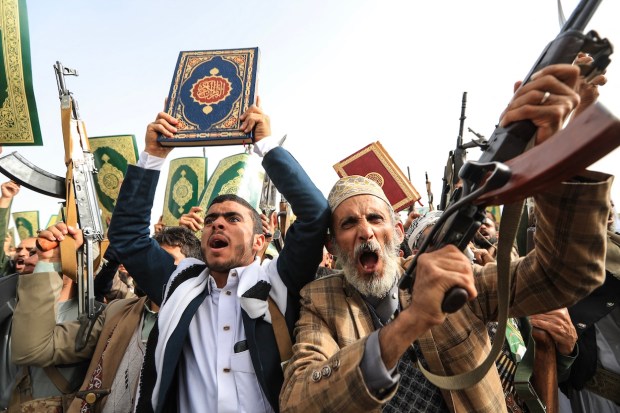
Iran’s strategy is threefold: to survive, to expand the conflict through its network of regional proxies, and to frame the war as an attack on Islam – thereby mobilising the radical elements of the global Muslim population and increasing the risk of terror attacks. It hasn’t been lost on the Muslim world that the strikes that killed Khamenei were carried out during the Muslim holy month of Ramadan.
Furthermore, Iran seeks to inflict economic damage by targeting the Strait of Hormuz and on Gulf Arab states, raising the cost of war for the United States and its allies. This aligns with its broader doctrine of using proxies, missiles, and maritime disruption to increase the cost of conflict across multiple domains.
Despite Khamenei’s death, the regime has signalled continuity through the elevation of Mojtaba, and its command-and-control structure remains intact and highly compartmentalised. This is not an improvised conflict; it is one the Iranian system has been preparing for since the end of the Iran-Iraq War. Its responses have demonstrated speed and symmetry – for example, when Israel destroyed the South Pars field, Iran was able to retaliate by targeting Qatar’s Ras Laffan facility the very next day. Similarly, when Iran’s Bushehr nuclear facility was targeted by Israel, the very next day Israel’s Dimona nuclear facility was struck by an Iranian missile.
For the United States, initial mission objectives are now secondary to strategic credibility. History is clear: air campaigns alone do not deliver regime change; they harden resolve – as seen in Britain during the Blitz and Iraq during the Gulf War. If the United States leaves this conflict with the Iranian regime intact – whether through withdrawal or a negotiated settlement – it will be seen as having failed. That would damage its standing as a global security guarantor. As Donald Rumsfeld observed, ‘weakness is provocative’.
Such a result would embolden adversaries and invite further instability. The United States is therefore constrained. Regime change remains an option, but not an inevitable one. Yet any outcome that leaves the regime intact and only degraded will be insufficient if Iran retains the capacity to threaten the region. As Ali Larijani, former secretary of Iran’s Supreme National Security Council, stated: ‘Iran’s nuclear program can never be destroyed. Because, once a state has discovered a technology, they can’t take the discovery away.’
For Israel, the core objective remains generally understood: to expand Israel buffer zones in Syria, Lebanon, Gaza and to maintain regional military and strategic dominance. The survival of the Iranian regime constitutes an existential threat and would be perceived as a loss. While immediate priorities include degrading Iran’s nuclear and ballistic capabilities, Israel’s longer-term objective aligns with its historical approach in Syria and Iraq – the systematic weakening, and ultimately dismantling, of hostile state structures. This is best illustrated by the targeted strikes carried out by Israel on Iranian institutions such as administrative buildings, utilities, energy infrastructure, police stations and schools.
Iran’s internal composition presents opportunities. It is a multi-ethnic state, with Persians forming roughly 60 per cent of the population, alongside Azeris, Kurds, and Baloch minorities distributed across its periphery. A strategy of supporting these groups could fragment the state from within. However, such actions carry escalation risks – particularly with Turkey (via Azerbaijan) and Pakistan (via Baloch regions).
While the Iranians have conducted strikes on the Arab states, they have so far limited operations against Azerbaijan for fear of drawing Turkey into the conflict, and similarly with Baloch regions to avoid bringing Pakistan into the war. Therefore, it is critical to approach battlefield narratives with scepticism. In modern conflict, attribution is often obscured; operations may be conducted by third parties and presented as Iranian actions. The Nord Stream incident – where Russia was initially blamed, only for it later to be attributed to Ukrainians – serves as a reminder that early assumptions in wartime can prove incorrect. Nonetheless, a fragmented Iran – divided along ethnic and sectarian lines – would effectively remove it as a coherent strategic actor, aligning with Israeli objectives.
For the Arab Gulf states, led by Saudi Arabia, the initial instinct was to remain outside the conflict. However, from Iran’s perspective, their hosting of US military bases made them active participants. Iranian strikes on the UAE, Qatar, and Bahrain have shattered the perception of these states as stable economic and security hubs – damage that may take years to repair.
Their position has converged around a broad objective: a weakened and contained Iran. This is driven both by the need to secure the Strait of Hormuz and to prevent Iran from emerging as an alternative ideological model in the region. Full collapse of the Iranian state carries the risk of regional chaos, which these states actively seek to avoid. At the same time, they are increasingly reliant on the United States to deliver an acceptable outcome, while still retaining leverage through their deep financial integration with Western markets and substantial US-linked assets. Recent reporting also suggests Gulf states are pushing not just for an end to the war, but for the degradation of Iran’s capabilities to prevent future threats.
At the same time, regional alignments are shifting. Saudi Arabia’s defence ties with Pakistan, alongside emerging Israel-UAE cooperation, point to a broader consolidation of military capability. This will likely extend to deeper engagement with Turkey and Egypt, as Gulf states seek to hedge their security and expand their strike capacity in an increasingly volatile environment.
A Gift to the Illiberal Order
With the United States now tied down in another war in the Middle East, both China and Russia have an opportunity to exploit the strategic distraction. The longer the conflict drags on, the greater the risk that America’s credibility as a security guarantor is weakened in the eyes of both allies and adversaries. That perception matters in a multipolar world, as it enables authoritarian powers to portray Washington not as a stabilising force, but as a source of disorder. Allies across both Europe and Asia are increasingly concerned that the Iran war is stretching US attention and resources – undermining Ukraine while diluting American focus in the Indo-Pacific. This is not merely a regional war – it is a global stress test of power, resources, and endurance across a fractured multipolar system.
For Russia, the war presents both economic and strategic upside. It is likely to reinforce Moscow’s ambition to consolidate its position in Ukraine while enhancing its standing as a regional power with influence over its immediate neighbours.
Higher oil prices have strengthened Moscow’s revenues: As reported by Bloomberg, the value of Russia’s crude exports rose to approximately US$270 million per day in the four weeks to March 22, up from around US$135 million per day in January. As oil prices rise, so too do Russia’s revenues – and with them, its strategic ambitions. There are already reports of Gulf Arab states seeking Russia’s assistance in containing the conflict. While Russia has so far limited its operational military support to Iran, this could shift as the war progresses – both to keep the United States strategically absorbed in the Middle East and to expand Russia’s influence in the region.
China’s position is more nuanced. While disrupted oil flows and higher prices do impose economic costs, no country is better positioned to benefit over the longer term. China entered this crisis with substantial oil stockpiles and has continued building them in the lead-up to the war. It also possesses the world’s largest refining capacity outside the Middle East. This conflict is likely to accelerate the global transition from hydrocarbons to electrification, and as the market leader in electric vehicles, batteries, and renewable energy technologies, China stands to gain significantly. China has also sent ships to the Middle East to monitor and study the conflict, gathering insights into US military strategy and capabilities. While there are currently no indications of an imminent move on Taiwan, the diversion of US military assets to the Iran conflict could present a strategic opening that Xi Jinping may seek to exploit. In strategic terms, time is working in China’s favour.
Navigating a Lawless World
Australia must now prepare for a prolonged period of global instability. The outcome of the war with Iran could have far-reaching consequences, including whether the United States remains a reliable security guarantor. The reality for Australia is that we are a nation of roughly 27 million people with limited military resources and budgetary constraints. Our primary focus must remain the stability of the Indo-Pacific, while hedging our relationship with the United States and, most importantly, avoiding entanglement in conflicts that do not serve our national interest.
To navigate this environment, there must first be a fundamental shift in mindset within our political class – from one of self-importance and complacency to one of pragmatism and preparedness. Australia’s strategy must rest on three strategic pillars: energy resilience, defence resilience and trade resilience – without which national security cannot be assured.
In terms of energy resilience, Australia must prioritise achieving genuine energy independence. We are a nation rich in natural resources – uranium, coal, oil, and gas – and should leverage this advantage. We cannot rely solely on renewables, as demonstrated by the country-wide power outage in Spain and Portugal in 2025. A balanced and diversified energy mix, incorporating both renewable and non-renewable sources, is essential. Rather than being constrained by the ideology of climate alarmism, energy policy must be grounded in reliability, affordability, and national security.
From a defence resilience perspective, modern warfare is increasingly defined by drones, precision missiles, electronic warfare, and artificial intelligence. For example, Iranian drones reportedly cost between US$20,000 and US$50,000 each, while interceptor systems such as THAAD, Patriot, and Arrow can exceed US$1 million per missile, often requiring two missiles per interception. In such an environment, cost efficiency becomes as decisive as firepower. This cost imbalance raises serious questions about the sustainability of current defence doctrines and highlights the need to reassess our military capabilities and defence arrangements, including whether frameworks such as Aukus remain fit for purpose.
On trade resilience, Australia must secure its trade routes, rebuild its industrial base, and position itself as a reliable and indispensable partner to its allies. This includes fast-tracking LNG production to offset potential supply disruptions from countries such as Qatar, particularly for partners like Japan and South Korea. At the same time, as the global economy transitions toward electrification, Australia must accelerate the approval and development of critical and transition mineral projects. This will not only strengthen our strategic relevance but also expand our soft power influence. The economic gains generated during this period of instability should be directed toward reducing Australia’s federal government debt, which is projected to reach $1.022 trillion by June 2026, according to recent Treasury estimates.
Ultimately, Australia cannot control global conflicts or external economic shocks. However, rather than resisting these forces, we must position ourselves within them and make them work in our favour. A crisis should be used as a catalyst to strengthen national capability. By anchoring our strategy in energy independence, credible defence, and resilient trade, Australia can secure its place and prosper in an increasingly lawless world.
World War Three
Two regional conflicts – one in Europe and one in Asia – once unfolded independently, driven by entirely different ideologies, grievances, and strategic aims, with little direct connection between them; yet over time, alliances hardened, interests overlapped, and these separate wars eventually became the second world war.
Today, a similar pattern is emerging. In Europe, we have Russia’s war in Ukraine, and in the Middle East, we have the USA and Israel’s war on Iran. These conflicts are already beginning to intersect – through energy markets, the global economy, military technology transfers, and shifting alliances. For Australia, this is not an abstract geopolitical shift but a direct strategic reality – one that will shape our energy security, economic stability, and national defence posture in the years ahead.
To quote former US President Franklin D. Roosevelt: ‘It seems to be unfortunately true that the epidemic of world lawlessness is spreading.’
There is therefore no compelling reason to assume we are not already entering a third world war.
Brendan Perera spent five years living and working in the Middle East during the War on Terror, where he contributed to the delivery of critical major infrastructure projects.