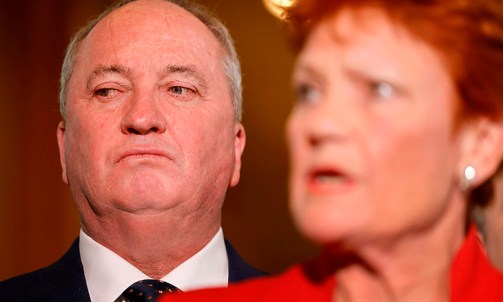
This week has seen two politicians putting family tax back on the agenda, but in very different ways. Matt Canavan is the young (-ish) new leader of the National Party, and part of his policy agenda is the idea of income splitting to decrease the amount of tax paid by families. In contrast, Teal independent Allegra Spender has recently proposed a tax reform bundle that I believe would do the opposite.
Australia’s anti-family tax system
Under our current tax system there is an inherent bias against families that have one primarily income earner. For example, a two-income family earning $200k (where each person earned $100k) currently pays just under $42k in income tax, while a one-income family earning the same $200k pays over $56k in income tax. This is because the two-income family is able to take advantage of the tax-free threshold and lower tax bracket twice, while the one-income family earns most of their income in a higher tax bracket.
The vast majority of developed countries address this issue by either allowing ‘income splitting’, where the family income can be split between partners for tax purpose, or some other form of joint family tax treatment. Australia is one of the only developed countries that has a strictly individual-based tax system.
Defenders of the status quo argue that the government should treat all individuals equally regardless of their family situation. That argument would make sense if the same rules apply to the welfare system, but that is not the case. To be consistent, either the tax-welfare system should always treat people as individuals (so a non-working parent would still get welfare regardless of their partner’s income) or always treat people as families (and therefore allow some sort of income splitting). In contrast, the Australian system takes a consistently anti-family approach across both the tax and welfare systems.
The politics of income splitting
Income splitting is not a new idea. It is already the stated policy of several minor parties, including One Nation, the Libertarians, Family First, and People First. Matt Canavan has been promoting the idea since he first entered Parliament back in 2014, and now that he’s Nationals leader, he will have a much louder microphone to make his argument.
Most mainstream politicians have shied away from the idea for three reasons.
- The government can’t afford family tax cuts (estimated at $6 billion per year) because the budget is in deficit. This is lazy thinking. Taxes in Australia are higher than ever and have become a drag on productivity and a heavy burden on working Australians. Instead of maintaining high taxes to pay for runaway spending, the Australian government needs to get their spending under control.
- Income splitting gives the largest benefit to the richest families. This is mostly wrong, but even if it was true it could be easily remedied with some minor policy tweaks. It is wrong because wealthy families can already achieve de facto income splitting by funnelling some of their income through companies or trusts. Introducing proper income splitting simply allows regular families to access the same benefits that rich people already have. Though if a skittish government wanted to avoid even the perception of ‘helping the rich’ they could at least introduce partial income splitting (such as the ATA proposal below).
- Income splitting creates a bias towards one-income two-parent households, which is seen as a relic from a bygone era. As mentioned earlier, this view is misguided because it fails to factor in how the tax and welfare systems work together. Instead of creating a bias for one-income families, income splitting is removing the current bias against such families. The current bias is based on the technocratic notion that we should always prefer parents in the workforce instead of with their own children, but there are many families who feel differently, and they shouldn’t be punished for prioritising time with their family.
Allegra Spender’s alternative proposal
The last week has also seen a proposal by Teal independent Allegra Spender that goes in a very different direction. To her credit, Spender has put together a comprehensive tax reform package that accurately highlights the problems with our current system, proposes lower income tax rates, and suggests some innovative ideas that are worth discussing. Unfortunately, one of her ideas runs directly opposite to the income splitting proposal discussed above.
As mentioned above, many Australians are already able to effectively split their income by funnelling their income through a company or trust. Rather than expanding that benefit to everybody, Spender wants to limit the existing option and, in my view, effectively make our tax-welfare system even more anti-family. Not to mention the fact that her proposal can still be sidestepped by people who simply hire their spouse through their own business.
The ATA proposal
The Australian Taxpayers’ Alliance has also been active in this policy space. During the 2025 election campaign we proposed a modest family tax policy that included a modified version of income splitting.
That proposal included:
- Joint Family Tax Treatment – Families (married with children) should have the option to file taxes jointly, with a combined tax-free threshold of $50,000. This would provide an effective benefit of up to $6,424 per year for families that opt in.
- Child Tax Exemption – Parents should receive an additional $10,000 tax-free threshold per child, providing an effective benefit of up to $3,000 per child. A family with two children would have an effective tax-free threshold of $70,000 before paying any income tax.
- Flexible Childcare Support – The current Childcare Subsidy should be replaced with a refundable tax credit of $1,000 per month per child under school age. This would give parents the flexibility to either fund professional childcare (like the current system) or use the money to support their own childcare needs. A family with two children under school age would have an effective tax-free threshold of $143,000 before paying net income tax.
- Simplified Family Tax Benefit – Family Tax Benefit (FTB) should be replaced with a streamlined $6,000 welfare supplement per child, withdrawn at a consistent 30 per cent rate once the family is no longer eligible for Newstart Allowance or Parenting Payment. The child welfare supplement for two children would be fully phased out at an income level of approximately $110,000, at which point parents would instead benefit from joint family tax treatment and the child tax exemption mentioned above. This would significantly simplify the overly complex FTB system and remove the current poverty traps where families face effective marginal tax rates exceeding 90 per cent.
We attempted to convince the Liberal-National Coalition to embrace some of these policies before the 2025 election, without any luck. We plan on doubling down on our efforts again this year, and with Canavan now the Nationals leader (and your support) hopefully we’ll have more success this time around.
For more, follow Death and Taxes on Substack