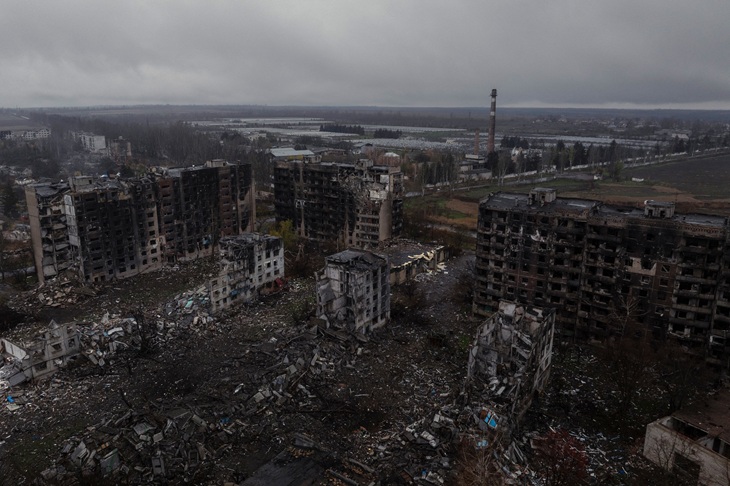
Here in Ukraine, there is the sense that the grinding war imposed by Russia has reached a turning point, and that its end point may draw into sight.
The sense of a shift is driven by four factors that have emerged in recent days.
First, for the first time since the audacious Ukrainian incursion some 10-15 kilometres into Russia itself at Kursk in August 2024, Ukrainian forces are taking more territory than they are losing. That includes recovering some nine population centres near Oleksandrivka in the southern oblast of Zaporizhzhia. In total, Ukraine regained roughly 200-450 square kilometres since early 2026 depending on methodology, while Russia gained around 125 square kilometres in February, a much slower rate than the gains of previous months.
Secondly, those glacial gains by Russia have been obtained at an unprecedentedly high cost to the Kremlin. Specifically, for the first time during the war, according to the General Staff of the Armed Forces of Ukraine, Russian personnel losses have been averaging over 1,000 per day during winter, and this rate exceeds Moscow’s recruitment of new soldiers (which averages around 30,000 per month). Other reports have estimated that in January 2026 Russia lost about 31,700 soldiers or roughly 9,000 more than it recruited that month. This is likely explained by the continued shift of war fighting to drone-based, which renders Russian infantry assaults particularly deadly for those undertaking them.
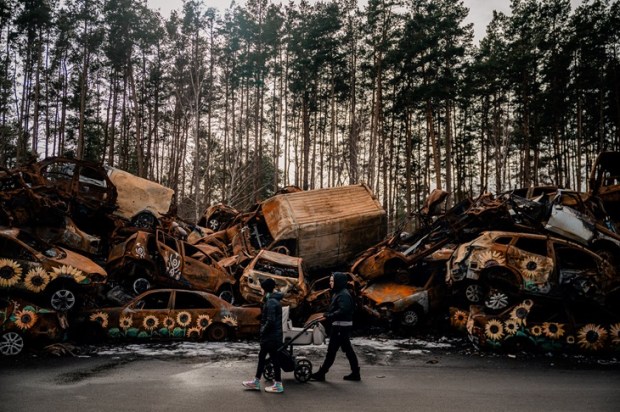
Thirdly, with the coming of spring, Ukrainians are coming out the other side of Putin’s barbaric bombing campaign designed to freeze them into submission over winter. In total, they endured, according to President Volodymyr Zelenskyy, approximately 19,000 drone attacks, 738 missile attacks and 14,670 guided aerial bomb attacks from a Putin clearly frustrated with the war’s lack of progress against his goals. That translates to around 200 drones and 8 missiles per day – which makes the current situation in the Middle East pale by comparison.
Fourthly, and speaking of the Middle East situation, it has brought into clear view for the White House that their fundamental enemy remains the Kremlin. Namely, the Washington Post and others have reported that Russia has been providing Iran with useful military intelligence. This includes US officials say Russia has passed Iran information that could help it locate and strike US forces in the region. This reportedly includes the locations of US warships in the Persian Gulf and nearby waters, positions of US military aircraft and information on US troop deployments or bases. Some of the data is believed to come from Russian surveillance capabilities, including satellite tracking of military movements. It would be difficult to see how American officials – and indeed President Trump – can continue to play footsy with Vladimir Putin (at Ukraine’s expense) after such direct flagrancy.
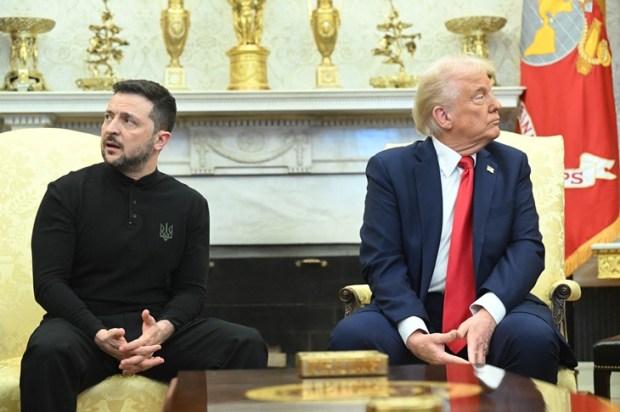
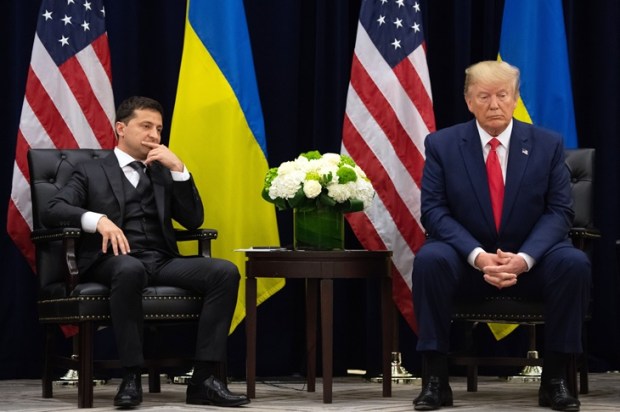
Taken together, the above four factors paint the following picture, according to some of the Ukrainians I spoke to on my most recent trip to the country. The battle on the ground is frozen if not shifting to the Ukrainians’ favour in both territorial and casualty terms; the worst of winter has been survived without the desired effect of psychologically damaging Ukrainian morale; the United States’ interests – and its seeming willingness to choose Russia over Ukraine – have been more clearly exposed as unwise and unproductive. In sum, Ukrainians have more reasons to believe that momentum has at least shifted in their direction.
The issue, therefore, turns to what do the Ukrainians do with that momentum to end the war on terms that are more favourable to itself. Here, to be truthful, some in Ukraine actively question whether there is a plan, but in fairness to Zelenskyy as well as his military leadership, what appears to be in place is a three-flanked approach.
Integrate Ukraine into Western alliances
This consists of a variety of initiatives and agreements ranging from bids for European Union membership/cooperation, Western investment in Ukraine’s strategic resources such as critical minerals, and Western leveraging of Ukraine’s hard-won battlefield knowledge and innovation in drone and electronic warfare, such as Zelenskyy’s offer to help the US and its allies in combatting Iranian Shahed drones in the current conflagration. The idea here seems to be that the more Ukraine is part of Western architecture, the higher the cost will be to Russia of trying to take the country.
Erode Russia’s ability to fight
Zelenskyy’s political strategy runs in tandem to his military leadership’s war plan which aims to denude Russia’s war-making ability through some specific measures. This includes: attrition warfare and inflicting heavy Russian losses, especially through cutting edge drone tactics; the targeting of Russian logistics and economic structures, particularly the oil sector which has been reduced by up to 40 per cent, and; building a sovereign military industrial complex – with some 50 per cent of Ukrainian weapons now domestically produced including the most drones manufactured of any country in the world. With the Russian economy sitting on 20 per cent interest rates, there are signs of this strategy succeeding.
Strengthen Western security guarantees
A core political goal of Zelenskyy’s is long-term security protection from Western allies. The proposals to achieve this include Nato-style guarantees, a multinational peacekeeping force after a ceasefire, and a European-sponsored air defence program to protect Ukrainian airspace. The idea is to ensure that even if the war ends, Russia cannot attack again.
Fundamentally, Ukraine’s leadership broadly believes that the war will end when three conditions converge: Russia cannot advance militarily; Russia’s costs – in people and economic terms – become too high; and Ukraine is fully integrated into the West including security guarantees.
As spring comes to Kyiv, and with new signs of Russian problems emerging, some in Kyiv and other Ukrainian cities believe that point has drawn closer.