When it comes to foreign policy, the debate can easily get simplified into a binary of ‘free trade v protectionism’ or ‘high immigration v low immigration’. That framing often makes sense, but there is a third way.
Instead of just arguing for more/less trade and more/less immigration, the other part of the debate that we need to consider is the makeup of our trade and immigration partners. This may sound trite and obvious, but different countries are different, and we don’t necessarily want the same relationship with Canada, Cambodia, Cameroon, and Costa Rica.
This is where the idea of Canzuk comes in, which is a proposal for closer economic and social ties between Canada, Australia, New Zealand, and the United Kingdom.
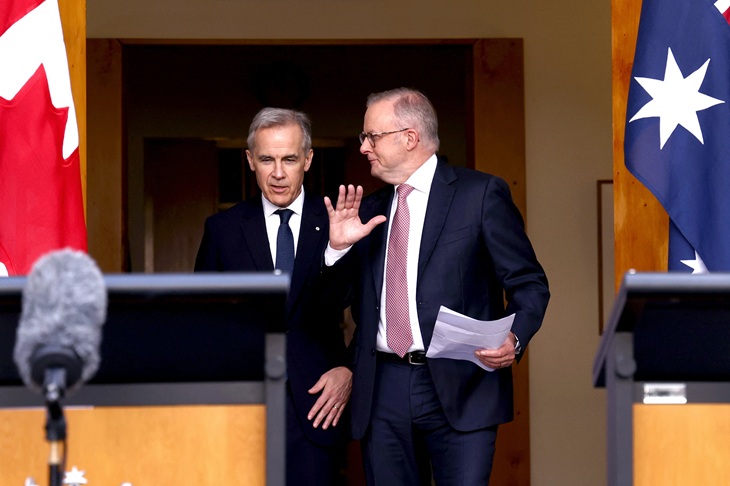
Canzuk is back in the media this week thanks to a speech by Canada’s conservative leader Pierre Poilievre to UK conservatives, where he once against championed the idea as a way to boost productivity, increase geopolitical power, and connect people across the globe who share a similar culture.
Immigration
Canzuk would allow for easier migration between the four Anglo countries. The issue of immigration has become a political football in recent years, but as discussed in our newsletter from last week, the issue goes beyond the simple matter of raw numbers. There is a cultural element. Our current system already recognises this when it comes to New Zealand, with relatively free movement between the Anzac cousins. The same logic can easily be extended to Canada and Britain, with whom we share a common language, history, Monarchy, legal system, parliamentary system, high-income and high-trust society, and many aspects of culture.
This would mean some more Canadians and Brits in Australia, and it would also make it easier for Australians to spend time in Canada and Britain.
Embracing Canzuk does not imply greater immigration numbers. Regardless of whether you support high immigration or want it radically decreased (or anywhere in the middle), the Canzuk idea makes sense as a way to improve the cultural compatibility of those who do come to our country, and create closer ties between similar cultures that are spread across the globe.
Economics
The issue of globalisation and trade is a difficult policy puzzle. A growing number of people are concerned that we have become overly reliant on foreign powers that may not have our best interests at heart, and yet we rely on global trade networks to maintain our way of life. The middle path is not to angle for more or less trade, but rather to refocus our trade towards countries that are reliable allies.
Closer economic integration between the Canzuk countries will have other productivity benefits that flow from mutually recognising credentials and standards, deepening capital markets, and achieving economies of scale.
Geopolitics
While not the front of mind for most Australians, Canzuk has the potential to reshape the geopolitical balance of power. As things currently stand the largest economies in the world are:
USA
EU
China
India
Japan
UK
Russia
Canada
Brazil
Mexico
Australia
South Korea
If we combine the Canzuk countries, then it would become the fourth largest economy, far exceeding the size of India or Japan, and becoming a serious world player. The new list would be:
USA
EU
China
Canzuk
India
Japan
Russia
Brazil
Mexico
South Korea
The Canzuk alliance would have an unparalleled network of safe harbours and strategic bases around the world, a highly interoperable military with one of the most advanced navies, a permanent seat on the UN Security Council, and significant soft power based on the English language, legal system, and cultural exports. It would be in a position to negotiate with the US, EU, and China as a peer, instead of middle-powers than can be pushed around.
Of course, there are plenty of wrinkles that would need to be ironed out before this concept could become reality, but it is an idea that’s worth considering to see if it can be made to work.
For more, follow Death and Taxes on Substack