The bombing campaign is the least interesting part of this war. Missiles and satellite images dominate the news cycle, but wars are not decided by what appears on a targeting screen. They are decided by what happens in capitals, borderlands, and political systems under pressure.
The real drama is already unfolding elsewhere. Ankara, Riyadh, Islamabad, and Washington are calculating what a weakened or collapsing Iran might mean for their own position. Everyone is preparing for the second phase of a war that has barely begun.
That phase will not be about missile launchers or centrifuges. It will be about the survival of the Islamic Republic itself. Now that the question is opened, the geopolitical consequences dwarf the bombing campaign that started the argument.
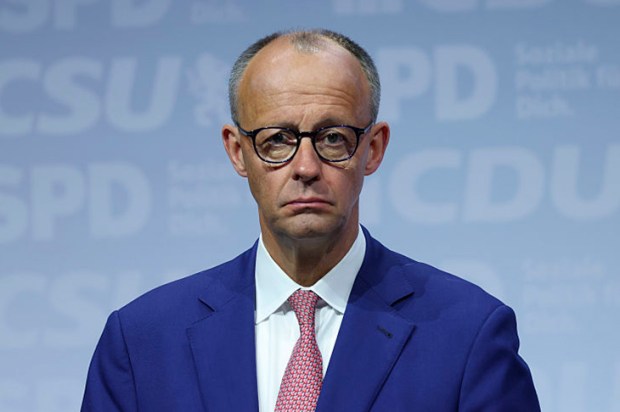
Europe has not responded as a bloc, and the differences are revealing. Friedrich Merz flew to Washington as the first foreign leader to meet Trump after the strikes began, telling reporters that Germany shared the Iranian people’s relief that the mullah regime was coming to an end. France has taken a similarly hawkish line. Together with Britain, they issued a joint statement condemning Iran’s missile attacks and opening the door to defensive action against Iranian launch sites. Trump thanked Merz for allowing US forces access to German bases and called him an excellent leader.
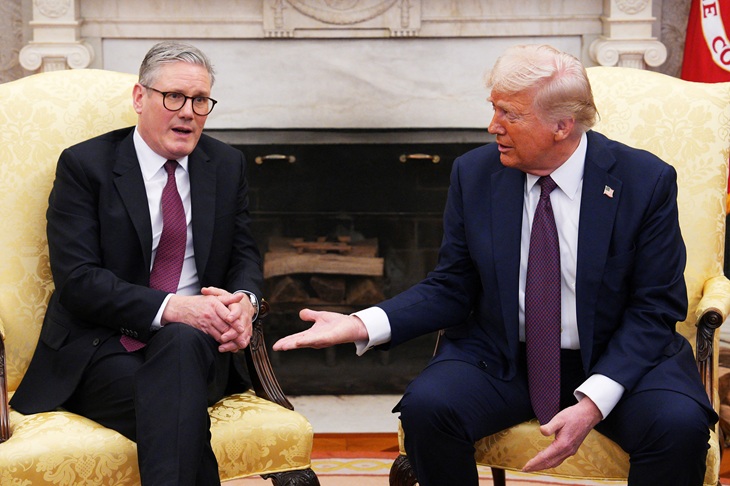
Britain’s support, however, is complicated. Starmer initially refused American planes the use of British bases, then reversed course, permitting their use for strikes on Iranian missile sites but not other targets. Britain’s position is less a coherent strategy than a sequence of managed capitulations. The defence establishment has presented Starmer with decisions framed as operationally unavoidable – defensive strikes, base access, intelligence cooperation – each individually defensible, collectively amounting to belligerence. Starmer gets the deniability. The war gets the infrastructure.
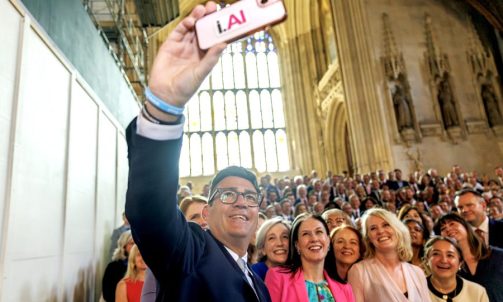
This week in Westminster Hall, Starmer joined his friends in the All-Party Parliamentary Group on British Muslims for their Ramadan fast-breaking dinner. He reassured the audience that Britain was not involved in offensive strikes and said he sympathised with them during what he described as a ‘difficult time for Muslims in the UK’. He received a standing ovation. Two days earlier, a Somali migrant had walked the streets of Edinburgh allegedly stabbing random members of the public while police officers declined to leave their cars. It is possible to understand each decision Starmer has made this week. It is harder to explain the overall picture they compose.
Spain’s Pedro Sánchez – a man whose academic record and coalition partners have required creative management – leads perhaps the strangest government in old Europe. His refusal to allow the US use of jointly operated bases prompted Trump to threaten a trade rupture. Madrid has supplied the clearest example of bad European diplomacy in its purest form: moral clarity at no personal expense and considerable cost to everyone else.
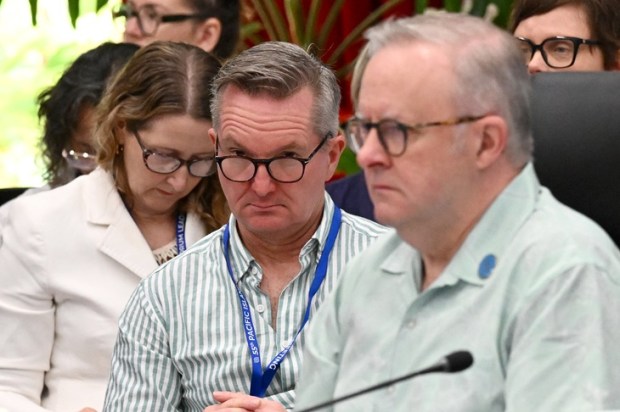
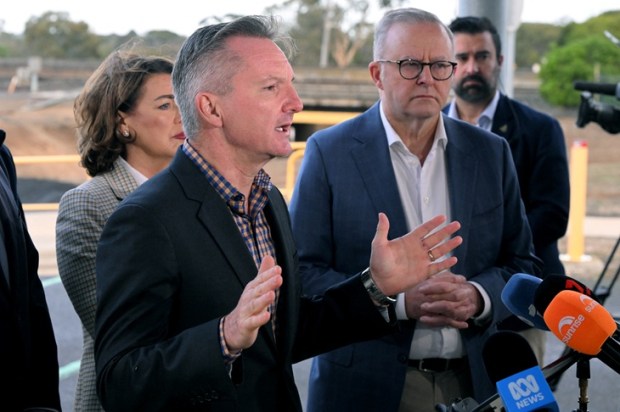
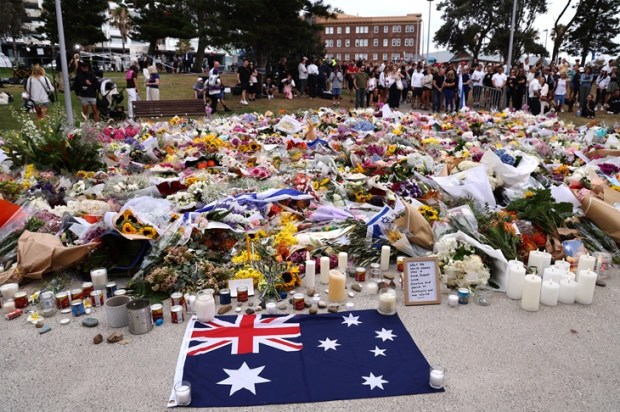
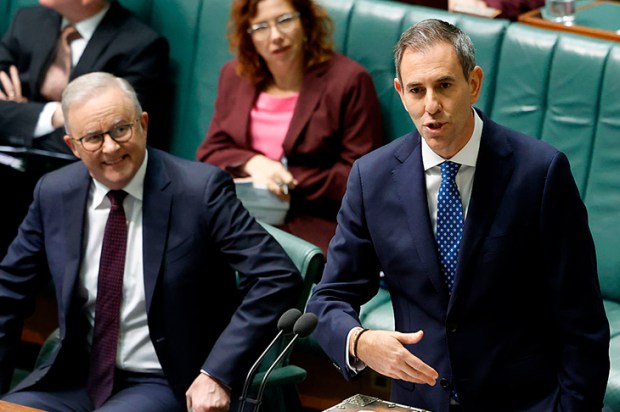
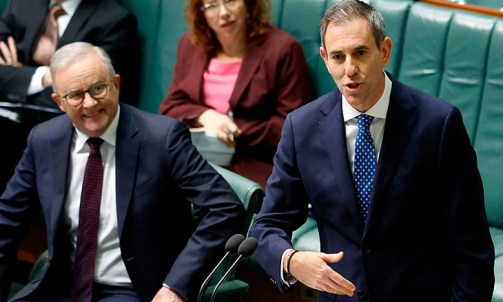
Starmer has refused to endorse the strikes as either necessary or warranted. Albanese has not – though one suspects his position owes less to strategic clarity than to the Bondi Massacre, which made studied ambiguity about Islamist violence a more expensive political posture in Australia than it remains in Britain. Had the shots not killed fifteen people at Bondi, Canberra’s position would likely look indistinguishable from London’s. Trump’s verdict on Starmer after the prevarication – ‘this is not Winston Churchill we’re dealing with’ – is unlikely to be forgotten.
What’s left of the Iranian leadership is unlikely to lose sleep over any of this. If anything, the spectacle of Starmer receiving a standing ovation for distancing himself from allied operations probably reads in Tehran as confirmation of a thesis they have long held about the political ineptitude of liberal democracies.
No country is watching this war more carefully than Turkey. Recep Tayyip Erdoğan has condemned the strikes in the language of international law while maintaining the Nato infrastructure that quietly assists Western operations. His deeper concern is not Iran’s nuclear program, but what might happen if the Iranian state weakens. If central authority in Tehran fractures, something politically inconvenient could emerge along the fault lines of four countries: a coherent Kurdish political movement.
The Kurdish population stretches across Turkey, Syria, Iraq, and Iran. Any sign of Kurdish autonomy in one country energises the others. Ankara has spent decades trying to prevent this dynamic, and a collapsing Iran would threaten to reignite it across the entire region. For Turkey, a wounded Iran may therefore be preferable to a collapsed one.
The Gulf monarchies have responded with public caution and private satisfaction. For decades they have absorbed Iranian missile threats, proxy militias and subversive campaigns. Watching Tehran absorb sustained military punishment is not an outcome that disturbs their sleep. But a fractured Iran would produce refugee flows, militias and smuggling networks on a scale that would dwarf anything seen before. They want the fire turned down, not the building burned.
Meanwhile Washington has produced its usual domestic theatre. Some Democrats who spent years predicting Trump would blunder into a catastrophic war are now demanding restraint before the war achieves anything. Several Republicans, led by Rand Paul and Thomas Massie, insist the President must seek congressional authorisation before continuing operations. The constitutional arguments are serious. Wars, however, have never been fought on committee schedules. Among Democrats, John Fetterman stands conspicuously alone in backing the strikes.
The objective of this war – the removal of the Islamic Republic – is likely to require ground forces. Given five decades of indoctrination, the number of potential jihadi resistance fighters is vast. Trump keeps talking this down without ruling it out.
From the Beirut barracks in 1983 to the roads of Iraq between 2003 and 2011, Iran and its proxies have killed at least 844 Americans without the two countries ever formally being at war. The US military is happy to finally deliver justice to the perpetrators and will wear the cost proudly.
The Western peace movement has already begun its ritual performance. ALP shills are outraged that anyone could wonder why Western Sydney mosques are holding vigils for Khamenei. Petitions demand immediate ceasefires and negotiations, offering moral self-satisfaction and no effect on the people they address. Canada’s Mark Carney initially called Iran the principal source of instability and terror in the Middle East and backed the strikes outright. Four days later, speaking in Sydney, he said his support had been given ‘with regret’ and that the strikes appeared inconsistent with international law. A man capable of travelling that distance in four days is not merely confused; he is dangerously unserious about the responsibilities of power.
Radical Islamists have never yet been moved by a candlelit vigil. The mullahcracy has been reading Western liberal opinion for decades and has reached its own conclusions about what it means.
The Islamic Republic is significantly weakened, with real parallels to Saddam’s predicament after the 2003 invasion. Political succession to high office in Iran is currently the equivalent of a death sentence. The question will no longer be whether Iran’s nuclear infrastructure survives. It will be who inherits the Iranian state – the Revolutionary Guards, regional militias, reformist factions, or something more chaotic than any of those.