Once again, we have some leaders inferring that the best way for children and young people to learn tolerance is to attend state-run schools. That such simplistic notions are being peddled by such senior people, some claiming to be experts in education, is sad.
First of all, what is ‘tolerance’ about?
In its usual form, it means I can listen to you and accept you as a person even if I disagree with you. However, more recent understandings of the word were developed based on neo-Marxist post-modernism and carry a heavier meaning – that of ‘preaching tolerance’ to the point of insisting upon it, even if it means suppressing perceived critical disagreement by becoming structurally intolerant.
However, historically, the kind of tolerance that enabled Western democracies to thrive was tied to a more fundamental concept – that of universal respect. And as a number of social historians have described in some depth over the last decade, such tolerance within civil life can only be found when there has been substantial influence from a particular aspect of Judeo-Christian belief.
That belief is that all people – regardless of what family, clan, or religious background from which we come – are worthy of respect as human beings. The particular expression that developed from this respect is that we avoid ‘categories of worth’. That means that we agree as citizens that no matter where you come or your current circumstance, you are just as worthwhile as anyone else.
It is this belief that has enabled general care for the vulnerable, equality before the law, equal access to basic education, and personal freedoms.
This belief does not mean acceptance of all people at all costs within the civil society – but it does enable a baseline of freedom of speech and association without violence. This is important when considering different belief systems that desire to be part of a free society – are they willing to live without inciting and enacting violence as part of their belief system?
For example, a devout Muslim and a devout Christian might both find the licentiousness that is openly displayed in some parts of Western society objectionable to the point of being repulsive. That point of agreement might surprise them and others. But the point of disagreement would be, as author Don Carson expressed it, around the use of coercion and violence in inviting others to their respective faiths – that devout conservative Christians:
… reject violence as a way of advancing the gospel and delight in the empirical pluralism of most Western democracies … we reserve the right to proclaim Christ, and we will give our lives to maintain that right; but we have no interest in the ostensible ‘conversions’ achieved at sword-tip, and we distance ourselves from forebears who did not see that point clearly.
Douglas Murray described how these views about violence can be manifested after the horrific attack on Israeli citizens in 2023. As he noted, all war involves horror. But evil is when that horror is celebrated, and it was those who preach expansion of their faith by violence who celebrated the murder, rape, and torture of civilians.
Such a distorted belief about the nature of tolerance assumes that we all need to be the same to be equal. The need for sameness is explained by a controlling narrative that declares you and I as oppressors, and they are the oppressed. Thus, to remove the perceived oppression, the oppressed must oppress their oppressors, even if that requires violence. Such internally incoherent self-defeating logic excuses any need for universal respect of individuals and their groups, and therefore this version of tolerance turns into coercion. Within this scenario, equality means enforced sameness of commitments.
In contrast, genuine tolerance based on universal respect results in viewing all people as having equal worth despite their different capacities, social roles, responsibilities, and authorities.
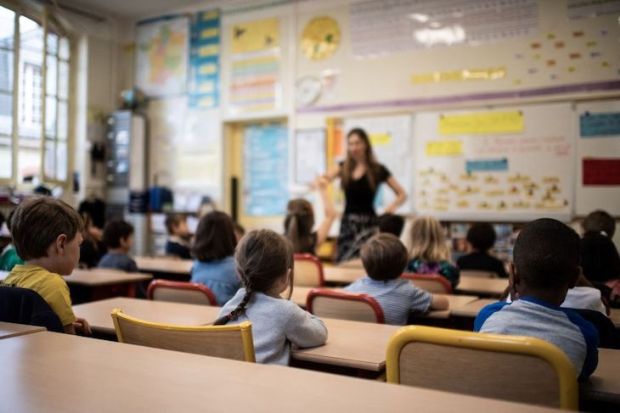
What does this have to do with school choice? Remember that schools are run by people. People carry their beliefs with them, and from those beliefs they decide what is important to them (their values). Those beliefs are based on what they put their faith in. That is why no classroom is neutral, and the total impact of the classrooms, even where there is a small amount of consistency, creates the culture (traditions) and climate (relational norms) of that school.
Here is a mind exercise when considering what kinds of schools may help in teaching (classic) tolerance based on respect without asserting or implying categories of worth: What kinds of messages are you hearing from the different kinds of schools around you in relation to the following?
- The environment – is it anxiety-producing alarmism, or more carefully considered stewardship (meaning we do look after the planet, but within a focus on helping people).
- The economy – is it orientated to a ‘government will fix everything’ approach, or is personal effort, responsibility and care more the mode in which money is discussed?
- Inclusiveness – is this focused on identity categories that carry implications of worthwhileness, like oppressed versus oppressor; or is it more focused on the Judeo-Christian understanding of universal respect?
- Identity (and as it relates to sexuality) – a couple of my principal friends highlighted this ‘new’ question from parents they are coming across in enrolment interviews. These parents are increasingly asking, ‘Is my boy going to be asked what sex he wants to be each week or day, and to choose his pronouns?’ Or do you hear in your local school that it defines and teaches that sex is defined biologically – and that students are recognised in the core categories as girls and boys, young men and young women, according to biological sex at birth?
- Education content – is the content loaded towards environmental alarmism, cultural Marxist histories (some might say histrionics), and thorough-going sensuality-focused explorations of identity and relationships; or is it focused on learning about the best of science, literature and theology that made the West what it is?
- Education methods – do the students get to decide what they think is important to learn to join the progressive activism of our times, or are they delightfully instructed in core knowledge on which they can develop expertise over time, and are they then invited to do good to continue in the rich traditions of the West?
- Freedom and responsibility – is the language of relationships focused on rights and entitlements, or is there a strong tradition of service of one to the other while developing personal capacity?
- Australian history and traditions – is Australia only presented as an inherently conflicted nation that is carrying eternal grievance, or is it celebrated, mistakes and all, as one of the most blessed nations in the history of the planet?
It is the parents who have the responsibility and right to make their decisions about these questions for their children. For the government to assume their control without reference to parents is foolishness at best, and dehumanising at worst.
But it is that controlling spirit that leads them to make their naïve and ignorant statements about which schools might be best for teaching tolerance. As Victor Davis Hanson wrote in the Washington Times in 2021:
Hubris begets divine retribution, not Sermon the Mount forgiveness of one’s sins … our current cultural crisis is not from reading too much, but from not reading much of anything at all.
Or as Jeremey Adams wrote in his book Hollowed Out, ‘To abandon … a broad and robust exposure to the thinkers and books that set Western Civilisation in motion is not just a wilful act of cultural amnesia. It is dangerous.’
But it is even more personal that, and parents know it. As Adams also noted about the overall message, or question, that students face in these differing learning contexts (schools):
Do they see themselves as random specks of cosmic dust or as purposeful children of a loving and Almighty God?
So, say again, dear leaders, what does make a good school for inviting Australian children to respect each other?