Amid the shouting match between NIMBYs and YIMBYs, between mass-migration extremists and advocates of sensible population policy, between spiralling housing prices and the wider economy, few seem willing to ask the deeper questions about housing itself.
Why does it matter that people own a home? If it’s cheaper, why not settle for a nation of renters? What is it about the quarter-acre block that Australians instinctively wish to preserve? In solely making arguments regarding economic affordability, we risk losing sight of the many other reasons why home ownership is deeply important.
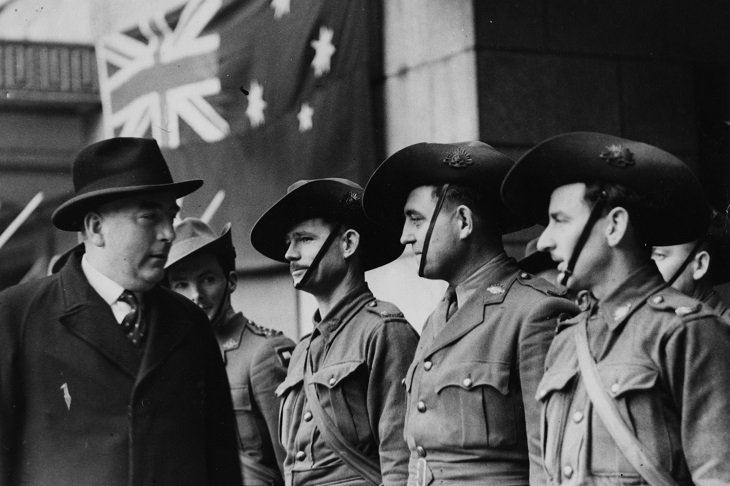
Luckily for us, great Australians who have come before also struggled with these questions. On the conservative side of politics, you can find few better examples then the words of the Liberal Party’s founder, Sir Robert Menzies. In his often-quoted forgotten people speech he said:
‘One of the best instincts in us is that which induces us to have one little piece of earth with a house and a garden which is ours; to which we can withdraw, in which we can be among our friends, into which no stranger may come against our will. If you consider it, you will see that if, as in the old saying, “the Englishman’s home is his castle”, it is this very fact that leads on to the conclusion that he who seeks to violate that law by violating the soil of England must be repelled and defeated. National patriotism, in other words, inevitably springs from the instinct to defend and preserve our own homes.’
This passage describes a far more expansive view on the role of housing then is traditionally recognised when quoting Menzies’ forgotten people’s speech. It is not just highlighting that home ownership is nice thing or a point of middle-class respectability that could assist in family formation but actually that in a democracy like ours, home ownership is key to building and maintaining a national identity. When you own a home, you feel as if you own part of the country. That as a citizen of this democracy you have a vested interest in Its success. It’s this sense of ownership of the nation as a citizen that encourages you to think in national terms, to be inclined to adopt a national identity.
Of course, housing is not the only thing that can, has or should be used to maintain a national identity. A sense of ownership can emerge out of a shared values, culture, ethnicity, or religion to varying degrees. But it is undeniable that a national identity is best preserved when the citizens who are supposed to control the state in a democracy like ours also own it. And when that ownership declines, so too does the instinct to defend and preserve what is ours. This erosion of national identity can have dire consequences, it is hardly a coincidence that as the dream of home ownership slips further out of the hands of young people, less than half of young Australians now say they would stay and fight if our nation found itself in a situation like Ukraine’s. Similarly, as ownership and national identity is eroded it is perfectly natural for Australians to be less willing to make sacrifices for the nation as a whole, whether through taxation, national service, or the everyday civic duties that depend on a sense of shared belonging.
The Romans themselves offer a stark warning. In the early Republic, legionaries were citizen-farmers who marched to battle with the certainty that they were defending their own fields and families. Their loyalty to Rome was inseparable from their loyalty to their own patch of land. But as wealth concentrated and land ownership collapsed into the hands of a few, the legions changed. No longer were they filled with men bound to the soil of Italy, but increasingly with Gauls, Germans, and mercenaries, men whose loyalty was not to Rome but to their generals and their pay. The citizen-soldier gave way to the foreign mercenary. And when the legions ceased to be citizens defending their homes, the Empire’s strength withered. Its armies became powerful tools in the hands of ambitious men, but they were no longer the bulwark of a people determined to preserve their nation.
We should think carefully about this today. Under the Labor government of Anthony Albanese, more than 10,000 Papua New Guineans are set to be granted Australian citizenship by joining our Defence Force. A move like this should be immediately rejected by any rational Aussie, it doesn’t matter what country they are from, filling our armed forces with people from another country should be viewed as an unacceptable encroachment on the sovereignty of our country, regardless of if they are our ally or not. If Australians themselves cannot afford homes and land worth defending, then like Rome, we risk an army made up of those with little stake in the nation they are meant to protect. And a country cannot be defended by people who feel they have nothing of their own to defend.
This is why the housing debate cannot be reduced to questions of affordability charts and economic efficiency. It is about something much deeper: the character of our people, the strength of our democracy, and the survival of our national identity. Menzies understood that patriotism springs not from abstract theories, but from the instinct to defend one’s own home. If we allow a generation to be shut out of home ownership, we are not only undermining their prosperity, but we are also hollowing out the foundations of citizenship itself.
A nation of renters is a nation of tenants, and tenants seldom fight for their landlords. A nation of homeowners, by contrast, is a nation with a stake in its own destiny. If we want an Australia that endures, free, strong, and sovereign, then restoring the dream of home ownership must be seen not just as good economics, but as a patriotic imperative.
Jordan Abou-Zeid is a Canberra-based writer and co-founder of The Recharge, a national conference for young Christians interested in public life