When Winston Churchill was First Lord of the Admiralty from 1911 to 1915, he ordered two technical changes to ensure the British fleet stayed more powerful than the expanding German navy.
One adjustment was to develop a 15-inch battleship gun that could fire bigger shells. The other, in 1913, was to convert the British fleet from coal to oil to boost battleship speed. The biggest gamble of the switch from coal to oil was that the UK was ditching a fuel found in abundance at home for an imported energy source. To ensure oil supplies, London took control of the Anglo-Persian Oil Company, the first business to extract oil from Iran, where it was discovered in 1908.
The UK navy’s shift to oil and the ensuing pre-war tussle with Germany to gain influence in the Middle East is just one of countless episodes whereby the scarcity of oil fields has sculpted history.
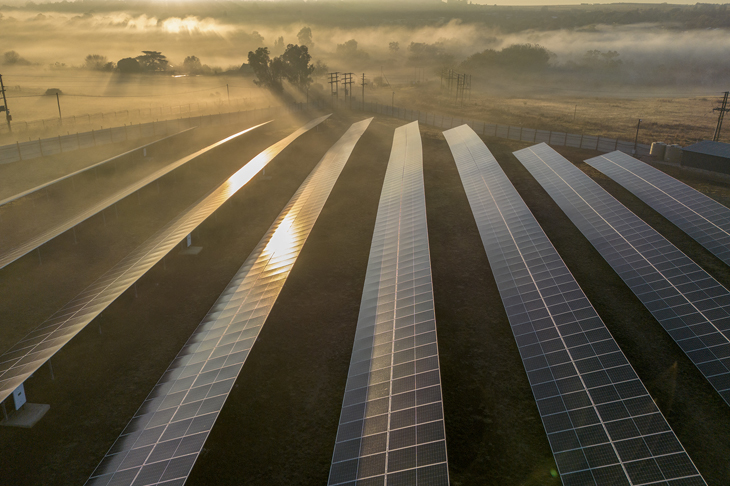
The shift from fossil fuels to renewable energy will do something similar. The move makes more vital minerals such as cobalt, copper, graphite, lithium, manganese, nickel, palladium and rare earths (that are abundant but hard to gather and costly and polluting to refine). The scramble for green inputs will transform global politics in at least nine ways.
One is that petrostates will lose relevance longer term. But there are complexities. In the short term, petrostates will enjoy the muscle conferred by higher prices, as uncertainty about oil’s long-term future reduces production before demand drops. When oil prices fall enough to ruin high-cost producers, the better-placed petrostates could gain enough market share to preserve global relevance.
Coal and natural gas are on the same trajectory but it’s milder because they are found in too many places to have the rarity value of oil fields. Of the two, natural gas will have more influence. As Europe has learnt, natural gas is important regionally and its delivery infrastructure slows switching suppliers.
A second change from the shift to renewables is that countries that possess, or can secure, deposits of clean minerals will become powerful ‘electrostates’, while those countries lacking these endowments (Western Europe) will be vulnerable. Australia, Chile and Russia have 21st-century minerals. China lacks them so it’s buying mines in Argentina, Bolivia and Chile (the ‘Lithium Triangle’) that has 56 per cent of known lithium reserves.
Some poorer countries with critical minerals might become mini-Saudi Arabias in wealth and status. Their challenge is not to become exploited and unstable states like the minerals-rich Congo, and thus stay weak powers.
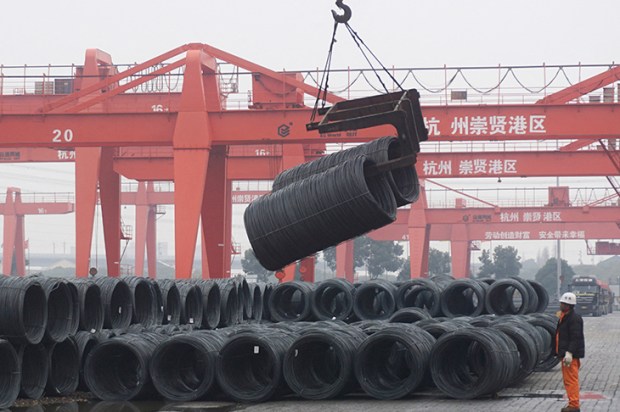
In the short term, countries that can process green minerals and manufacture components for green technologies will enjoy diplomatic might. China is well placed due to its loose pollution safeguards, cheaper workforce and strategic smarts. In 2019, 60 per cent of the global rare earths supply came from China. The country dominates global battery, solar and wind turbine production.
Going green’s third global impact is the shift could backfire on countries whose emissions-reduction targets are so aggressive they are performing ‘unilateral economic disarmament’. These countries overestimate the capability of renewables to match the reliability and base-load abilities of discontinued fossil fuels. Think Germany before the Ukraine war (and Australia in coming years).
The fourth effect is that going renewable is triggering a rush for critical minerals in international waters. China’s spread across the Pacific is partly about securing minerals found in the seabed. The Arctic and Antarctic could one day host scrambles for minerals.
A fifth change is the countries that pioneer the renewables drive will pressure others to follow. Laggards could be subject to ‘green tariffs’, boycotts and other sanctions. Such actions are likely to cause trade frictions, if not trade wars.
A sixth global outcome of going renewable is that the quest splits advanced and developing countries. Poorer nations see that countries that grew rich on coal, gas and oil are being hypocritical when they demand emerging countries forgo the opportunity to industrialise using cheap fossil fuels to repair the damage done by rich powers.
Seventh, climate-change policies require government intervention in energy markets and international cooperation. The more governments subsidise local green industries, the more they will anger other countries. International agreements require cajoling among countries. The more there are pacts, the greater power global bodies gain over countries, the more bickering among countries to secure signatures, and the more fallout if countries fail to meet targets or threaten to, or do, withdraw from accords.
An eighth effect of going green is that securing energy supplies could alter allian-ces. India, if it can’t secure Australian coal, warns it will turn to Russia (see Gina Rinehart opposite). Where would that leave the ability of the ‘Quad’ of Australia, Japan, India and the US to push back on China?
Ninth, greenhouse-gas emitters will use their cooperation on climate as a bargaining chip. China, which spews out 27 per cent of global emissions compared with 11 per cent for the US, has stated its cooperation on climate change depends on countries relaxing stances on Hong Kong, Taiwan, Tibet and Xinjiang, where Uighurs are persecuted.
The switch to renewable energy is thus poised to rejig the global order. In time, the effects are likely to be as big as were oil’s but with one difference. The global political consequences of oil tended to spur greater efforts to find oil. The international effects of going renewable, however, will trigger challenges that retard the green drive, even to the extent of helping the case for nuclear.
To be sure, global politics shapes energy policies too, as Russia’s invasion of Ukraine shows. Discoveries, technological advances and greater nuclear uptake could reduce the need for renewable power and many of its global consequences might never eventuate. It’s not all rival versus rival. Countries are cooperating on climate change. The shift to green could lead to fewer tussles about energy because renewables make countries more energy self-sufficient.
But no energy switch is without political complications. Just study the history of oil. In time, the tale of the switch to renewables will probably be as fraught but less successful.
Got something to add? Join the discussion and comment below.
You might disagree with half of it, but you’ll enjoy reading all of it. Try your first month for free, then just $2 a week for the remainder of your first year.