The Illuminati – in case you didn’t know – were members of a Bavarian secret society that first convened in the late 18th century. Their mission, it was said, was to subvert established religion, ‘overthrow every throne’ and eventually take control of the way the entire world is run.
In this project they have been extraordinarily successful. Having masterminded the French Revolution, they, or their successors, fomented uprisings in Ireland and England and have been responsible for the Bolshevik revolution in Russia. They have promoted various wars, and devised countless plots against the US, including the 9/11 attacks as well as other matters too dreadful to describe in polite society. So about a quarter of the population of the world believes, according to a YouGov poll in 2019. Another poll in 2023 found that more than 40 per cent of Americans reckon that some ‘Illuminati-style’ group secretly runs the world.
Given that such views are so widespread, now is perhaps a good moment for a book that offers serious scholarship of the Illuminati phenomenon and the way it has morphed into an all-purpose conspiracy theory. It covers pretty much everything, from The Protocols of the Elders of Zion to the faking of the moon landings, and is echoed today in places ranging from the Oval Office to the man-cave of Andrew Tate. Michael Taylor’s work is certainly scholarly – the references alone run to almost 100 pages. But given the way conspiracist belief tends to be immune from challenge, your average conspiracy theorist is unlikely to be among its readers.
Never mind. The history of the Illuminati idea is of great interest; and perhaps the most revealing part of the story is the single decade of 1776-86 when the real-life Illuminati actually existed. After that things get a bit difficult to follow, and eventually become completely nuts (which is how they stand today, what with Bill Gates, Hillary Clinton, Jay-Z and Beyoncé, Rihanna and Taylor Swift along with George Soros and a race of 12-ft high super-intelligent lizards all having joined the Illuminati team – or so the conspiracy theorists say).
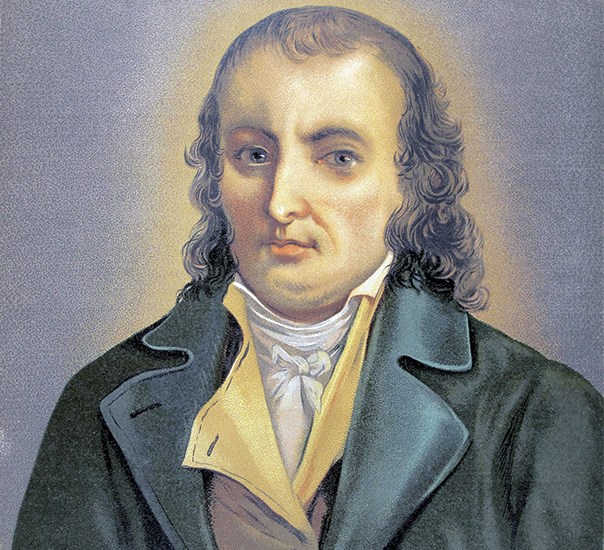
But this is to get ahead of ourselves. It was in the Bavarian university town of Ingolstadt that a mildly disaffected academic called Adam Weishaupt founded the Illuminati in 1776. His purpose? Difficult to say precisely, as the programme tended to be fairly vague and frequently contradictory. If anything was consistent it was Weishaupt’s hostility to unassailable authority (mainly in the form of the Jesuits, who controlled Ingolstadt academia and who had frustrated his career), and a preference, in principle, for rational debate over revealed truth. The slogan was that reason should be ‘the whole code of human law’, although that didn’t strictly apply when it came to Weishaupt’s own pronouncements.
This positioning may sound relatively innocuous, but in the authoritarian setting of pre-unification Bavaria it was incendiary, and if Weishaupt had been effective it might have been revolutionary. But although Weishaupt had some success in attracting influential adherents to whatever the Illuminati creed happened to be at any one moment, in most other respects the enterprise was a farce from beginning to end.
Weishaupt himself was something of an egomaniac (sometimes he wanted to be known as ‘the General’, sometimes ‘the King’). He was as much interested in regalia, peculiar ceremonies and home-cooked liturgies as he was in his cultural/political project; and while he had a talent for finding disciples he had an equal talent for converting friends into enemies and annoying the wrong people.
Day-to-day management was a case study in organisational self-sabotage. The members of this secret society had no system, no tradecraft. They documented the proceedings of their order in detail and had a propensity for leaving those documents lying around or losing them at critical moments. (How unlucky is it to have your key spymaster struck dead by lightning with his pocket full of papers and an inquisitive priest nearby?)
Instead of following a plan, they spent their time and energy enquiring into whether potential candidates for the order were sufficiently good-looking, or whether they liked ‘to make small cardboard boxes’, or were ‘good at conjuring tricks’. They tried to finance themselves by a mathematically impossible scheme of fixing the lottery or ‘selling poetical prose on the state of Bavaria’. In other words, they had no idea.
The Illuminati disappeared after being scattered and suppressed in the late 1780s, and Weishaupt ended his days as a cranky exile in Gotha, denying that anything like the society had ever existed. The fact that the Illuminati had an afterlife that continues to this day, from fringe online discussion groups to the offices of high officials across the world, is both extraordinary and inevitable. Endlessly shape-shifting (the big switch was when conspiracy hunters began identifying the Illuminati as a Jewish plot, even though Weishaupt had specifically excluded ‘Jews, women, pagans and monks’ from the order), the Illuminati are today the conspiracists for all occasions. Of course the fact that for most of this history they have not actually existed only increases their infernal power. There’s nothing worse than an invisible enemy.
Got something to add? Join the discussion and comment below.
You might disagree with half of it, but you’ll enjoy reading all of it. Try your first month for free, then just $2 a week for the remainder of your first year.